Eamonn Coghlan: Runners must avoid footpath disputes
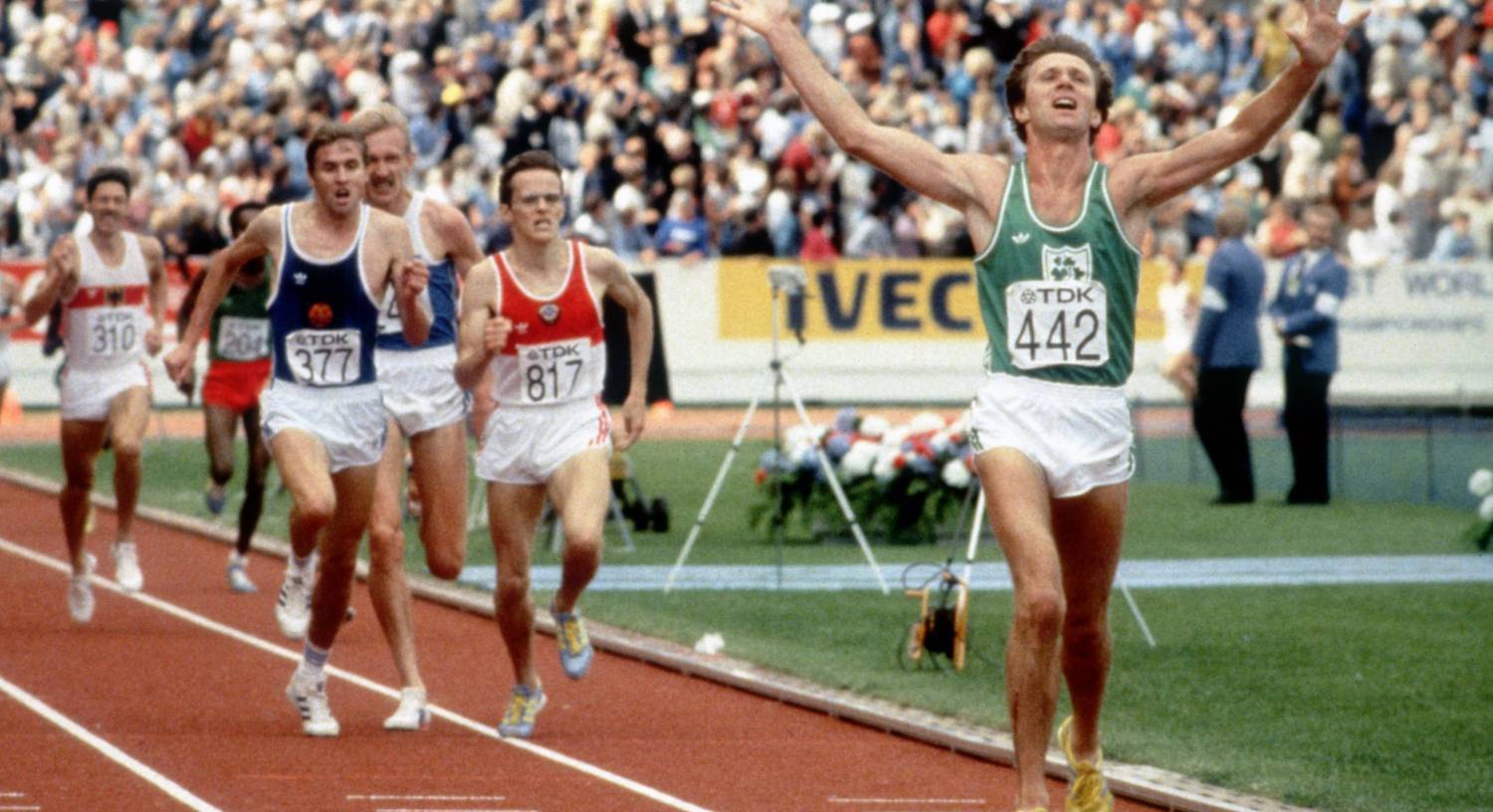
The Chairman has spoken.
Eamonn Coghlan, world champion at 5,000 metres, star at multiple Olympic Games, one of the all-time icons of indoor athletics, has weighed in on one of the most pressing issues of the current lockdown.
Coghlan says the onus is on joggers and runners to be courteous towards others on the footpaths and roads of Ireland â to âmove wide and not to try to intimidate people by running at them and expecting them to move out of the wayâ.
âIn these trying times, which weâve never faced before, everybody needs to be very conscientious,â says Coghlan.
âWhen it comes to joggers and runners they cannot be selfish.
âWhen you look at an athleteâs career, from the highest level on down, everyone has a focus when they run â some are going at a slow pace, some at a fast pace, some at a pace they consider fast, put it that way.
âBut they all have to be conscientious about their positioning at this trying time. Rather than thinking youâre the authority because youâre out doing your run, youâve got to be aware at least a hundred yards before you meet a family or a couple of people.
âItâs your responsibility as a runner to take control, and the only way you can take control is to move wide and not try to intimidate the people by running at them and expect them to move out of your way.â
Coghlan adds that confrontations between walkers and runners is completely counter-productive for all concerned.
âIf youâre going at a good pace and someone steps out suddenly it can be hard to adjust at the last moment, so you must be more aware of moving your positioning much earlier than you would normally.
âIt doesnât take much. If a runner gets annoyed because someone on the footpath is going slowly â he or she has no right to get annoyed. Itâs up to him or her to take control and to move wide.
âRemember, if a runner allows a confrontation to develop with a walker cursing and the runner responding, thatâs counter-productive for everybody trying to maintain a positive mental attitude in these trying times.
âIf youâre trying to intimidate people by running too close to them, theyâll get upset, youâll get upset, and nobody gets any benefit out of that.â
The fact that traffic is far lighter should make that social distancing easier to achiever, surely?
âThatâs true, there is more space now and itâs up to people to take advantage of that space within reason.
âThereâs enough space on the road and on the footpath for everyone, itâs there to be used.
âIn general, though, I think itâs up to the jogger or the runner to take control of those situations because they need to realise that while they may have been jogging or running in a particular place â which they regard as their own patch â they have to adjust to the fact that other joggers or families are now using the same patch at a slower pace.
âTherefore the responsible jogger or runner will do everything in his or her power to eliminate any interaction within that two-metre distance weâre all trying to observe.â
Coghlan adds that misunderstandings happen easily: âI ride the bike a lot â my hip isnât up to long runs â and what I find is that the cycle lanes in the Phoenix Park, where I go, can be too busy.
âOften there are walkers in the cycle lanes but Iâm not trying to run them down â I give them a whistle at least a hundred yards out just to let them know Iâm coming.
âThey move, I move and weâre all on our merry way. But sometimes they misunderstand the whistle, which is just a signal â sometimes they think youâre annoyed with them, which youâre not, so you can get someone saying âeff offâ when youâre only giving them the heads-up that youâre coming their way.â
That whistle is the equivalent, then, of running track etiquette.
âThatâs right, and itâs why I use the whistle rather than shouting âtrackâ.
âThe protocol, if youâre training on a running track with joggers going at various speeds, is that you shout âtrackâ when you come up behind someone, and they either move to the second or third lane or hop into the infield.
âBut right now nobody has that kind of right of way out running on the streets. We have the right to be more courteous, and what that means is that if youâre rolling along at a good clip and there are people ahead of you on the footpath, you donât shout âtrackâ, you ease wide.
âThink of the best athletes in the world, those preparing for the Olympics. Theyâre doing maintenance work, keeping themselves ticking over. Theyâre not bursting past people and getting worked up.
âIf one of them gets into trouble in a race, if they get boxed in, what do they do? You step back, you move out, you move wide. So what should joggers and runners do? Step back, move out, move wide, and move on.â
The man famous as the Chairman of the Boards due to his successes in indoor racing has one final point to make.
âRemember, youâre not training for the world championships,â says Coghlan. âYouâre not preparing for the Olympics. Youâre training for your physical and mental health at a very challenging time, to get the endorphins going â and you wonât get that benefit if youâre arguing with walkers or families and then coming home to argue with your own family.
âThe people out walking â or running slower than you â are out there for the very same reason as you, to try to stay healthy. So a little bit of understanding goes a long way.â