Jessie plans to raise bar on mental health
Question: if you were a gifted player in a high-profile sport, the kind your coach and teammates rely on to get a result, would you tell them about your depression?
And what if it wasnât your mind, but your body, that was giving you hassle? Would you open up about a sore hip but suppress a suicidal thought? Tell them about an asthma attack, but not a panic attack? If so, why?
Thatâs a question thatâs been on Jessie Barrâs mind for a few years, ever since she began her PhD on the stigma of mental health in sport. With the finish line slowly looming into sight, her findings appear troubling.
Because for all the progress made in recent years, Barr says a huge fear remains about how admitting such issues will be perceived.
âMy research is finding people are willing to seek help but theyâre worried about what people think,â she says. âWill my coach see me differently? Will I be relegated to the subs bench? Will I be dropped from the team? Are people going to see me differently? Thereâs always a worry about perception and 63% of people said thatâs why theyâd be slow to seek help.â
Barr believes the issue is most prevalent in male team sports, with players scared to admit any potential frailties.
âThe nature of sport is youâre removing weakness, [judging] the person whoâs mentally toughest and physically toughest, the fittest and fastest, but if you tell people youâre going to see a clinical psychologist, straight away itâs [perceived as] weakness. âAre they able to play on the team if he had depression last year?ââ
Her chief goal was to find the root cause of that fear, and Barr believes coaches have a key role to play. âIf [players] hear a coach giving out about someone going to a psychologist thatâs where it can stem from.
Thatâs the opinion from a lot of coaches from the old-school era, the GAA in particular. In some teams, people think itâs very far-thinking to have a psychologist.
A few years ago, after completing her psychology degree in UL, Barr found a sporting landscape with only âsingular voicesâ willing to speak out, but she says, in most cases, the reality does not match playersâ perceptions.
But ignorant comments, whether intentional or not, can end up solidifying the stigma.
When a handful of basketball stars such as Kevin Love and DeMar DeRozan opened up about mental health issues last year, NBA Commissioner Adam Silver made the startling revelation based on his interactions that âa lot of playersâ were unhappy, plagued by sadness, isolation and depression.
NBA Hall of Famer Charles Barkley responded by saying it was âthe stupidest thing I ever heard any commissioner sayâ. âListen,â said Barkley, one of the sportâs most influential pundits. âThese guys are making $20, $30, $40 million a year.
They work six, seven months a year, stay in the best hotels in the world. They ainât got no problems. Thatâs total bogus.
But there lies the dangerous idea â that fame, wealth or sporting success is any insulation from mental health issues. Sport may have proven benefits for mental health, but those level off and may even regress as you progress to higher levels.
âItâs definitely risky,â says Barr. âIt can be a catalyst if youâre someone more likely to succumb to stress or pressure as a result of something not going your way. Sport is a business for [professionals] so the true nature of it is sucked out of it a lot.â
In recent weeks, heavyweight boxing world champion Anthony Joshua addressed rumours he suffered a panic attack before his shock defeat to Andy Ruiz Jr, saying:
I had no panic attack. Iâm not that type of person.
Whether or not Joshua realised how clumsily worded that was, itâs indicative of how those with issues are stigmatised. Barr knows this better than anyone.
In 2012, she competed at the Olympics in London on the Irish 4x400m team and made the European final in the 400m hurdles. She was 22 at the time, and assumed it would be the first of many peaks. Instead, it was the beginning of the end. She never ran faster and hasnât raced since 2016, deciding to call time on her career late last year after a series of injuries.
âMy head was fried,â she says. âI was battering a dead donkey at that stage with athletics and putting my future career on hold. Even since Christmas Iâve flip-flopped but I know Iâm not going to get back [to the previous level].
I could use the excuse of time, but thereâs always time. I donât have it in me any more. I donât have the motivation.
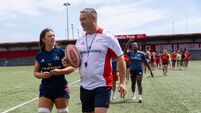
The transition to life beyond the track was âreally hardâ, but Barr found a new path in sports psychology. For her internship she did workshops with the Munster Rugby Academy and in the summer of 2017 she did an internship with the Sport Ireland Institute. That helped her earn a traineeship and sheâs since been employed two days a week with the Institute as a psychologist.
Earlier this week, she flew to Minsk, Belarus, where she is working with the 63-strong Irish team at the European Games, which begin tomorrow. While Barr has all the qualifications needed to say the right things, she admits itâs often just a case of allowing athletes âto ventâ.

Having witnessed it from both sides of the fence, she knows the psychological demands can be crippling on many sports people. Her purpose now is to help them through it and to normalise a practice, that should be just that â normal.
The 29-year-old is one to practise what she preaches, and she plans to see a clinical psychologist herself in the months ahead to adjust to her new career, her new identity.
And she speaks for many others in sport when she says of that decision: âIâd like to be able to seek help without people thinking thereâs something wrong with meâ.