Olympian turned sports photographer rediscovering buzz of competition
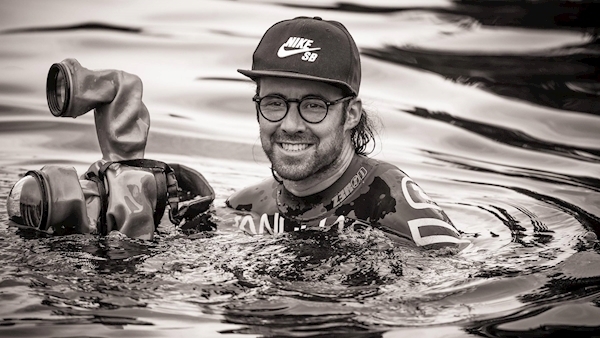
Bryan Keane endured a rollercoaster of emotions in his former life as a professional athlete. Three years on from his retirement, the former Olympian has found the perfect job in his quest to challenge himself and rediscover the buzz of competition.
The void is real, and itâs out there, waiting â a chasm along the path of every sportsperson. To see it coming is to at least have a chance, to stop it swallowing you whole. But even that might not be enough. Because in a life lived at full speed, the end of the line can be a terrifying place.
Bryan Keane knows this. Itâs a little over two years since the Cork man woke up to a distorted reality, his career consigned, at last, to the past tense.
It was just after Christmas 2016 when he made the decision, Keane having to rattle through the various stages of grief before he could let go of a sporting career that spanned three decades. When he arrived at the final stage, acceptance, it took just two words, uttered to his wife, to bring the curtain down: âThatâs it.â
Five months before, he was standing on a start line in Rio de Janeiro beaming with pride â the pinnacle of his career. He was 36 that day, the oldest competitor in the Olympic triathlon, reaping his harvest after 20 years of hard toil.
But people see the climax and not the sequel.
The act and not the actor. Step away from a height like that and thereâs an eroded sense of purpose â a disillusioned dystopia that can be boiled down to two more terrifying words: What now?
Keane confronted that moment by making a list.
âWhat are my options? You write them down and in one way itâs limitless, you view yourself like a kid again,â he says. âThereâs a naivety, an innocence â I can be anything â but the reality is: what are my skills?â
What were his skills? Riding a bike around Belgium was great and all, but it doesnât hold much sway with the average employer â nor does an ability to swim, cycle and run like only a few dozen men on the planet.
The void can be a lonely place.
âYou see so many stories of people struggling, whether itâs with depression or ending up in jobs they hate,â he says.
When youâre fit youâre not really looking to the future. I found myself riding a wave of sport â how long I can ride it for?
Those first few weeks, he continued to churn away on his bike, eyeing up a few races to sate his competitive appetite.
âI needed to train because otherwise Iâd go mental,â he says. âYouâre training to fill the void.â
He knew, at least, what he didnât want: âI couldnât think of working in an office in a nine-to-five. That would be my idea of hell.â
But what did he want? With a background in fine arts, Keane had a creative mind that could appreciate the allure of aesthetics.
In his mid-20s, after moving home from Belgium at the end of his cycling career, he spent a couple of years working as a photographer in Cork, a job he continued during a year in Australia.
But it was Down Under, at the age of 28, that he discovered a new obsession, triathlon, which enveloped his existence for the next eight years.
When that ended, the most obvious thing was to revert to photography â but how?
Heâd like to say his big break came through careful planning, but to argue that is to be fooled by lifeâs randomness.
Keane was a few weeks into retirement when he got a call to pose for a shoot to promote the Tunnel Run with fellow Olympian Natalya Coyle. The photographer that day was a recognisable face, Dan Sheridan, and their chat would change the course of Keaneâs future.
Knowing how hard a field it is to break into, Keane asked Sheridan to meet for a coffee so he could pick his brains on photography.
Sheridan went one better, inviting him to join him on a job in Athlone at a para-cycling event that weekend. He handed Keane a camera and let him fire away all day, and the two shot the breeze the whole way home about what was needed to succeed in the industry.
As it turned out Sheridanâs agency, Inpho, had an opening, and Keane was offered a one-month trial.
His learning curve was as steep as an Alpine slope, working alongside guys whose expertise he had long admired.
âWeâd have the Examiner delivered every day and Iâd always check who took each shot,â he says.
âThey gave me gear and let me off, let me make mistakes and learn that way.â
After the trial Keane was hired, and earlier this week he clicked past the two-year anniversary of his start at Inpho.
Through his contacts, his skill and a massive slice of luck, he had found a way to fill the void.
âI see so many athletes who stay in sport and you think, âyou should be gone, mate, youâre flogging a dead horse, continuing to race because thatâs all you know,ââ says Keane. âBut thereâs a fear of leaving. Itâs like letting go of a relationship; youâll always think of the good times and look at it with rose-tinted glasses.
âBut then you realise itâs over, itâs gone. Stop it, let it be. Move on.â
Life as a photographer â itâs not so different. The familiar rhythm of an average week is still an alien concept, his weekends surrendered to the altar of live sport.
Like the triathlon, you observe the best, absorb what you can, then practise, practise, practise â try to be better tomorrow than you were today. âIt takes time, craft, training hours,â says Keane. âI was at the bottom of the ladder â welcome to the real world.â
He also wasnât very good, at least at the start. âIn anything creative you see yourself as better than what you are, but I look back on pictures from a year ago and go, âGod, that was shit.ââ Inpho gave him time, space, dispatched Keane around the country and allowed him to make mistakes, then brought him in and helped him figure out a better way.
âYou need a three-year apprenticeship before youâre competent across the realm,â he says.
âSometimes you see something in your head and picture the way you want the shot to be and you donât always achieve it. That often comes down to technical elements â that youâre not good enough.â
Over the past two years he pulled on the photographerâs bib in all corners of Irish sport: from Champions Cup games to the AIL; All-Ireland finals to club matches with an old man and his dog watching. From swimming to cycling to running, he has re-acquainted with all his old loves.
âItâs a nice environment, sports photography. Youâre not doing hard news, having to rock up where thereâs been some horrible murder. Itâs sport â itâs trivial, in one way.â
The job is different each time, yet also the same: capture the story with an image, a key snapshot that says more about the event than 3,000 words of prose.
Thereâs beauty in the small matches. On any day you want to produce the best work possible, whether itâs a World Cup final or Grand Slam or U16 camogie match.
"There is a brilliant shot in everything â you just have to put yourself in position.â
Thatâs the science behind the art, how the best guys end up in the right place at the right time. It all comes back to planning.
On the day of a big game, Keane will arrive four hours before kick-off. Sometimes heâll have a corporate PR gig to shoot in a stadium suite, other times heâll scout angles, backdrops â composing an image in his mind long before itâs captured by his camera. As his work improved, the votes of confidence grew stronger. Less than a year into the job, he was dispatched to Twickenham with three Inpho colleagues to shoot Irelandâs Grand
Slam victory over England. Such days can be a cauldron of pressure â botch your assignment and youâre in for a bollocking.
âYou have to be so switched on because if you donât have a certain shot itâs: âWell, we want it. How do you not have it?â. You donât ever get to stand back and just watch and enjoy it.â
In a typical game he might shoot 4,000-5,000 images, and the process of sifting through them is made easier by tagging each player with a code long before a ball is kicked.
Sometimes heâll send them to headquarters straight from his camera, where they will be edited and published by other Inhpo staff. Other times heâs a one-man band, trawling through images on his laptop during the game, trying his best not to miss a pivotal moment.
Heâll typically narrow it down to the best 100 shots, which are uploaded and will soon appear across the back pages of newspapers, splashed on websites and timelines across the country.
The ones editors like best are usually those that capture both the emotion of an occasion and the essence of the story. It all comes down to timing.
âYouâre looking at where that pass or the high ball will land. It comes back to aesthetic and emotion â if someone has missed a tackle and thereâs desperation or despair, thereâs skill and art in capturing that.â
The photographer who snaps it will sleep soundly. The ones who donât will not. In the early days, Keane was a demon for dragging his work home, spending hours online to see what was captured by Inphoâs chief competitor, Sportsfile.
âIâd cover a match and see who was there from Sportsfile and think: what did they get? I was learning from other people, watching and looking at what they got. But now I donât worry about that â I worry about what Iâm doing.â
The biggest misconception? That it comes down to luck. Sure, there are freak incidents, stars aligning in front of the lens, but the best shots are got by those who put in the graft.
Keane had to work hard for one of his favourites.
When he was commissioned to cover the RĂĄs Tailteann last May, he knew he had a leg up on others, having raced the event himself himself. The first of eight stages left Drogheda and headed for Athlone, roads that Keane knew well.
There was one field in particular that stuck in his memory â a brilliant yellow blaze of rapeseed in full bloom.
Long before the race, Keane sussed out the site and realised the rapeseed had grown to six feet â taller than him. So instead of holding his camera in the air â a technique photographers call âspraying the preyâ â he drove up the morning of the stage to leave a step-ladder in the field.
The result was a stunning shot that seemed lifted off a Van Gogh canvas â it was a day when his fastidious nature came to fruition. âIt comes down to planning â you wonât go into a race not prepared,â he says. âOr you canâŠbut youâre not going to get a result.â
When it clicks like that, the satisfaction is immense, but success doesnât always hinge on the motion of live sport. In recent weeks Keane worked with a team to create a portrait of Beckie Scott, a Canadian cross country skier who was a guest at the launch of Sport Irelandâs anti-doping review.
Scott made global headlines last year after resigning from the World Anti-Doping Agencyâs Compliance Review Committee after it voted to re-instate Russia following state-sponsored doping.
Her tale was that of a clean athlete who took a stand against cheating â both during and after her career â but how to capture that?
He settled on Scott staring down the lens through a mirror, an unmistakeable message shining through.
âItâs about being able to look yourself in the eye, look back at your career and know you did it clean. When everything comes together like that, you know thereâs nothing more you could have done.â
The new path has seen him retrace old steps. Last December, Keane returned to the European Cross Country Championships for the first time in 19 years, shooting the event in Tilburg that he competed in as a junior. But thereâs one event heâd like to revisit more than any: the Olympics.
Itâs the biggest show. The passion you have for it, you want to witness it from the other side.
These days, life through a different lens may not produce quite the same rush â nothing ever will â but it has its benefits. âAs athletes you live in a bubble, this little privileged bubble and itâs not reality. âYouâre self obsessed, but you need to be selfish to achieve what you want.âIt was how he was, how he had to be.
âAs a kid of 12 I dreamed to go to an Olympics and Iâm so proud to call myself an Olympian. Iâll always have that.â
For the longest time, it was a void he couldnât fill.
Trace the arc of Keaneâs career and you quickly spot a pivotal turning point, a terrible road crash. It was one that turned him from one of Irelandâs fittest men to a bloodied wreckage, lying in a helpless heap on the Cork to Cobh road.
There was no warning, no way he could steer to safety. While hurtling along that road at 45kph, a car travelling the opposite direction had made a right-hand turn into his path. Keaneâs bike ploughed into the passenger door and he went hurtling over the top, crash-landing on concrete with his knee and head taking most of the impact.
A couple of days later he had two pins and a wire inserted in his knee to hold his patella together.
âI had two years of crap after that,â he says.
âFor a year, I couldnât walk properly. For a few months, I couldnât sleep because of the pain. I said âIâm not going to let it beat meâ. Even if I quit competing, I still had to get my leg right, otherwise Iâd be going around with one gammy leg.â
The accident was in 2010, and he got back racing in May 2011. But his fitness had abandoned him, the door soon slamming shut on the London Olympics. That was tough to take, a dream snatched from his grasp by forces outside his control.
But professional sport had chewed up and spat him out before. In 2006, while cycling professionally in Belgium, Keane dug his body into a hole through overtraining. His response? Keep digging.
âI was in a jot. I should have just stopped; all the signs were I was completely cooked. Instead of backing off and knowing my body, I thought I could push on.â
He returned to Ireland a broken athlete, wanting nothing to do with cycling. But it all stood to him.
âYou have to fail. Thatâs part of the experience of having really shitty low times when you have nothing and your ass is dropped from a race and youâre completely empty. Thatâs character-building.â
Later, when wading through a morass of injury, what kept him going was the thought of Rio. Early in 2016 his qualification hung on a knife edge, Keane having to race in triathlons across the globe to boost his ranking after an Achilles tendon issue side-lined him for much of 2015.
But he got there, standing proudly on that start line alongside his good friend Tyler Mislawchuk of Canada. In the race itself an error with his helmet cost Keane dearly, his 40th-place finish not a true reflection of his ability, but it mattered little. He was never going to be in the medals. The victory was in getting there.
To be on the cusp of qualifying for London and for all that to be taken away, then to come back four years later and finally make the Games, it did vindicate everything.
"Iâve never thought what would have happened if I didnât qualify, if that was something I would carry. It was always, âletâs get this done.â Keep going and going and going.â
When he steps back now, looks at his career with the wide-angle lens, he can see the whole journey in a new light. How the crash â cruel twist of fate that it was â set off a chain reaction that shaped his life for the better.
If it hadnât happened, and Keane was still charging head-first towards the London Olympics, he knows he wouldnât have been around Dublin in 2012 when he met Sarah Early.
The pair got together that year and tied the knot in October 2016, with their first daughter, Sophie, born in March last year. Their second is due in the coming week.
Did becoming a dad change him? âYour outlook on life changes, you become a lot less selfish,â he admits. âIt puts a huge smile on your face and itâs brilliant, itâs fantastic. A child wakes you up to the reality of the world and whatâs important.â
One day, his children will learn about his achievements in sport â the European Cup victory in Athlone in 2009, the seventh-place finish at the Sprint Triathlon World Championships in 2010 â but if Keane thinks back on the snapshots that tell the story, itâs not those that spring to mind.
Itâs waking up on a Monday morning in South Korea and knowing, as he watched everyone file into work, that his job that day was to ride his bike. Itâs the tempo run in a secluded forest in Australia with a cluster of the worldâs best triathletes, his feet floating over a woodchip trail with no sense of effort.
âTheyâre moments you treasure â the days of the week donât matter, time doesnât matter, nothing matters only doing your training and trading on your physicality,â he says.
I was lucky to recognise at the time that sport allowed me a privileged position.
These days, he knows how lucky he is to have found a replacement, a path that feels just as precious. Keane still rides his bike in his spare time, swims in the sea and runs when his legs will allow it, but he no longer has to.
He does it to stay healthy, and if he gets the odd flashback to his racing days, well, so be it. Theyâre in the past now, where they must remain. For him, the only way to fill the void is to accept what it was and not lose sleep over what it wasnât.
âThatâs what I achieved with the time I had in the sport, but life moves on and you evolve into something different,â he says. âItâs over, itâs done. Iâm very happy to be on the other side.â