Jessie Barr holds on to Olympic dream
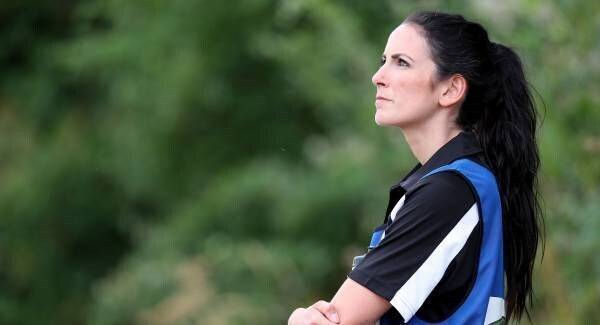
Jessie Barr admits she would “give anything” to race in another Olympics as she returns to training this month.
Barr returns to training at UL this month.
Her pressing goal, as she takes to the new running track in UL, is to keep fit. However, the desire to pull on the Irish jersey — intensified by the fact that an Achilles injury forced her to miss out on the 2016 Rio Olympics — still remains. Tokyo 2020 is very much on her mind, though the next edition of the Olympic Games could see Barr playing the role of motivator rather than competitor.
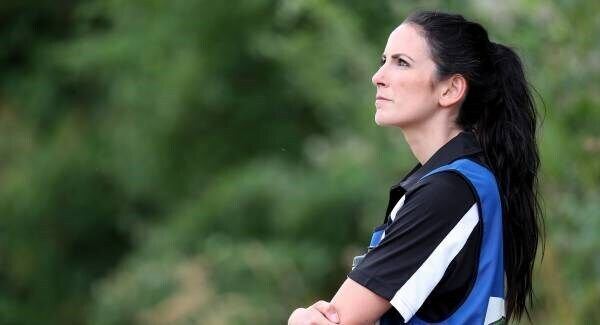
“(Representing Ireland again) does seem like a long way away, but never say never. I would love to get back into an Irish vest. Who wouldn’t? I’d give anything to go to another Olympics. It is always much easier to motivate yourself when you have a goal set. Whether I have it in my legs is a different story. I’m going to see if there is anything left.
“To get to Tokyo would be amazing, though I could be there working as a sports psychologist instead.’’
Despite nursing a fascination with the mind more or less all her life, Jessie Barr somehow neglected the mental side of her own preparation until late in her athletics career. Now, in her role as a sports psychologist, Barr preaches the role of mentality as crucial to the performance of high-performance athletes.
The Irish Olympian, who currently holds a trainee position at the Institute of Sport under the guidance of Dr Kate Kirby, believes that mental techniques play an integral part in the development, and output, of both elite and up-and-coming sports people.
“Using psychology is basically thinking and behaving. If you think, if you behave, and you act on an emotion or a thought, that’s psychology, if you were to strip it down. So, everyone uses psychology in some shape or form,’’ she adds.
Barr, the older sister of 2018 European bronze medallist Thomas, studied psychology and sociology as an undergraduate at the University of Limerick, before then moving on to Britain to complete a master’s degree in the field at the University of the West of England. After taking a year out, aspirations of improving the mindset of elite competitors and potential stars only “solidified”.
The 29-year-old, who is in the process of completing a PhD in the subject at the University of Limerick, is now bringing together her experience as a high-performance athlete — she has represented Ireland at major international championships such as the 2012 London Olympic Games and the European Championships at Helsinki — with her passion and understanding of psychology.
She admits that she somewhat overlooked the importance of the mental approach during her days representing Ireland in the 400m hurdles and 4X400m relay, but she now knows how important it is in achieving marginal gains en route to excellence.
‘‘I really wasn’t applying it to myself until very recently. Now that I am actually working with athletes, I can see where I could benefit. I never saw a sports psychologist throughout my whole career, which is mad when you think that I competed at the level I did and the sort of career I went into.
“It definitely would have benefitted me, in terms of coping with the injuries I’ve had over the years. I was always focusing on what I couldn’t do and things that were out of my control. With some of the injuries, it took me a long time to accept that I was missing out on championships and maybe getting to a second Olympic Games.
“I did struggle quite a lot with that. I can see now that an injury really isn’t the end of the world — there is always a next year — and there is always a positive to come from it.”
CONNECT WITH US TODAY



Be the first to know the latest news and updates