Shane O’Driscoll and Mark O’Donovan: A pair of heavyweights keeping the boat straight
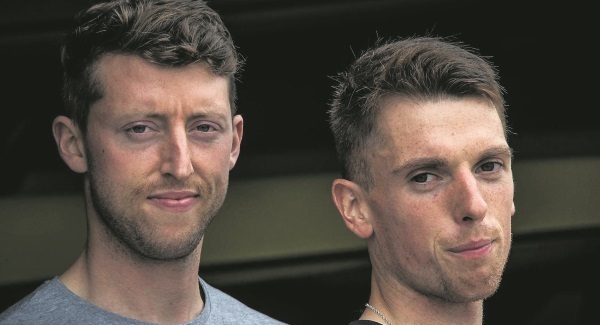
A chill wind howls at Farran Wood. There are no boats on Inniscarra Lake this morning. The National Rowing Centre appears deserted.
Gary O’Donovan finds me in a corridor, leads the way downstairs to the gym. The hurt locker.
Shane O’Driscoll and Mark O’Donovan are lifting, under the guidance of Eamonn Flanagan, head of S&C at the Institute of Sport. The soundtrack isn’t your dance workout staples: ‘Óró sé do bheatha abhaile’. ‘Fields of Athenry’, Paddy Reilly singing; ‘Whiskey in the Jar’, the Dubliners’ version.
This ain’t no disco, this ain’t no fooling around. The boys are building themselves up. Rebuilding everything. Because nothing they achieved this year counts for much now.
They grab a wash and we convene upstairs in the kitchen. They flop on the two sofas with their porridge. “You know what they say, oats power boats.” They lived here in the Rowing Centre two winters ago, waiting on funding. The year they finished seventh in the world at lightweight pair, they slept downstairs beside the gym in the room with the row of bunks. It wasn’t as warm as where they’d moved out of; a shared bedroom over a pub.
A year ago, the lads sat on these sofas, analysing a training spin on an iPad, looking for an edge. They needed one. They’d finished fourth in both the World and European Championships. Not that the world was terribly interested.
All chat, they invited me out on the boat for a spin. But I was there for Gary. He was the story then, himself and Paul.
This year, midway though the biggest race of their lives, Mark and Shane learned something new about themselves. And the world took notice.
Actually, their story might just be beginning. Though they have to risk everything they’ve achieved so far, to keep it on track.
Feeling the fear
What was the mindset, this time last year?
Very disheartened. We knew how close we were to the top. But you’re kind of thinking; is it going to take me a year, or two, or three?
We were hurt after those fourths. Fourth is good but you don’t want to be there. At least Mark has a medal (World U23 silver at lightweight quad, 2010). But I had never won a medal at any international regatta.
During that winter, we put in a big effort. We got away on camp. The warm weather. You’re just able to do a bit more. Positive vibes. It gets fairly dull and miserable around here.
Dominic Casey got appointed lightweight men’s coach and he took us under his wing. We had the new year in Spain. It was nice. Dominic put belief into us. The Europeans was end of May and he just said, I think you should go out and win that. The year before we were ten seconds off winning it. The British boat had won it two years in a row. We knew we’d have to beat them.
First, you won a World Cup race in Belgrade. That was big?
It was, but maybe we said others weren’t peaking for it. Maybe the British had an off-day. The night before the Europeans, then, the former High Performance coach Morten Espersen — he’s a very straightforward guy — says (attempting Danish accent), “I think you should go out and win the Europeans tomorrow morning because you might not get another chance.”
Simple as that.
We really went for it in the first half of the race. It was the first time we really found our technique, I suppose, our style of rowing. This is how we race, this is how approach things.
You know that saying, to get something you’ve never got, you have to do something you’ve never done. This unit has never gone that fast. We don’t train like that.
You hadn’t managed an effort like that in training?
No, we don’t try to replicate that in training. We do go hard, but on the day we just bring a whole other side and an aspect to performing. I don’t think you could simulate it in training, because it’s just the feelings you get on race day and the kind of pressure you put on yourself.

A fear of coming fourth again?
That’s it. We kind of put that on ourselves. I do anyway.
Even in a domestic regatta here, if you go out with the attitude ‘we’ve got this’, you’ve got another thing coming.
I go overboard. This fear. Especially as the year went on, we were winning everything but the last one was the one that we really wanted, the world champs. I was thinking, if we come fourth in this one, it’ll be a disaster of a year.
Most athletes try to keep negative thoughts away.
I don’t find it a negative. More a positive. We are sharp and we’re not going to lie down.
It’s a resilient thought more than a negative.
As you go on in your career, you can do that. Maybe as a young fella, you’re trying to take the pressure off. You wouldn’t be telling a young fella to approach it like we do.
‘What are they doing? They’re going to blow up’
It’s probably more stressful for Shane. He’s a few feet down the track from me. That throws off his view. I’ve a much better vantage point of everybody left and right. He can’t really judge where they are. But when I make a call, he’ll respond even when it’s going to be to his death.
Mark makes all the calls?
Oh, he’s the boss. Even in the warm-up, he’ll call our bursts. Even in training, I just don’t speak. He has the experience.
You’ve got an unusual style. Aggressive. If you were a football team, you’d play a pressing game, high-tempo.
Yeah, that’s it. You saw us doing weights and it’s quite aggressive and quite quick. That comes into the boat. We started working with Eamonn this time last year. He helped us with that. We can move a lot of weight quite fast.
It’s quite dynamic.
It comes into our rowing stroke. And then our gearing on the oars and the setup of our shoes and our seat is quite different to other boats. We tested that. A lot of other crews would reach a lot more. But we found that if we really compress our bum up into our heels that’s the best way for us.
Especially the way I row doesn’t fit into any technical model. Coaches would say it’s awful looking. It’s not how the upper class would move a boat.
Coming into the line especially, you can see his head and everything will be on the end of the oar, trying to move the boat.
Throwing everything into it.
A pair is hard. We have an oar each so we really rely on each other. If I had two oars and Mark had two and I blew up, he could almost keep it going for ten strokes. But if that happens in a pair, the boat will turn around.
It’s all about timing and synchronicity.
When I went into the pair with Mark first, I had a more leisurely start. And he was a complete lunatic and the boat would turn. Even at the start of every regatta now, even at the World Championships, I’m thinking I have to get the boat to go straight because I know Mark will go off like a lunatic. I’m thinking just do the first six strokes hard and the rest will look after itself.
Your win in the Euros must have been an eye-opener to the rest of the field? To the British?
We had two more World Cup regattas. The rest of the field had cottoned on that we’d go out really hard and so in Switzerland they went with us. The British really went out hard and we were behind.
Halfways, we were in third place. Mark was saying, we have to go now. And I was saying to myself, pretend it’s the last ten strokes of the race. So we just went for it.
So what happens after those ten strokes?
We got up beside them on their bow. And then you just... everything takes over, and you give it another ten and you’re past them. You’re hurting, hurting a lot, but it’ll hurt a lot more if you lose it. You keep going.
We kind of replicated that in the final of the World Championships. We were a minute into the race. We were behind. We knew we had to get ahead at the first 250m mark if we wanted to win. Even the commentator on the BBC was like, ‘I don’t believe it, it’s like the last ten strokes. It’s like they’re going for the line here. What are they doing? They’re going to blow up’.
There was 1,750 meters left. But on the video, you can see Mark looking at me, and he had obviously said something, probably go now, the British are ahead.

Music to their ears
Gary O’Donovan pops into the kitchen for his porridge. Porridge seems to power this whole operation.
It’s quick. A friend of mine who’s a chef says oats are only for cattle.
Dominic Casey lands to organise a training spin.
Dominic, did you find me a woman yet?
Even the notoriously media-shy coaching legend, anxious to put as much distance as possible between him and a journalist, has to stop and crack a smile.
Most people think a technical coach is just for technical things. But Gary…
Surely, with an Olympic medal, he’s not struggling in that department.
You would be very surprised. He doesn’t wear it that much.
He’ll get nowhere with that beard.
What did Gary and Paul’s success do for you? Did it make you want a piece of it even more?
It was great for Irish rowing. I do a lot of coaching around the clubs. The clubs got a lot of numbers. Of course when Irish people are flying the flag it’s great. In Skibb, with the Coakleys and Timmy Harnedy, we always saw there was a pathway.
It helped us to know people had done it before, so why can’t we? People are human. It doesn’t matter if they are wearing a Russian one-piece or a German one. People should still fear that green, white and orange as well. Though, unfortunately we can’t wear the orange, it’s only green and white… politics.
The Olympics is different, because it’s the Olympic Council.
At least there is no law against us holding up the flag.
Would you be quite patriotic? Who put together the soundtrack for the gym?
That was Mark.
I’d be frothing at the mouth listening to it (laughs). But Shane’s great for the old sing-song too.
Ah it’s nice. We’re proud of where we come from. We love the old culture. At the regattas I got to know this Croatian guy and he had all the Clancy Brothers tunes and was singing them, it’s amazing. A lot of the rowers know that stuff.
Does that feed into the way you find something extra on the day, an emotional element?
It would be there alright. But if you let emotions get the better of you on the race day you won’t perform at all. You’ll be crying there in the boat.
I do remember watching back the 2015 race. We’re there gritting our teeth and I remember Morten saying to us, ‘you really have great passion for what you do’. That’s still there. We do have great passion and pride in the jersey.
‘They don’t even have a set of oars for us’
How has life changed in a year? You’ve a place to live these days?
We’re still living together, renting, but we’ve separate rooms at least. Ah, it’s been great. When you go home people keep saying how proud they are. It’s nice to still hear that.
After winning the worlds, we flew into Dublin airport, Skibb Rowing Club had a bus organised to pick us up, straight back to town. We hadn’t slept with days, and 4,000 people there to greet us. Oh God… but fair play to them.
It hasn’t changed much really. We don’t know what’s going on outside.
This is life at the moment. We’re here in this building.
People would always be asking us what sponsors have you got and what money. But it’s the government funding you’re living on. Someone was asking me how many houses do you have now. How many houses! People assume because they’ve seen you on telly you’re doing alright, but we’ve yet to find the businessmen with the cheque books. #
No sponsored cars?
No, Shane won’t take his car on long journeys in case it won’t come home. He was pulled at a checkpoint the other day and couldn’t let down the window. He had to drive on a bit and open up the door.
It’s been a struggle to keep a boat on the water. To keep the dream going?
Rowing Ireland just doesn’t have the money. That was always the way. They don’t even have a set of oars for us. We had a set free on lease. I had to email the company to extend it, pleading. They said grand.
For three months, we had no gear. I remember when the women soccer players were looking for the tracksuits — fair play to them, they were dead right — but we laughed. We didn’t have racing uniforms. At least they had kit to go out and compete.
Everyone thinks at a national level things are given to you. Far from it. People think just because we’re going away to competitions, Rowing Ireland is paying for it. They are in their f**k. Each competition is between €400 and €800.
Out of your own funding?
Yeah. The World Championships was a grand each.

That comes out of your government funding?
Yeah, comes out at source. And we’re trying to live on that.
Gold in the Worlds got you onto the next rung of the funding ladder. How much now?
€20,000. It starts from February. Instalments. It’s always performance-related. If we don’t perform, we might be on €12,000 next year or back to nothing.
So this big decision you’ve made is quite a risk?
Absolutely, we’re risking it all to get this boat to Tokyo.
Starting from scratch
These boys roll with the punches. Few days before the Worlds, on way back from camp in Banyoles, a crash en route to Barcelona airport meant traffic bedlam.
Dominic was panicking. It was very tight. You’d lose a day’s prep if we missed the flight. We checked in the bags and we’re all running. Barcelona airport is a nightmare for queues. Lines and lines at security. What are we going to do?
All of a sudden Paul pulls the bag off my back and Gary and Mark picked me up. Carried me along, pretended I had a broken leg. And the security, when they saw us, lifted up the barriers. Straight through.
Out the gap. Made the flight. I remember looking back at Dominic in the queue, still panicking. ‘Where are they?’
A bigger blow landed last February with word governing body FISA had voted to drop the men’s lightweight four from the Tokyo Olympics. There is no lightweight pairs race so their most realistic Olympic ticket had been torn up.
Until, this month, they made the decision to go heavyweight. From racing at 70kg (11 stone), they must step up to row at 90kg (14 stone), maybe shave 10 seconds off their best time.
We’ll rely heavily on the nutritionists and the S&C. And the physiologist. And the weights room.
We’ll have to eat a lot more calories than we ever would have before.
The intakes will be high. It can be quite tough, trying to eat as much as you can. Have your dinner and try to push a bit more and more.
You’re almost feeling sick so you leave it a while and go back. Constantly putting fuel into the tank. Because we do so much aerobic training, burning it off, it will be a slow road.
You’ll be allowed a few buns?
I think so, as the nutritionist says, there’s only so many calories in a tomato. But we won’t be racing with a belly either.
Has the transition been done?
Yeah, a lot of the time by individuals. Maybe one fella moving up to be with another heavyweight.
James Hunter, the Kiwi was in the lightweight four last year in Rio, came fourth, he ended up in the heavyweight men’s pair that came third in the world.
Hannes Obreno, the Belgian. He was a lightweight single sculler, came fourth in Rio in the heavy single. It took him four or five years.
It’s going to take time. But we’ve finally achieved the World medal. Trying to qualify for an Olympics is all new and exciting. We understand we’re starting down here…
Now that we’ve done the Worlds once, I’d risk it all to qualify in a heavyweight boat.
In 2019, we’ve to finish top 11 to go to the Olympics. That’s the target. We have a bit of time.
I think having built the relationship for so long in the boat will mean we’ll punch above our weight.
It will be hard to go from top of the world to starting from scratch.
You don’t dwell on it. You could get very bogged down if you started focussing on it. Nobody wants to be thinking, actually this is shit enough… (laughs)
They can feel the fear again. But the boat, and the dream, is pointing straight ahead.