The Liam Mackey Interview: Craig Breen is born to drive and fully focused on road ahead
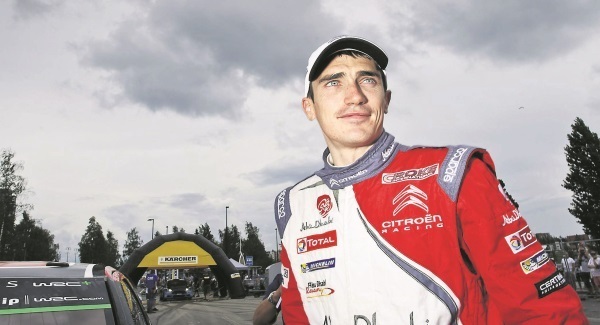
Craig Breen might just be the most famous Irish sportsman you’ve never heard of.
As a driver for a factory team in the World Rally Championship, the sport’s top level, the 27-year-old from Slieverue on the Kilkenny-Waterford border, now living in Italy, is a household name in Europe but an altogether more anonymous figure at home.
“I couldn’t go anywhere in France or Finland now without being recognised,” he says. “In Finland it’s their national sport — rallying first and ice hockey second. For some reason here, the sport just falls under the radar. I don’t know why. It’s popular amongst the community but, outside, no.”
Irish motorsports enthusiasts will know all about Craig Breen, of course. He was born into that community, inheriting his love of cars and speed from his father Ray, twice a national rallying champion.
“I was just brought up around it, knew no different from when I was a child,” he says. “It’s the only sport I know. I was just clinging onto him from when I was an infant. I always wanted to be as close as I could to the car. I travelled to every single one of his events. I just loved everything about it.
“I grew up with adults as friends because of the sport I was in. And that didn’t bother me. It ended up I matured quite quickly as a young fella. There were a couple of lads rallying in my area and I loved to finish school and go down to the garage and give them a hand getting the cars ready. I preferred that to hanging around with lads playing soccer or hurling or whatever. I had no interest in that.”
Karting came first, a sport at which he progressively excelled from age eight through to 18. It was his entry into what he calls “this whole world of speed” and, from then on, he says, “it was all I ever wanted to be, all I ever aspired to.” While karting and rally driving are not exactly chalk and cheese — “it’s still an engine and four wheels,” he points out — once Breen took to the open road there was to be no turning back. When I ask him if, for the uninitiated like me, he can describe the thrill of rallying, his face brightens and he leans forward in his chair.
“A race track and a public road are two completely different things,” he begins. “It’s the feeling. It’s the sensation. It’s so raw and so pure. It’s not like a track, a confined space with barriers. You’re doing 130 miles an hour down a road that, an hour or two before, was open to farmers and commuters going about their daily lives. It’s a public road. That’s what gives me the buzz.
“You’re making your way through towns and villages, heading across the country, getting to see some amazing landscapes. Or at least you see them when you’re doing your recce, that’s when you take it all in. The whole thing feels like you’re taking part in an adventure because you’re not stuck within the restriction of a track.”
A victorious weekend for @Craig_Breen & @AHayesNav on #MortaguaRally behind the wheel of a #DS3R5! Congratulation guys! 🏆🚗💨 pic.twitter.com/FeA5ISTEx7
— Citroën Racing (@CitroenRacing) September 25, 2017
This sense of freedom also explains why Formula 1, for all its ostentatious glamour and dominant profile in the world of motorsports, no longer spins his wheels.
“When I was getting better and better at the karting as a young fella, there was a point when maybe I was destined to head towards the track but, to me, it’s a bit boring,” he says. “My heart is in rallying. I love the challenge, I love how diverse it is: we drive on tarmac, gravel, snow, ice, mud. Rain, hail or shine, you never stop. I’ve never heard of a rally being cancelled because of weather conditions.
“I mean, we drive in fog, we drive in visibility of five, ten metres, and you have to rely completely on your co-driver. There’s times you couldn’t even see the end of the bonnet of the car so you have to listen to what he’s saying — and try as best you can.”
That symbiotic relationship between driver and co-driver is changing as the sport evolves, however.
“Technology has crept in,” he says. “We use an onboard camera now and when we finish the recce we can watch it over and over and over until you learn it. The technology is there and if you don’t embrace it someone else will. Rallying is even faster now because everyone is driving from memory. Really, it’s taken the whole sport to another level.”
The everyday physical and mental commitment which the sport demands of its practitioners is considerable.
“It’s underestimated how fit you need to be,” he observes. “You could be getting up out of bed at five in the morning and be in a stage at 6.30 or 6.45 and drive all day long before getting back to the hotel at midnight. And then you do the same thing again the next day. There’s not many sports you do at that intensity for the duration of three or four days.
“You can have ambient temperatures inside in the cockpit of the car of 55 to 60 degrees all day long. There are irregular sleep patterns. There are irregular eating patterns — you might eat at five in the morning and then at two or three in the afternoon and not again until 11 at night. During the rallies we have chefs who prepare meals that try to keep us going as long as we can. But we still have to take a lot of things in the car, snacks and gels, stuff that will give you a quick boost of energy. You really need a lot of aerobic fitness.”
Then there’s the difficulty of adjusting to normality when the intense adrenaline rush subsides — a particular challenge, you suspect, for someone whose mind appears to be as one track as Craig Breen’s.
“It’s tough, I struggle with it,” he admits.
“Monday morning is hard when you get back to reality again. So you just try and throw yourself back into it by preparing for the next rally. I’m lucky now in that I’ve a big programme this year so there’s always something happening and not a lot of downtime.
“The downtime? I hate it. You’re just waiting to get going again. It’s a high-octane, high-stress sport and but you get used to being in that environment all the time. So when you’re back at home on a Monday with a cup of tea in your hand, there’s always a feeling of ‘what do I do now?’”
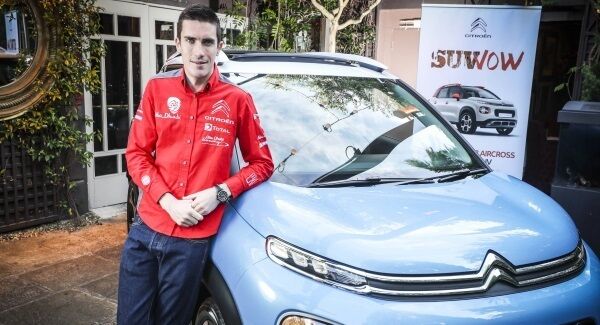
Ask him if there’s anything at all in his life which allows him to switch off and unwind, and his answer is immediate and emphatic.
“No. And I don’t want anything else. Is that healthy? Eh...maybe not. Maybe I should have something else.”
He doesn’t miss a beat when I observe that there’s a fine line between passion and obsession.
“I’m probably well over that line,” he shoots back with a grin.
“But I love it. It satisfies me in its entirety. Yes, I’ve had to make a lot of sacrifices. But that’s the way it is because I’ve dedicated my whole life to this. I’m prepared to throw whatever is needed at it. OK, maybe when I’m an oul fella I might look back and say, ‘Jeez, that was a bit stupid’ but, at the moment, I’m fully focused on my goals.”
Spend even a brief amount of time in Craig Breen’s company and it quickly becomes
almost impossible to imagine what his life would be like without rallying.
But that was a prospect he was forced to contemplate after tragedy struck during the Targa Florio rally in June 2012 when Craig’s Peugeot 207 crashed into a roadside barrier, resulting in the death of his close friend and co-driver, 24-year-old Welshman Gareth Roberts.
“A side-rail penetrated directly at the front of the car,” Craig recalls. “In Sicily, the barriers didn’t dip into the ground and it basically went through like a blade into the cockpit.”
Grief-stricken, he felt he had no option but to give up the sport he loves. Five years on, he still speaks emotionally but with unflinching honesty about that darkest day.
“I was devastated for losing Gareth,” he says. “I grieved for him but I also grieved for the loss of my sport because I thought that’s what I had to do. I thought that’s what the protocol was.
“Something like that happens and you have to stop. But I remember I called my dad that night and he said, ‘you don’t have to stop, it’s you that’s saying that you want to’. And I said, ‘I don’t want to but I know I have to stop now.’ And he said, ‘no, you don’t’.
“Gareth’s family were behind me too and so I decided, very, very quickly, that I would go back.
“The next rally I did, Gareth’s brother Dai was with me. He does a lot of co-driving and I just wanted the two of us to take that first step together before we’d go our separate ways again. It was a tough one but it was the right way to do it. That was the environment in which I had spent all my time with Gareth, really, and I felt that’s where I could be close to him. It all just felt right.
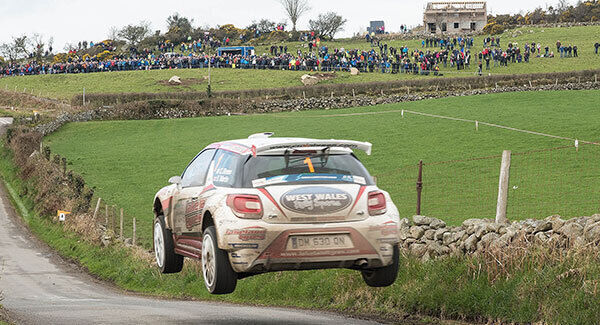
“The first big rally I did after that, in Finland, I had quite a big accident. Some people who saw it said it was horrible to watch. It was a far, far bigger than the accident I’d had with Gareth and yet I got out with a broken wrist, relatively unscathed. I took that as a message that what had happened in Sicily was a complete freak and the chances of it ever happening again were so slim. And, touch wood, since then I’ve been safe.”
After a breakthrough podium finish in Finland in 2016 had helped him land the elite role of driver with the Citroen works team for the start of the 2017 season, Breen is currently in seventh place in the WRC standings with three rallies (Spain, GB and Australia) to go before year’s end.
However, even a man who is forever in a hurry knows he will need to be patient in pursuit of his ultimate ambition to become world champion.
In motorsport, not everything is within the control of the driver.
“You need to have a good package underneath you and this year, unfortunately, we’ve been struggling with the car,” he explains. “It’s the first year the team has come back with a brand new car. All the regulations have changed and the cars are much faster. It’s just taken a little bit of time but it’s starting to go in a good direction and we have another year next year to get the thing right. I’m confident it’s not too far away but all the ingredients need to come together.”
And beyond that?
“I can’t see beyond a rally car,” Craig Breen admits. “Forty is the normal age for retirement in this sport but if I could do it at 70 I’d still want to have a go at it. Maybe in 13 years’ time I might say something different but, right now,
nothing else satisfies me like being behind the wheel of a rally car.”

CONNECT WITH US TODAY



Be the first to know the latest news and updates