Patrick McMillan Q&A: ‘Sometimes you hit jumps that take you out 50 metres but you don’t really do this sport if you’re not a little crazy’
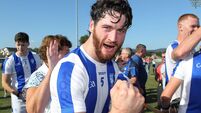
Hurling was the first sport I tried growing up in Ogonnelloe but I took up rugby when I went to school in Kings Hospital in Dublin. I played wing and centre and made the Leinster U19 team and then I went to DIT and was playing for the college and U20 for Lansdowne. But when I realised I wasn’t going to make it in rugby I looked for another sport I could represent Ireland in and went to skiing.
If you’re not making it into the academy system you just know. Of the lads I played with on that Leinster U19 team only a handful of them have made it. Tadgh Furlong and Jack Conan are the only two that have gone the whole way so far but a few others are with Leinster.
We always used to go skiing over Christmas as a family. In the new year of 2012 I told my dad how much I’d enjoyed it and asked him if he could give me the support to see if I could make something of it. I started skiing when I was 12 and only started racing at 21 but it has really worked out for me in the last two years.
I live and train in Austria. My coach of the last three years, Hans Frick, worked with Austria’s World Cup team for years. He’s been the director of the Moldovan ski federation for the last 10 years. He trains myself, a Moldovan athlete, a Japanese skier and another from Ukraine, we’re like a league of nations! We share a house in a village called Flattach and train together. Our goal is to race fulltime on the World Cup circuit and have some non-traditional countries competing in it, to make it interesting for everyone.
Not really. I spend 10-11 months a year training, it’s pretty much non-stop. The racing season starts in November and ends in April when we go home for 7-8 weeks and then we start all over again. We can train on the glacier here throughout the summer months and it’s usually six hours a-day, three hours on the mountain in the mornings and three hours of dry-land each evening.
At the moment I’m skiing in FIS races and on the European Cup circuit and I was on course to compete in World Cup races for the first time this year. The European Cup is like the ‘championship’ in soccer and the World Cup is our ‘premier league’. To race in World Cups you need to keep your FIS points under 80. Before my crash in December, I had 52 in downhill and 59 in Super-G, so had qualified. Two years ago I was outside the world’s top 1000 in downhill. A year later I was in the 400ths and by the end of last season I was ranked 288th so that was solid progress.
I was only about 25 seconds into a training run, coming around a left-hand turn when my skis crossed and I started somersaulting. I was going around 100kph so when I came to a rest eventually the first thing I checked were my knees. Thankfully they were OK but when I went to pick up my poles I felt pain in my shoulder, reached back and could feel a bone sticking out. I had surgery on a ruptured clavicle the next day.
Yes, my events are Super-G and downhill. In Super-G (super giant slalom) the top speeds can be 110-120 and downhill is like Super-G but at even higher speeds. The average downhill course is about 4km long and you’re down it, on average, in one minute and thirty or forty seconds. When it’s icy and bumpy that’s what really takes the power out of your legs and that’s why we spend the whole summer training so hard on our fitness. Once you start losing power the turns and your technique starts going.
No. My favourite thing is the speed and adrenalin, from going so fast and being right on the edge. Sometimes you hit jumps that take you out 50m and your heart might be in your mouth a little bit, but you don’t do this sport if you’re not a little crazy! In ski-racing today if you don’t push yourself to the limit you won’t win. It’s a very fine line between success and crashing.
Yes, after a few weeks I had to accept I wasn’t going to be going to the World Championships and what was even worse was that I also missed the European Cup race in Kitzbuhel a few weeks ago. As a downhill skier the ‘Hahnenkamm’ in Kitzbuhel is the one race you always want to do. They say a first place in the World Cup there is worth more than an Olympic gold. It’s like the Masters in golf.
Austrian skiers have something inside of them that I can never learn because they’re skiing since they were small kids but, with enough time, especially in the speed events, I can get there. Dave Ryding, an English slalom skier, was second in the Kitzbuhel World Cup recently. The top downhill skiers are now aged around 32-33 so I have time to build up the experience I need.
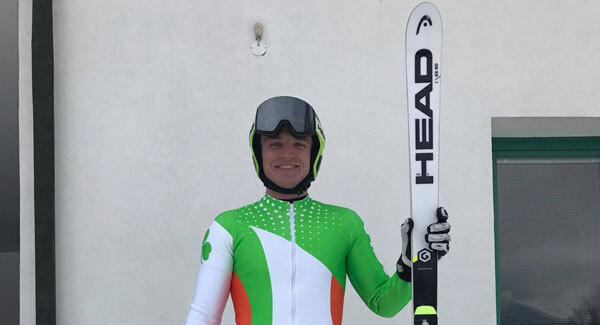
The Irish Snowsport Federation helps me out as much as they can and I have some sponsorship which isn’t easy to get. Luckily ‘Head’, one of the ski companies, sponsor me and I have about 14 pairs. You need different ones for different disciplines and, even within Super-G and downhill, you need different skis for different weather conditions.
Getting your mates to teach you is a big mistake. It’s a dangerous sport so, if you’re a beginner, start off slow and get lessons. Powder may look and feel fantastic but it’s even more dangerous, so learn to ski properly on the slopes before you try it. In powder you need to ski with much more feeling in your feet but it’s a lot of fun.