Players must wield their power wisely as relationship between professional sports and TV deals fades
Wall Street Journal reporter Matthew Futterman’s Players: The Story of Sports and Money, and the Visionaries Who Fought to Create a Revolution asks some tough questions about money and sports.
“I wanted to write a book about the creation of the modern sports world,” says Futterman.
“How we got to the point where we had this billion-dollar industry that was incredible and ubiquitous and inspiring — but also sort of crass and over-commercialised, and which really annoyed us at times.
“I wanted to try to figure out where it started, what the beginning was, and the more I talked to people, the more they told me that the beginning was Arnold Palmer and Mark McCormack, the creation of Palmer as the first modern sports entrepreneur.”
Palmer, the legendary golfer, and McCormack, whose International Management Group would eventually dominate the sports agency business, were the ones with the foresight and the ability to put their vision into operation.
“What eventually I came upon was the idea that what enabled McCormack to have such a great impact on things was that he was the first person, really, to realise that the athlete on the field was really undervalued — and that the result of being undervalued meant they didn’t make much money, and they didn’t have time to practice.
“If you to back to that time, the fifties in America, a lot of them had second jobs — the golfers were teaching golf on courses, the baseball players were working in hardware stores in the off-season, all of that.”
McCormack’s plan was to improve the athletes’ remuneration — and thus improve standards all around. His basic idea was that the only way sport could become really big would be to get more money into the hands of the athletes, because only then would they be able to dedicate themselves to their craft.
“And if you did that, the competition got better, which meant more people would pay to watch those competitions, and that would mean more money would be invested in putting that on television, money that would filter down to the athletes.
"That would make those jobs — working as professional athletes — more attractive, and more people would compete to get those jobs, and the whole system would snowball - it would build on itself.
“McCormack was the first man to have that grand vision, to see how money could have an impact on what we were seeing on the field. More money, more exposure, more training, more of everything, really.”
What appears to be capitalism red in tooth and claw, however, is tinged with a little socialism. Futterman points out that “some form of a level playing field” is preserved in American sports to preserve competitive balance between teams.
“What they’ve worked out is a compromise. In the US the sports sort of believe in parity, that everyone should enjoy some form of a level playing field.
“So we have the draft in a lot of the pro sports, with the worst teams picking first, and the best teams picking last.
“That means there’s a balance. You can become a free agent and take advantage of the free market —but only when you’ve been tied to your team in baseball for six years, or three years in the case of football — and even within those rules there are different elements. If you’re not happy with what your team is paying you, for instance, you can go to arbitration and appeal for a higher salary.
"It’s collectively bargained, but the end result has been to get athletes, in most cases, about fifty per cent of the revenue, whereas before they got a fraction of that.”
The increase in player wealth is a double-edged sword, of course. Futterman points to the improvement in the sporting product but also acknowledges the problems it’s brought — around the world.
“Generally I think money has been good for sport, that it’s improved things. You mentiond the Premier League, I don’t think anyone would argue that that, as it exists, isn’t better than the First Division in the eighties.
“The stadiums were awful, the games weren’t as good — now the players are so much better in terms of their speed, their fitness, their precision. It’s a much better product now.
“There may be a sense that when the athletes took all this power that they misused it, and in the book I talk about that process, beginning in the eighties with Michael Jordan.
"Nike turned him into a superhero and a cartoon character, a legend that was ridiculous, but what that meant was that players became obsessed with ‘what’s my legend, what’s my story’ rather than focusing on winning championships, on being a good team-mate, on performing. A lot of the emphasis moved to ‘how much is my shoe deal worth’.
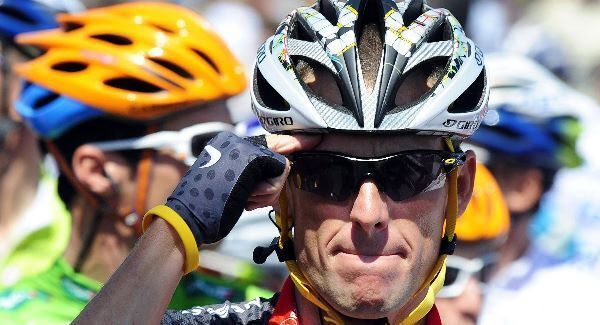
“And that danger brought us to situations like Lance Armstrong, where all an athlete cares about is his legend, and maintaining that legend, and he’ll do anything to keep maintaining it, cheat and lie.
"You had those ridiculous commercials with ‘what am I on, my bike six hours a day’, when he was on a lot more than his bike.”
One of the key changes on the horizon that Futterman identifies is the difference in media consumption and its potential impact on professional sport. Teenagers abandoning traditional media won’t fund lucrative sports media deals, after all.
“I think in the US you’re about to have a real change in the economics of sport because of the way the pay-television packages are structured.
“We buy cable TV as a package, with sport as part of that package, but that system is falling apart, with younger people just watching what they want on computers and tablets. The decline in cable TV is bound to have an impact on those huge TV deals.
“I think someone is going to come up with a new economic model to sustain those media revenues; sports are going to have to work hard to sell their media products to a generation of fans that haven’t grown up addicted to those products, the way their parents did.”
Players: The Story Of Sports And Money, And The Visionaries Who Fought To Create A Revolution by Matthew Futterman is published by Simon and Schuster.

CONNECT WITH US TODAY



Be the first to know the latest news and updates