‘At least you know when you achieve the records, people know you’re clean’
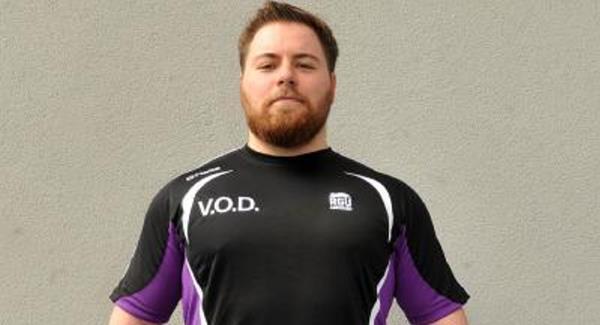
On my third attempt to do a 250kg squat, I suppose I was a bit arrogant and lost focus a little and ended up injuring my back. A minor bulging disk. It kept me out of a month.
Yes, everyone who lifts heavy weights will have bulging disks. It’s just this was hitting nerves. It affected my performance. Mine wasn’t damaged too bad but I was in a fierce amount of pain. Afterwards, it was taking me five minutes to get out of bed.
Yeah, I carried on with the competition and benched 177.5kg, which was a European Junior bench record. It was a competition PB but it was a bit below what I was aiming for. I’d lifted more in training but the back was affecting me so I couldn’t really push it the whole way out.
For bench, definitely. Even lifting the bar off was causing pain and I was being assisted lifting it off. My German coach Michael Groh is qualified in muscle therapy. He did a few frictions on me. We changed the technique as well. More the legs taking the weight as opposed to the back. Thankfully that worked very well. Then we said to hell with it, we’d go for the last one — the dead lift — to get the total world record. So I had to put 15kg on my PB — a weight I’d never even touched before. Hadn’t even gone near it in training.
It was a fierce struggle. But the 270 came off the ground that day so we’re glad that’s the day it did.
After the injury we were just trying to finish the competition. I’d feel bad if I had to pull out after the amount of support I’ve had. My family got me my flights and everything. So I wanted to finish. Retaining the title was the main goal. But I just felt good with the deadlift and we thought there was no point leaving unanswered questions. My coaches, Michael Groh and Calum Young, were great that day.
I got into the weights through rugby. I played for Christian Brothers College in Cork. But being honest, I didn’t have the competitive edge like I did for powerlifting. I was very easy-going. But I really enjoyed the gym sessions. Of everyone on the panel, I was the one most ready for the gym sessions at half-seven in the morning. I never missed one.
But to be honest, I was lifting like an idiot. I was terrible. One of my friends took me aside and showed me how to lift properly and I haven’t really looked back. Then Michael and Calum stepped in and took me to the next level. I started powerlifting in second year at Robert Gordon University Aberdeen. So I’m three years lifting properly.
The players are getting bigger and bigger alright. The only thing I would say; as long as they’re being trained properly in lifting weights. Because when I was younger, I lifted completely wrong. I was lucky I didn’t injure myself. It’s not exactly a sport where you can go in and know what you’re doing. A bit like rugby itself. Everyone thinks it’s all strength. But there’s a lot of technique involved. It’s not just picking up a weight. There’s different aspects. When you learn them, the weight feels a lot easier in your hand instead of just horsing it up.
I was a lot smaller when I started I was 12 stone. Now I’m 17 and a bit. So I’ve gained a lot of weight.
I’d like to think so (laughs) but not when you’re lifting the heavy weights, unfortunately. You have to carry a bit of extra luggage.
Exactly, that’s the best way to describe it. Everyone thinks I’m a rugby player. You have to make sure you’re eating enough. There are times when you’re gaining weight where you have to eat when you don’t want to. Force yourself to eat. I don’t have to be too lean, but you try to keep it as lean as possible. You can’t be eating cake the whole time.
The sport is picking up across the UK. Rowing was the big university sport, but a lot of the unis are getting into it. Even in Ireland, it’s growing massively. The first competition I went to there was only 140 there, but the following year, it was up to 230. Now they have had to bring in regional qualifiers for the bigger comps.
Definitely. For a strength sport, you only reach your peak in your 30s. If you watch the world’s strongest man, they’re all 36 or more. The best lifters are always the ones with experience. You get guys in their 40s who are still phenomenal.
We’re 100% amateur. There is money in the sport in America, but I do it for personal satisfaction. I train four days per week - two and a half to three hours each session. Probably half an hour of that is spent warming up. Then two or three months out from competition, it gets more serious, and you’re also managing your weight, etc.
At least you know when you achieve the records, people know you’re clean. There are several different federations, a bit like boxing. It can be a bit annoying, because the best can’t go up against each other. We’re in the 100% drug-free federation. If you’re caught, you’re banned straight off for life. Never allowed back in. It stops you even considering it. Not that I ever would.
The federation do quite regular out-of-competition testing. And they do random testing on the day or they test guys who look suspicious. I was tested on the day I broke the European bench and squat records. They do catch people out. You get the odd person who comes in and chances their arm. We lift a lot less than the federations where they aren’t as strict. But when you’re in the sport, you can pretty much tell who’s on the stuff and who’s not.
I think it would improve things if others adopted the life-ban approach instead of a suspension or a fine. Because professionals won’t take a risk with their careers.