Paul Giblin fighting back against cancer and ‘all-in’ for gamble of life
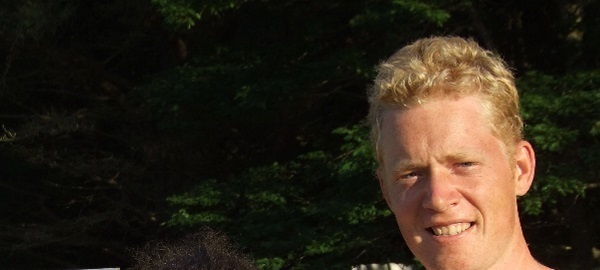
He’s one of the country’s toughest, most versatile competitors. Champion rower, international cyclist. He has until January 13 to win the most important race he’ll face ... against cancer.

Paul Giblin fighting back against cancer and ‘all-in’ for gamble of life

He calls himself a poker player now. High-stakes stuff. And he has to go ‘all-in’, because options are running out.

Trouble is, he needs someone else to put cards on the table too. He needs your help. Somebody’s help.

Sports psychologist Fritz Hagerman described men like Paul Giblin thus: “Great rowers are physiological freaks; but, that quality is minimal compared to their psyche and to their ability to essentially experience pain — and experience discomfort — and yet be able to do the work knowing that it’s going to continue.”

Giblin, winner of 18 national rowing titles, has drawn deep on that well of endurance and resolve over the past two and a half years.

This is the story of his toughest battle.

“It was April 2012. I felt 100% but there was a lump on my neck. I was in the army and I was back training for rowing. I remember doing tests on the machine and doing quite well.

“But I went to the doctor and she said I needed to get the lump checked out. So I did. I caught it very, very early, but that’s how it all kicked off. I was 29.”

What he caught was Hodgkin’s Lymphoma, a cancer that, if detected early, can be eradicated in the majority of patients with one blast of chemotherapy.

He was diagnosed in Naas Hospital as it was close to where he worked in the Curragh, had the requisite treatment that summer back home in the College Hospital in Galway and made plans to return to the barracks.

Problem, solution. Move on. Giblin talked about it like it was a stone in his shoe.

But two months later, his cancer was back. More chemo, this time in November. Another scan followed at Christmas, but the curse of a thing had returned to his system yet again. His life no longer belonged to him. Doctors and oncologists picked and poked and scanned him for clues. They came to the conclusion that he should consider a stem cell transplant as there was no guarantee the outcome would be different with chemo next time around.

The irony of it all is that Giblin possessed a physiological make-up most of us can only dream of having.

His late trainer, Tom Tuohy, called him “an extraordinary talent”. And with good reason too because if he was ordinary he’d not have won those national titles, or broken the course record and won Ireland’s first medal for 130 years at the Henley Royal Regatta (with the help of three more freakishly talented rowers), or a World U23 bronze medal, or, after switching to cycling, ridden on the Irish Track Team in the World Championships less than a year after taking up the sport.

Where once he could smash records and rivals with the stroke of an oar, he was now clinging to handrails to get to the bathroom, such was the debilitating effect of cancer.

He opted for the transplant and that was performed in April last year, but there was more chemo before it and radiotherapy followed in May and June.

Giblin was being deconstructed, rewired and rebooted using the most harrowing procedures imaginable.

But it worked … if only for a while longer.

He had been full of optimism. “I went back to work in November 2013 and everything was going fine,” he said. “I was back training, I even did a couple of triathlons this summer and everything was back to normal. I got engaged last February (to Cate. The couple married on Saturday).

“But on September 11 it all started again. I had a bit of a cough that wouldn’t go away. It was back. I started chemo again in October, I’ve three rounds of that done and I have one more at Christmas…”

He’s 31 now and has won the opening three rounds. But this latest setback has really rocked him.

“The third time it took me a long time to get up for the fight again and it was just because I know what it all entails,” he exhaled.

“The first time when you get diagnosed it’s a bit of a novelty. That sounds so strange to say but you just don’t know, there’s a bit of excitement almost. I was always very, very positive and when it came to the second time I knew it was a lot more serious but it was almost just another test.

“I said ‘it’s no hassle’. Even when the second chemo didn’t work there were still other options at that stage and it was always the goal to get the transplant and I got that. At that stage I felt that’d be that, it worked and I was back to normality and I wasn’t worried about stupid little things, you know yourself, whatever it could be. Everything was fine but there was always a risk that it would come back but I was just living life as normal.

“There was no one mollycoddling me, life was normal, I was going out having a few pints and going training and working and enjoying myself and then obviously September came and it was a massive blow because the options are getting limited. The more options you go through you can’t go back and do them again, so this transplant is …. there’s a good chance it’ll work but there’s no point stewing over it … it’s very, very risky.

“The mortality rate with the transplant is about 30-40%. You’re either going to win big, or lose big, it’s like going ‘all-in’ in a game of poker. It’ll go one way or the other.”

This next transplant he speaks of will take place in St James’s Hospital on January 13. A ‘Mismatched Stem Cell Transplant’, where he’ll be given some other person’s cells in the hope those cells will fight the cancer. Sometimes, donor cells match his own, but the vast majority don’t.

“I did it before where I got my own cells back and that allowed me to regenerate but this time I am getting someone else’s cells back, so there’s two things; really strong chemo and, secondly, I’m going to be adopting some new person’s immune system, which is going to fight the cancer.

“You look for a perfect match, and ideally the sibling is the best possible match and I’ve two sisters but they didn’t actually match up against mine. So what has to happen now is it goes to a global registry.

They basically search the whole registry and they haven’t found a match just yet. What they have found is a mismatch, which means they’ll go ahead with the transplant but it makes it even riskier.

“The side effects of the transplant are worse (with a mismatch), and the relapse rate is slightly higher.. It’s needle in a haystack kind of stuff but it’s worth a chance.”

* To find out more about the Global Registry, check out the FAQ section of the GiveBlood.ie site. For more on Paul’s story, go to the #marrowmatch website.

More in this section

Cookie Policy Privacy Policy Brand Safety FAQ Help Contact Us Terms and Conditions

© Examiner Echo Group Limited