F1 to ditch controversial double-points system
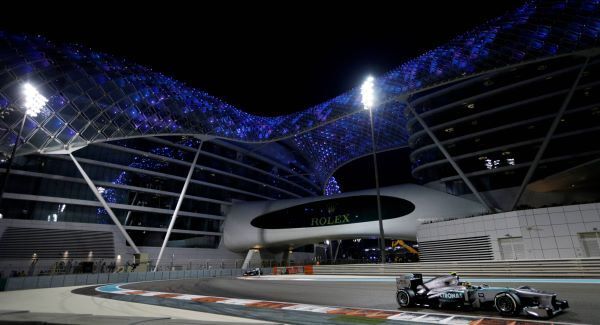
The controversial double-points system introduced into Formula One for the past season has been abandoned after just one year.

F1 to ditch controversial double-points system

The World Motor Sport Council (WMSC) yesterday ratified a decision taken following a meeting of the Formula One Commission in Geneva last week.

The scheme was introduced at the behest of supremo Bernie Ecclestone in an effort to prolong the life of a championship and attract high television audiences through to the final race.

Ecclestone’s original concept was for the final three races to carry double points, but it was decided at last year’s meeting of the WMSC the system would only be employed for the closing grand prix.

Upon its announcement the decision was greeted with overwhelming condemnation by fans, whilst drivers past and present also voiced their disapproval.

The recent campaign would still have gone to the wire with the final race in Abu Dhabi even if there had been no double points on offer.

Lewis Hamilton, however, could have lost the title on double points to Mercedes team-mate Nico Rosberg if a certain set of circumstances had unfolded.

Mercifully for Hamilton he emerged victorious, claiming his 11th win of the year, and with it his second world championship.

Following the WMSC’s meeting in Qatari capital Doha, it has also been decided there will be no standing restarts behind the safety car.

The F1 Commission voted in the idea earlier this year, but following a thorough review of the potential difficulties that, too, has been axed.

It has also been revealed Formula One faces a potentially record-breaking 21-race schedule in 2015, with the Korean Grand Prix surprisingly re-emerging on the calendar. It has been given a ’to be confirmed’ date of May 3, just a week ahead of the Spanish Grand Prix.

Elsewhere the WMSC has agreed to the introduction of the ‘virtual safety car’ (VSC) which was successfully piloted at the end of practice sessions at recent grands prix.

The system arose following Jules Bianchi’s accident at the Japanese Grand Prix in early October, with the Frenchman still in hospital in Nice as he recovers from severe head injuries.

The FIA quickly reviewed how best to control a driver’s speed during incidents where a safety car is not required, deciding the VSC, where a speed limit is imposed around the track, to be the ideal solution.

Meanwhile the WMSC has also stiffened the rules regarding the awarding of a super licence, the document that allows a driver to compete in F1, which will come into force for 2016.

In past years all a driver primarily had to do to obtain a super licence was complete a total of 300kms on track in an F1 car.

Now any driver will be required to hold a valid driving licence, be at least 18 years of age, and understand the sporting regulations and international sporting code.

He or she must also have two years’ experience in minor formulas, whilst a points system requirement will be also be applied based on a driver’s results in those formulas.

x

More in this section

Cookie Policy Privacy Policy Brand Safety FAQ Help Contact Us Terms and Conditions

© Examiner Echo Group Limited