Living proof style never goes out of fashion
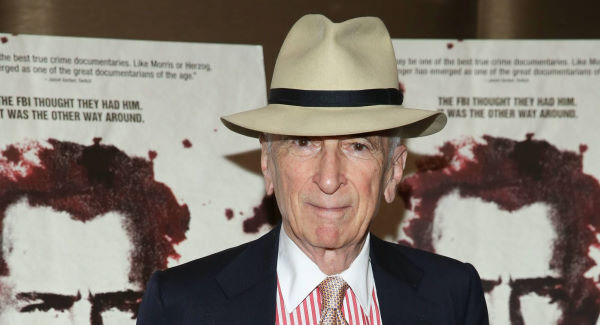
“You’re from Cork?” says Gay Talese. “I know Cork. That’s where my wife’s family comes from.”
With that Talese is off and away.
Doyen of New Journalism, the man who wrote Frank Sinatra Has A Cold (“The greatest literary-non-fiction story of the 20th century” — Vanity Fair) and The Silent Season Of A Hero, about Joe DiMaggio (the opening piece in The Best American Sportswriting of the Century), wants to give me his wife’s background.
“Her name’s Nan Ahearn. Now Talese. Her great-grandfather came from Cork and became a police officer in New York.
“His son became deputy fire commissioner of New York, was awarded many medals for bravery, and his son in turn went to law school in Columbia. His daughter, then, married me.
“I’ve never advertised that, though then again I didn’t think I’d get the chance to.”
Talese started in 1956 with the New York Times (“My only job,” he calls it) and his first two years were spent as a sportswriter.
“I left sportswriting in 1958/9 and went into general assignment, but I still did occasional sports pieces.
“By 1965 I’d left the paper but still went to sports events: I knew people who could get me tickets, and at an old-timers’ game in Yankee Stadium, I was introduced to Joe DiMaggio by an old photographer.”
DiMaggio, the great baseball icon of mid-century America, seemed cordial, and Talese said: “If I’m ever out in San Francisco can I call you up for an interview?” “Sure,” said DiMaggio.
“Now, sometimes at parties, people say things they regret later,” says Talese. “I probably shouldn’t have taken him at his word, but I was young then. I wrote him a letter, told him I was going to San Francisco and that I was thinking of dropping into his restaurant to make an appointment to see him for an interview. He never answered the letter but I went to San Francisco and went to the restaurant anyway. And that’s the opening of the piece.”
Talese’s lengthy feature for Esquire sketches what happened as the writer tried to talk to the sports icon; it’s realistic, not hagiography, and begins with a man waiting for DiMaggio in a restaurant.
“It’s clear to the reader who reads carefully that I’m the guy in the restaurant,” says Talese.
“I didn’t use my name because you had to use the third person in that piece, it had to be a little remote.
“DiMaggio was very remote, not at all like the guy I’d met in Yankee Stadium, but I made it my business to meet a friend of his, Lefty O’Doul, a former baseball player.
“I cultivated O’Doul. Bought him dinner, brought him for drinks. I told him I had the greatest admiration for DiMaggio, that I wasn’t going to do anything embarrassing, ask him about Marilyn Monroe or anything like that.
“O’Doul spoke to DiMaggio and then invited me along to watch them play golf.”
When Talese’s father had taken up golf the young Gay would go along to caddy. His father wasn’t keen on losing golf balls, so Talese Jr developed an eye for following the ball, which helped with DiMaggio, who was “shanking the ball all over the place — the woods, the weeds, everywhere.
“I found two of his balls, though, and that changed our relationship. I’d served a purpose, so he took more of an interest in my welfare.
“When they finished the game of golf they invited me for a drink with them in the clubhouse, so I graduated from being an observer to being a fellow drinker.”
When DiMaggio said he was going to spring training in Florida, Talese offered to go with him, to carry his bags.
“I graduated from caddy to porter, but as a reporter sometimes you’ll do anything to stay with your subject.
“When we got to St Petersburg I tagged along when he’d go out and pick up the check — I picked up a lot of checks, because DiMaggio didn’t pick up checks at all — and everything was going well until something happened which screwed it all up.
“My Irish wife called me from New York.”
Nan called Talese and pointed out that it was cold in New York but it was warm in St Petersburg, and seeing as Gay had done his work, more or less, how about she came down and sat by the pool while he hung around with Joe DiMaggio, she had a manuscript she could work on . . .
“Sounded good to me, so I said fine, and I told DiMaggio that she was coming down but it wouldn’t interfere with what we were doing . . .
“DiMaggio said nothing. I’d been driving him out to the ballpark every morning but after I told him Nan was coming down that was all over. When I rang and asked if he wanted a ride to the ballpark the next morning, he said, ‘No, I have another ride, you take care of your wife, I’m spoken for’.
“And he hung up. I said to myself, ‘Jesus, what is this about’? I went out to the park myself, there were a lot of people there, and DiMaggio was very aloof and I didn’t talk to him.
“I went back and told my wife, and she said, ‘This is ridiculous, I’m going back to New York’ — so she had one night and one day in St Petersburg. I hung around one more day, and I saw him one more time, at the ballpark when someone talked him into taking a swing or two with the bat. And that was the end of the piece.”
Talese met DiMaggio once more, a quarter of a century later. When Time magazine was celebrating its 75th anniversary the people who’d been on the front cover were invited to a big bash at Radio City Music Hall: former Presidents of America, movie stars, Mikhail Gorbachev — and Joe DiMaggio.
“An editor at the magazine invited me along,” says Talese. “There were cocktails before the big ceremony, and I saw DiMaggio there. I caught his eye and said, ‘hello, Mr DiMaggio’, and he looked at me and said, ‘You still writing for that rag?’ I said, ‘No, I’m not’, and he walked away. And that was the last time I spoke to him.
“Did I see it [the piece] as having such a long life? No. I think it works as an example of what you have to do, sometimes, when the person you hope will talk to you doesn’t talk to you.”
Time is the key, as Talese says. It made all the difference. “I could hang around and wait, with DiMaggio, with Sinatra.
“The other key thing was using minor characters in those pieces.
“They’re not minor characters — they may seem minor because they’re not famous, they’re not Frank Sinatra or whoever, but the people around those famous people can be amazingly productive and useful to you as a writer.
“You learn to do that from reading good writers, to see how they use people and characters — Frank O’Connor, John O’Hara, Irwin Shaw, great short story writers.
“As a journalist my only ambition was to write short stories with real names: to be a story-teller without changing the names, which is what I’ve always done.
“Being a non-fiction reporter, you’ve got to be accurate, not make up anything, obviously — and you shouldn’t extend your imagination to make a story more colourful or dramatic.
“If you know your people well enough, or if you hang around, you’ll see the scenes, but you must have thesensibility to see the scenes.
“And if you read fiction — I never wrote fiction apart from one short story — you’ll develop that.”
Talese also observed the other side of literary life: what happens when the writing stops.
“When I first came to New York, the guy who seemed to be having all the fun was Brendan Behan. I had records of him reading his poems.
“He’d appear in the White Horse Tavern and so on, but he was someone who put in my head that you could be a good writer and have fun, though he probably had too much fun, which shortened his career.
“I knew Norman [Mailer] pretty well, and he had a lot of fun too, though it didn’t shorten his career. John O’Hara had a lot of fun but it probably shortened his career, too.”
By fun does he just mean drinking?
“Well, drinking, and not being so trapped in your customary arrangements, including marriage.
“When I was in the New York Times, everything was going on among the writers and editors and copy-readers that you see in the advertising industry in Mad Men, which is a TV series I love.
“Certainly the drinking, carousing, the sexual cavorting in the newsroom at the Times — or the Daily News, the Herald Tribune, all of them — was as raunchy as what you see in Mad Men.”
Talese is almost as celebrated for his fashion sense as his writing, but it’s not an affectation. He believes dressing well confers gravitas on a journalist.
“Absolutely. I teach classes sometimes at colleges, including Harvard and Yale, and I meet kids wearing blue jeans and T-shirts, baseball caps turned backwards as though they were from the ghetto . . . ok, some of them are scholarship kids but a lot of them are rich.
“I tell them, ‘Do what you want, but if you’re going to be a reporter, dress up for the story’. Don’t dress for your college professors, okay, but if you’re going to be a journalist then dress with a little pride in your profession.
“It’s the only honest profession I know of. If you go into banking you’re a crook, even the clergy . . . but journalism is the only enterprise in a democracy which can keep a society clean, or at least try to expose the corruption rampant in all forms of life — Wall Street, politics, all of that.
“I’m not saying there’s no corruption in journalism. There is. But there’s less lying. In the big city room of the New York Times I thought there were fewer liars per square yard than there was in any comparable room in any other occupation. I always believed that.”
Talese’s father was a tailor and made his clothes when he was young, and the journalist felt sartorial standards paid off.
“I often felt dressing well and having good manners could break down the resistance of people. Including DiMaggio, finally.
“When I was on the golf course with him and his friends I wasn’t in blue jeans: I wore a suit and tie. It meant I wasn’t quite part of the group, or part of the serving class looking for a hand-out from these people.
“I believed my occupation demands dignity, and if the people who are journalists do not exude it or believe it, they are missing out on the full potential of the occupation.”
How he assembled his pieces also became part of the Talese legend. The tailor’s son used shirt boards to sketch out the shape of the profile.
“I took my notes on those little cardboard cards, and after I finished interviewing I typed them up.
“When I had the notes together I reviewed them into an organisational sequence — steps, scene one, scene two, all of that.
“I sketch the opening: Sinatra at a bar, two blondes, he’s smoking.
“Scene two — people dancing behind him, someone puts on In The Wee Small Hours Of The Morning, he doesn’t react.
“Scene three, Sinatra walks into the pool room, young guys playing pool there, Sinatra asks one of them about the boots he’s wearing, and so on.”
Talese didn’t avoid the leg-work, either: “After that happened, Sinatra talking to the young guy, I went after that young guy and asked him for his phone number, to follow up by talking to him.
“I met him and asked what he was thinking when Sinatra spoke to him, what did he think was going to happen — we went over that whole scene again. His name was Harlan Ellison, and he turned out to be a writer too.”
A fluent prose style isn’t the only reason Talese remains a legend to journalists: take the expenses claim he submitted for his Sinatra profile . . .
“I stayed in the Beverly Wilshire for that piece, a first-class hotel,” he says. “I thought it’d be a three-day visit, but then it extended beyond three weeks.
“After the first few days I called the editor of Esquire, ‘Look, maybe I should go to a cheaper hotel’, but he said, ‘No, stay there’.
“Amazing. Nowadays they’d tell you to go sleep in the car.
“Because of all of that my expenses got up towards $5,000. But you’re on the road, you’re hiring a car, you’re tipping porters, buying dinner for people you’re trying to impress . . .
“You’re following Frank Sinatra in his lifestyle: I was doing everything short of going to the tables and throwing down one hundred-dollar bills. I wasn’t doing that. But I was watching him gamble. And I wrote about that.”
Talese still writes. Fifty years ago he wrote The Bridge, about the building of the Verrazzano Bridge in New York. Now he’s revisiting the topic.
“Pete Hamill introduced me to a lot of the men, the iron workers, who worked on the bridge, many of whom were Irish, and I’m reviewing the book for a new edition now and revisiting a lot of them.”
That new edition of The Bridge comes out this October. Is he working on anything else?
“Yes, I’m working on something so wild I don’t want to reveal it.
Do you mind if I don’t tell you?”
Not at all. Gay Talese’s stuff is always worth the wait.

CONNECT WITH US TODAY



Be the first to know the latest news and updates