Paul Rouse: War will also shape the future of our sporting world
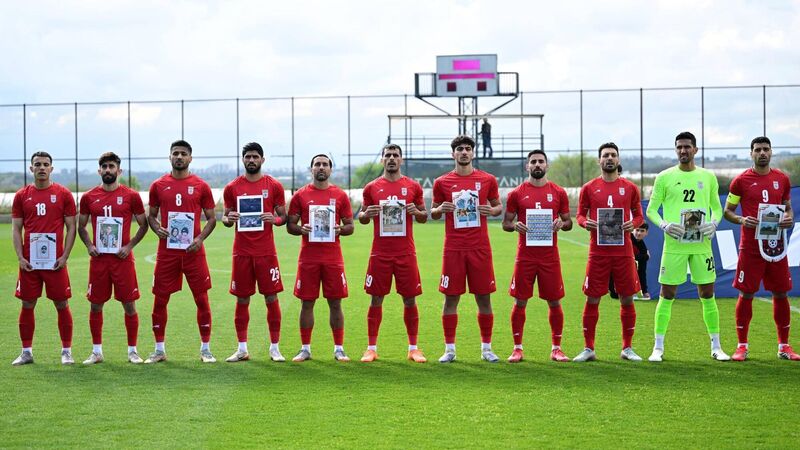
Team Iran, holding photos of children killed in war, ahead of a friendly match against Costa Rica at the Titanic Mardan Palace Sports Complex in Antalya, Turkiye. Pic: Orhan Cicek/Anadolu via Getty Images

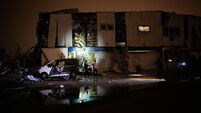
The bombing of Iran by America and Israel has had a significant impact on sport.
It may be argued that disruption to sport is the least of things to worry about when thousands of people are dying under a hail of bombs and bullets, when Americans and Israelis are bombing Iran, and Iran in turn is bombing other states around the Gulf.
The fact that the Israelis also continue to treat the lives of Palestinians with such disdain and are again destroying the lives of innocent people in Lebanon is also a disturbing truth.
The basic existence of many people rests in the hands (and warped minds) of men who are unfit to lead.
And yet, sport does matter. It entirely pales in importance beside the loss of lives, of course, but that does not mean it should be disregarded.
Because sport is such a vital part of the everyday life of people around the world, it allows us further insight into the impact of war.
This has been manifest at various levels.
All sporting events in Iran were immediately cancelled.
The Iranian women’s soccer team were competing in the Asian Cup in Australia, when the bombing started. They became entangled in a deeply concerning controversy which centred on the singing of the national anthem and the subsequent extension of humanitarian visas to some of their players by Australia.
The Reuters report that an Iranian state television presenter described them as “wartime traitors” for not singing their national anthem before the match against South Korea was chilling. It was a reminder of the appalling nature of the regime in Iran.
State media also reported that the star of the Iranian men’s soccer team, Sardar Azmoun, had been dropped for “disloyalty” and had personal assets seized because he was deemed to be a “traitor”.
Azmoun – who plays in the UAE – was involved in a friendly match played against Nigeria this week in Turkey. The Iranian team stood for the anthems carrying schoolbags to symbolise the death of more than 100 children who were killed in a school by American missiles on the first weekend of war.
That same weekend the 12,000-seat Azadi Stadium in western Tehran was destroyed and it is reported that so too were other sports facilities.
Multiple high profile sporting events in the region have been cancelled. These include Formula 1’s Bahrain and Saudi Arabian Grands Prix which were due to take place in April.
Along with that, MotoGP’s Qatar Grand Prix was postponed until next November – the understanding being that the war will by then be over.
A contrived but unquestionably high-profile soccer match was cancelled: Spain were due to play Argentina in the 'Finalissima' last weekend in Qatar. This was the European champions against the Copa America champions at the Lusail Stadium in Doha – or in the modern world of celebrity sport, it was Lionel Messi against Lamine Yamal.
Obviously, this was a made-for-TV match and it was to be followed by a friendly between Qatar and Argentina this week – it too was obviously cancelled.
The American men's hockey team withdrew from a World Cup 2026 qualifier in Egypt; Asian Champions League matches were cancelled; and a cricket series between Afghanistan and Sri Lanka was postponed.
All of these cancellations and postponements – and the others that have taken place – are potentially important for the long-term organisation of sport.
Saudi Arabia – through its Public Investment Fund – is front and centre to a shift in how sport is organised around the world. Formula 1 is the fastest growing major sport in the world in respect of global media coverage and, in particular, on social and digital platforms. The Saudis have already invested in the McLaren team and of course in a Grand Prix at Jeddah at a newly-built track.
Having been upstaged by Abu Dhabi winning the Champions League at Manchester City, Saudi Arabia is also seeking to make up lost ground through the purchase of Newcastle United and, more particularly, the dramatic expansion of the Saudi Arabian league.
It is mistakenly presumed that all of this engagement is sports washing (the attempt to use sports as a form of propaganda to direct attention away from a country’s human rights abuses or other scandals).
It is much more than that: it is about diversification of the Saudi economy through growing the sports events industry and tourism.
As well as soccer and Formula 1, from golf to boxing, and from snooker to esports, the Gulf states have become hugely prominent in global sport’s most high profile spectacles.
Sporting spectacle demands political stability, security and certainty that events can take place. Ongoing conflict will destroy the progress made in establishing the region as a hub for global sports.
Gulf states’ sponsorship of global sport is a crucial element in its financing. There will inevitably be some retrenchment now. The Rugby Nations League is due to start in July – will it still be sponsored by Qatar Airways as planned?
Countries not immediately at risk have also seen sport affected.
On the one hand, people who were due to travel to sporting events through the hubs of the region have had to withdraw from competition.
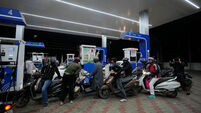
And on the other hand, the increase of fuel prices and deep fears of shortages have led to remarkable upheaval. For example, the Pakistan Super League reduced the number of its venues from six to two, and moved its games behind closed doors in Lahore and Karachi, having already cancelled the opening ceremony.
It was part of a wider policy to close schools and to insist on working from home.
And then there is the FIFA World Cup, due to be played in America, Canada and Mexico this summer. This week, on Wednesday, Iraq became the last country to qualify by beating Bolivia 2-1 in Mexico in their inter-confederation playoff.
Will they be joined by Iran? It is quite the turn of events that a host of the World Cup should currently be bombing a country that is meant to be playing in that competition. Iran are due for matches in Los Angeles and Seattle this summer. The noise being made by FIFA claims that Iran will compete. It is exceptionally difficult to see how that can happen if war is ongoing.