Paul Rouse: Old arguments now lost as Colombia bans cockfighting 
It does not necessarily mean that this world will disappear. Indeed, it almost certainly won’t.
Paul Rouse: Old arguments now lost as Colombia bans cockfighting 

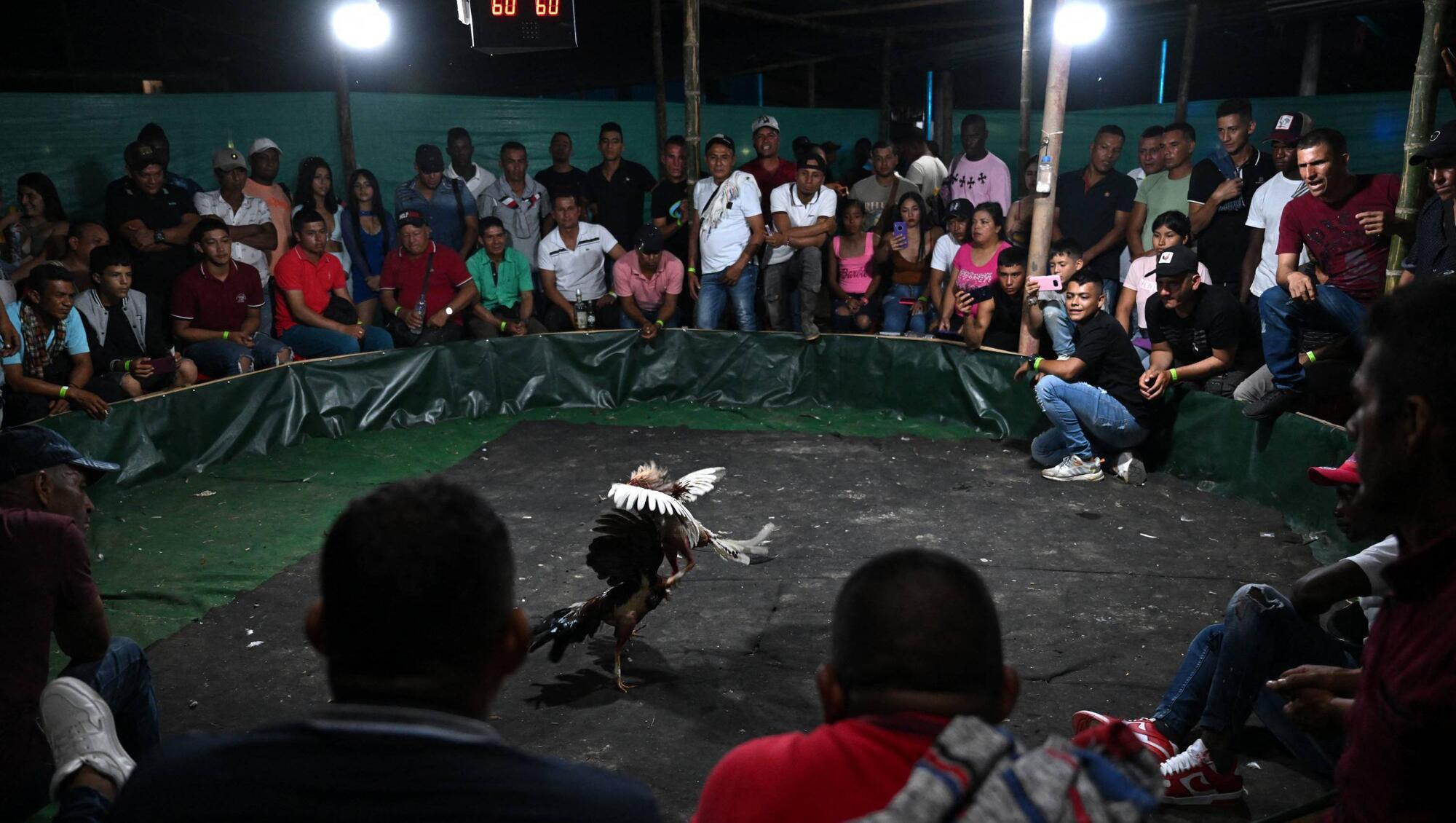
People attend a cockfight during holidays in the San Juan de Micay village in Micay Canyon, a mountainous area and Central General Staff (EMC) stronghold in Cauca Department, southwestern Colombia. Pic: RAUL ARBOLEDA/AFP via Getty Images 

Last September, the courts in Colombia banned the sport of cockfighting. It is not an immediate ban. Instead, there is now a three-year “transition period” underway.

This period is being allowed because of the importance of cockfighting as an industry to many Colombians.


The lands that form modern Colombia were colonised by the Spanish in the 16th century and one aspect of the vast impact of the destruction of indigenous peoples and cultures was the importation of cockfighting.

Colombia has been independent for more than 200 years now and across those two centuries cockfighting has thrived in a country which now has a population of some 52 million people.

It is estimated that there are around 10,000 active cockpits in the country, with perhaps 1 million people depending on the enterprise for their living (including the family dependents of those who work through it). This includes the people who breed and train cocks, work the arenas, run the gambling operations and are otherwise engaged in the hinterland of a sport that has been embedded in national culture for many generations.

The banning of cockfighting actually took place as something of a sideshow to the banning of another imported Spanish sporting tradition: the bullfight. In 2024, after months of debate in the national congress, a law was passed which banned bullfighting.

When he signed that bill at a remarkable ceremony in the main bullring in Bogota, the president of Colombia Gustavo Petro said: “We cannot tell the world that killing living and sentient beings for entertainment is culture. That kind of culture of killing an animal for entertainment would also lead us to killing human beings for entertainment, because we are also animals.” 

The ban on bullfighting was appealed through the courts but the law was upheld in the September 2025 ruling of the Constitutional Court which also deemed cockfighting illegal.

Supporters of bullfighting had argued that the ban denied the rights of minorities to express their cultural heritage. They also said that it destroyed the livelihoods of those who made a living from bullfighting – the bullfighters and ticket-sellers, the promoters and ranchers, the bookmakers and doormen, the people who made the costumes and the specialised equipment.

They lost in their argument.

Supporters of cockfighting have been making a similar argument themselves.

That they too have now lost is because of several factors.

Firstly, long-term opponents of these sports are now in positions of power in Colombia. The great example is Gustavo Petro who – before being elected President – was once mayor of Bogota and he used that office to oppose the staging of bullfighting in the city. He is now also a significant global figure. He does not appear cowed by Trump and was in the White House this week for a meeting.

Secondly, there has been a long running campaign by animal rights activists to ban bullfighting and cockfighting. There were various close-run votes in parliament over the past 20 years – more than a dozen attempts were made in parliament – but eventually a cross-party coalition of activists secured enough votes to win. This involved some politicians having to face down their constituents.

Thirdly, the global spread of ideas around animal cruelty has proven potent in recent years in areas where previously there was a sense that change was highly unlikely. For example, the tide has turned decisively against bullfighting now. Indeed, Associated Press reports that there are now only seven countries in the world where it is still legal: Spain, France, Portugal, Mexico, Venezuela, Ecuador and Peru. Cockfighting is legal in more places than that, but it too is in retreat.

The reaction of those who find their sport and their livelihood banned is one that echoes with the words of those in Ireland who endured the same outcome in the 19th century.

There is a lament for what is seen as an assault on a way of life, a tradition, a culture. There is fear for the future among those who use it to make a living. There is the repeated assertion that cocks fighting each other is an expression of their nature.

And most of all there is the noting of the hypocrisy of those who eat meat and wear leather and are happy to live lives facilitated by the byproducts of the slaughter of animals and birds reared in industrial-farming units before being killed.

Their arguments are now losing ones. Although, it does not necessarily mean that their world will disappear. Indeed, it almost certainly won’t.

The Plaza de Toros in Bogota is a stunning bullring, built as most such venues were across the Spanish empire in imitation of the Roman colosseum. It is now to be remade as a venue for “cultural events”.

It is one thing to stop bullfighting, but altogether another to stop cockfighting. To imagine that passing a law will put an end to a sporting practice that is so embedded in the life of many communities is unrealistic.

Cockfighting is exceptionally difficult to suppress. The infrastructure of breeding and training and gambling can retained in clandestine manner. For the events themselves, they need only a place for people to gather – a room, a garage, a shed, a yard, a lane, a field – and it can proceed.

In this, it might be pointed out that this is precisely what has happened in Ireland. Cockfighting was banned in Ireland and Britain in 1835. It was the first animal rights legislation of its type introduced in the world. And yet there are still cockfights held on both islands. They do not proliferate as they once did, but neither are they inconsequential.

In recent years, there has been cockfighting in Monaghan, Fermanagh and Derry. At one of those cockfights, at least 60 people gathered in a country field; at another, such as the crowd that there was even a catering van selling burgers to spectators.

Paul Rouse is professor of history at University College Dublin

More in this section

Sport

Newsletter

Latest news from the world of sport, along with the best in opinion from our outstanding team of sports writers. and reporters

Cookie Policy Privacy Policy Brand Safety FAQ Help Contact Us Terms and Conditions

© Examiner Echo Group Limited