Dion Fanning: A different Liverpool story in a parallel universe
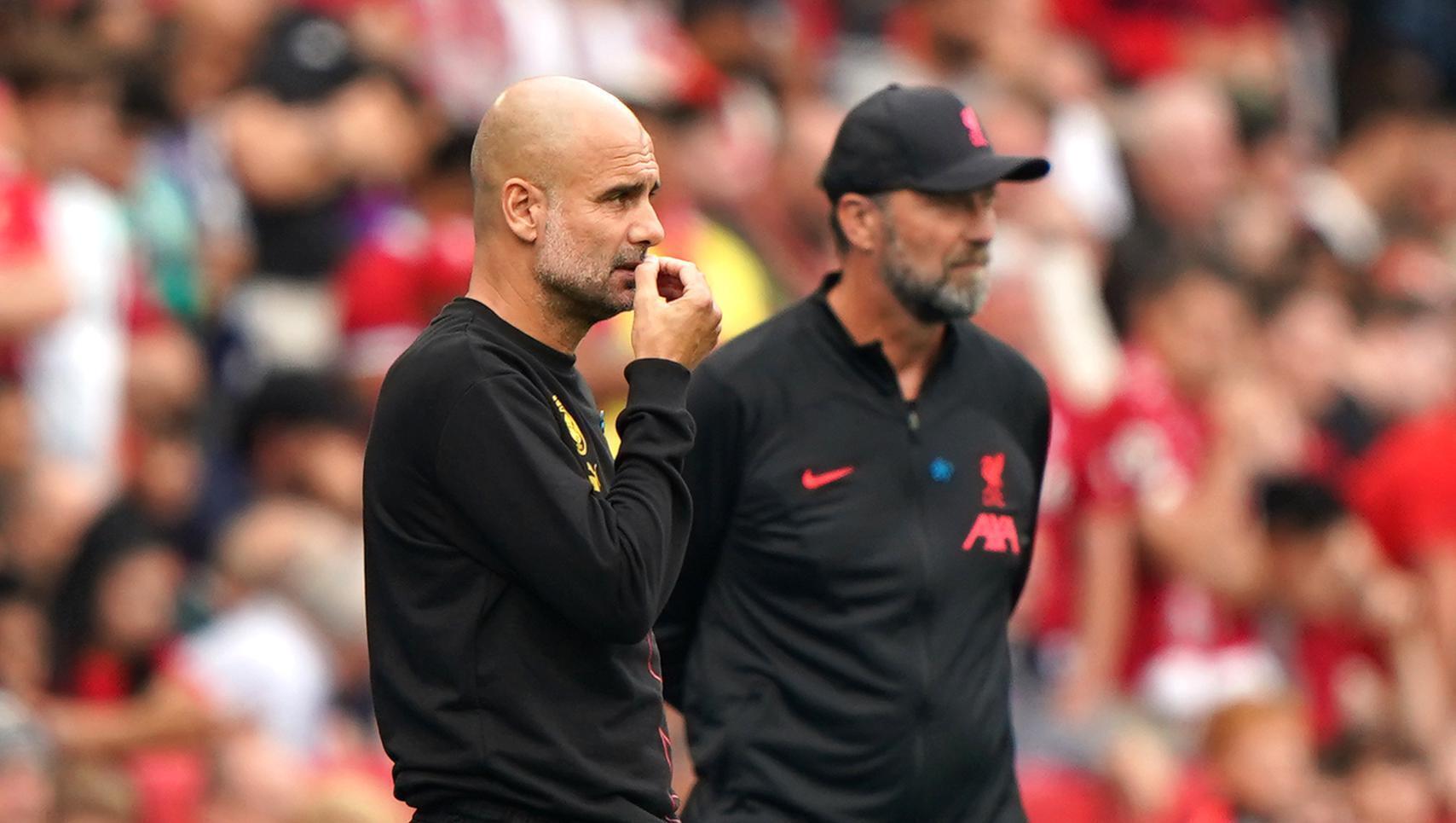
FIREWORKS EXPECTED: Manchester City manager Pep Guardiola (left) and Liverpool manager Jurgen Klopp.
SPORT makes believers of us all.
Even if we are professionally sceptical, the first instinct when we witness something extraordinary is to leap from our seats. We watch these moments and mutter ‘unbelievable’ but we really mean the opposite: we believe.
The betrayal we feel on the occasions when that faith is misplaced - when what we have believed was so good it must be true turns out to be too good to be true - is personal. We want to believe that sport, at least, is a fair contest, even though we know that sport, like life, is never fair.
Liverpool play Manchester City at the Etihad on Saturday and if Liverpool’s away form is any indication (they have won only three times away from home in the Premier League this season), then the match will be another demonstration that Jurgen Klopp’s great team has reached the end of the line.
When Liverpool were chasing down all available trophies last season, it was common to hear that this was a golden age that Liverpool fans should appreciate while it lasted. They were soothing and wise words but Liverpool fans may have expected the golden age to last a little longer. Instead, it has come to a swift and brutal halt.
Liverpool have already embarked on rebuilding and their supporters are desperate to the point of mutiny that the reconstruction is accelerated. Liverpool’s owners are said to be unwilling to deviate from their sustainable model. But the great team that reached three Champions League finals, winning one, and ended Liverpool’s 30-year wait for a league championship is finished.
At this point, it would be customary to ask if they can be considered a great side, considering they were thrilling but failed on many occasions.
“Mind I was here during the bad times too,” Bob Paisley said once. “One year we finished second.”
In the past four seasons, Liverpool have been part of two Premier League title races that were relentless rather than thrilling. The nature of those races told us something about the superclub era of European football. All other teams were swept aside and instead Liverpool against City became a competition that looked like a Terminator movie: the more basic T-800 trying to compete with the T-1000.
From December 28th, 2021 to May 6th, 2022, Liverpool drew two league games and won the rest as they chased Manchester City in what would become another forlorn pursuit of a title. Liverpool finished second, as they did in 2019, ending up on both occasions one point behind Manchester City.
Unlike previous great Liverpool teams, they have not conquered all before them. Jurgen Klopp created a side that had all the characteristics of greatness except one: the abundance of trophies that would normally be deemed an essential requirement.
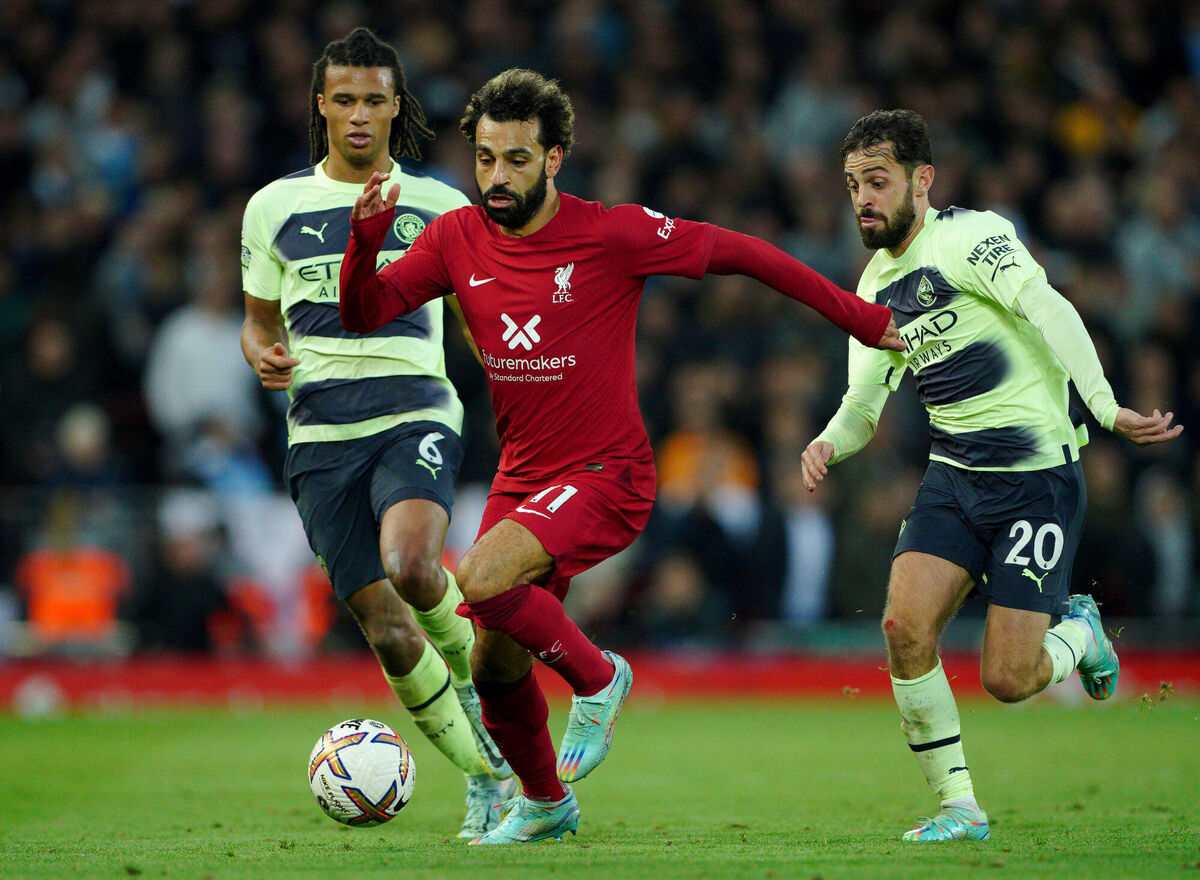
Many people would say that disqualifies Liverpool from greatness but they were competing against an even greater side, albeit one which may be judged differently by history. In February, Manchester City were charged by the Premier League with 115 breaches of financial regulations, a case that may not be concluded until long into the future.
If City are found guilty - and they deny all the charges - they may, at some point, receive a punitive fine (how do you fine the club which has everything?) or a points deduction for a future season. It is considered unlikely that they would be stripped of titles or have points taken off them retrospectively - after all what value can be put on a financial charge and applied to a sporting contest?
The financial charges brought by the Premier League cover the years 2009-2018, while those requiring a club to “cooperate with, and assist, the Premier League in its investigations” cover 2018 to this season.
“The club welcomes the review of this matter by an independent commission to impartially consider the comprehensive body of irrefutable evidence that exists in support of its position,”
City said at the time of the charges.
“As such, we look forward to this matter being put to rest once and for all.”
There is nothing to stop Manchester City releasing the “comprehensive body of irrefutable evidence” straight away but we will all have to wait.
Since City were charged by the Premier League, one of the common responses is to say that when two teams like Liverpool and Manchester City play each other, they are both clubs with vast resources on the field.
The desire to see it as a sporting contest is overwhelming. As these are financial charges, it is tempting to view them as something on the periphery, as if City had failed to observe some local planning laws when developing their training ground or had been charged with a breach of environmental regulations. The reality is different.
The FT journalist John Burn-Murdoch recently calculated that in the years 2015 to 2023, Manchester City had on average 15 points more per season than would be expected relative to wage bill. And a club’s wage bill has long been acknowledged as the key factor in a club’s success.
“Such an extreme divergence from the historical trend raises an obvious question,” Burn-Murdoch wrote. “How have they managed to reach a level of performance that would typically be associated with a team spending tens of millions more?”
Of course City are super-smart. They have a genius of a coach in Pep Guardiola, they undoubtedly have an edge on other clubs in their use of data and, since they were taken over by Abu Dhabi, they have been methodical in how they have developed the club. All of these could explain their spectacular over-performance.
But among the 115 charges from the Premier League are allegations that Manchester City used shadow contracts to pay players. As John Burn-Murdoch put it, there is “a more ominous possible explanation of the club’s outsized success: that it could have been paying some of its playing and coaching staff additional fees not disclosed in its accounts.”
In 2018, Football Leaks alleged that Roberto Mancini, City’s manager when they won their first Premier League title in 2012, had two contracts. A report in Der Spiegel which covered the Football Leaks information alleged that he had an annual salary with the club and another contract as a consultant with Al Jazira Sports and Cultural Club, which is controlled by City’s owner. This it was claimed would allow City to get around UEFA’s Financial Fair Play regulations. City have previously described the Football Leaks allegations as “a clear and organised” attempt to damage the club’s reputation.
There are those, too, who will say that these are artificial rules designed to protect the elite and they have no bearing on the sport itself. But most rules in sport are absurd and all clubs in the Premier League agreed to these ones. They also have a direct bearing on a team’s chance of success.
Football’s financial regulations have provided the context for the football rivalry between Liverpool and City.
“How much was the losing bid?”
Liverpool’s principal owner John Henry tweeted in 2011, when Manchester City announced a £400 million sponsorship deal with Etihad Airways.
FSG’s ownership of Liverpool and their sustainable model, so heavily criticised by a section of their supporters, may one day be viewed more benevolently as well.
On Saturday, Manchester City are capable of providing conclusive proof that Liverpool’s golden age is over. But there is a parallel universe where the greatness of this Liverpool team is undisputed. If the charges against City are one day proven, then it will alter everything we have witnessed.
Maybe then that parallel universe will seem a bit more real, although that might not be much of a consolation.