Colin Sheridan: Aaron Rodgers - the silent, dark, retreat
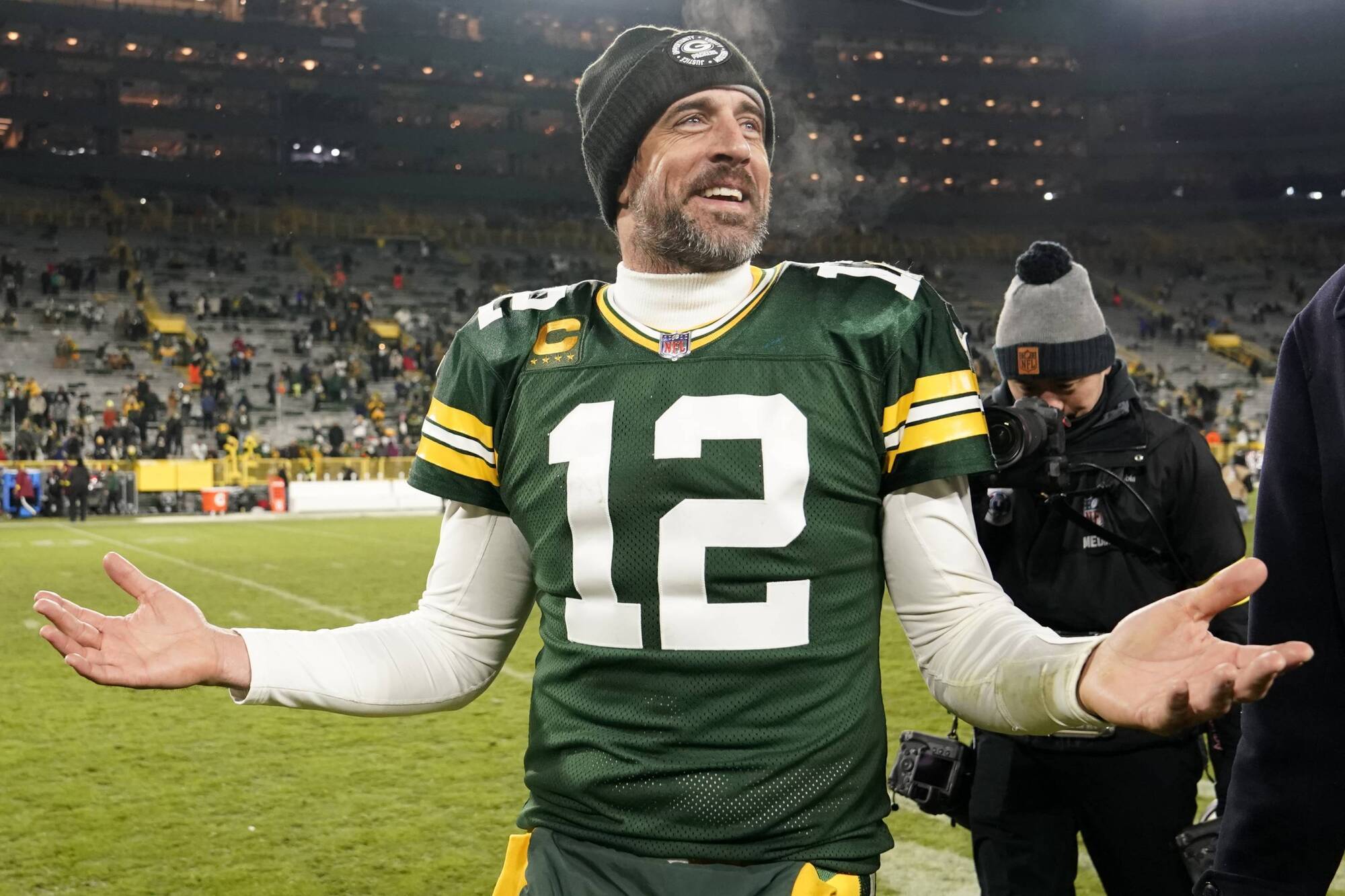
IN THE DARK: Aaron Rodgers of the Green Bay Packers. Picture: Patrick McDermott/Getty Images

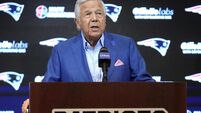
The next time you dare take aim at your local GAA superstar for “being difficult” - for wearing rainbow laces, sporting a suspiciously deep tan or banking some coin from Instagram, consider the fans of the NFL's most storied blue-collar franchise, the Green Bay Packers, who’ve had to patiently tolerate the moody modus operandi of quarterback Aaron Rodgers for almost two decades now.
Rodgers - one-time Super Bowl champ and four-time regular season MVP - is widely regarded as the most talented quarterback of a generation led by Tom Brady. As a football player, Rodgers breathes rarified air; he is, as one commentator once described, “a modern-day Rembrandt”, which makes his contradictions as a person all the harder to decode and reconcile.
Last week, Rodgers confirmed that he would be going to a Darkness Retreat - capitals D & R - in Oregan where he would spend a period of anything from 48-96 hours in an underground 300-square-foot room that had zero natural lighting (a studio in Portobello, anyone?) in an attempt to emotionally cleanse and recentre himself, including - but not exclusively - figuring out whether or not he wanted to play football anymore, and if he did, where. He said this with a straight face and to an audience of millions. With free agency looming, what Aaron does next matters, especially in Green Bay, a team for whom he has been both a messiah and megalomaniac mystery every other Sunday.
Watching great quarterbacks quarterback is something anyone can appreciate, whether interested in American Football or not. Like big-wave surfing, the delicate dance between violence and victory, the footwork, the flick-of-the-wrist artistry mixed with a sniper's understanding of angle and wind and air, not to mention the acumen required to make split-second decisions in the face of rushing 350-pound linebackers, places quarterbacks in an elite bracket of sports stars.
As hyperbole obsessed as American sports media can be, even they struggle to fully convey how difficult it is to play under-centre. For two-thirds of his 18-year career in the league, Rodgers has been one of the best at throwing tight spirals. It’s helped too that there is a touch of the movie star about him. Moody, broody, articulate and Hollywood handsome, he has a voice like honey-laced bourbon and a head of hair harvested straight from an Iowan prairie. There’s been A-List fiances, a guest spot hosting Jeopardy and trips to India to help deaf children. If Tom Brady was annoyingly sanguine and the Manning brothers far too “ah shucks!” to be believed, Rodgers was that rare thing amongst superstars - accessible and believable, a genius talent not subservient to brand and legacy.
At some point in the last few years, however, it seems that Rodgers has flown a little too close to the sun, less himself, more Nicolas Cage with a dynamite arm. A contrived coolness has replaced his everyman alter-ego, one that reeks of mystery and intrigue and edgy intellectualism, but is ultimately smothered in self-obsession.
It hardly started with the misrepresentation of his COVID-19 vaccination status (he pronounced himself “immunised” only to be later exposed as unvaccinated in direct contravention of NFL protocol). But that episode best encapsulated the recent emergence of “misunderstood genius Aaron”, a character intent on preaching his own truth to power, a man who will never bend the knee to the “woke mob” he claims to be so superior to.
On the field, he has been just as enigmatic. Back-to-back MVP seasons both ended in catastrophic playoff defeat. Both losses saw Rodgers deflect all responsibility from himself back towards the Packers front office. He would proffer that speaking out is another example of him just telling it like it is. All it has done, however, is further stress an already fractured marriage, one that for so long looked rock solid.
The Packers, too, are hardly blameless. In 2020 they drafted Jordan Love without consulting Rodgers, an act of perceived treachery toward the incumbent. As Brady proved when Jimmy Garoppolo appeared in New England, hell hath no fury than a quarterback scorned. Unlike Brady - who internalised his bitterness towards team and coach before going on to win three more Super Bowls in Boston - Rodgers once again chose sanctimony over sacrifice. He lambasted his employers and ridiculed Love. MVP seasons followed, but no rings.
For all of that, Rodgers remains as compelling as he is relentlessly self-obsessed. His Tuesday sessions with the Pat McAfee Podcast are an unfiltered window into the world of an elite sportsman. It is also a convenient soapbox for him to push his bespoke version of enlightenment. Artists like Justin Vernon from Bon Iver (with whom Rodgers is friendly) have often retreated to the woods to make their best art. The difference is, we usually only hear about it after the masterpiece is made. Rodgers is out of the dark, but has yet to make his intentions clear. If we’ve learned anything about him, it’s that he’ll tell us soon. Tomorrow’s Tuesday, after all.
Being an uninvolved, unemotional observer of Arsenal’s candidacy for Champions of England, there comes a point where some humility and grace is called for. The Gunners' unwillingness to capitulate and revert to supposed type has made fools of many of us. As a gambler once told me, those who say sport is predictable have never had a substantial sum on Club Bruges to beat Zulte Waregem at home on a Tuesday night, only to see their allowance go up in injury-time smoke. Arsenal’s assuredness in the face of ubiquitous doubt has been remarkable, regardless of what happens from here.
A couple of years back Ronan O’Gara referenced some sound advice he received - from a Kerry person no less - after his La Rochelle side had just beaten Leinster to reach a European Cup final: “Walk easy when the jug is full”.
I’d never heard it before, which is strange, because being Irish, you pretty much assume you’ve heard every word of caution a parent can utter, especially when you’re flying high, drunk on possibility and potential.
The one that stung the most was the almost sinister, “I hope it lasts for ya”, which you might hear after a jealous sibling leaked that you were taking another holiday, maybe a stag in Budapest or a long weekend in New York (admittedly, this was late Celtic Tiger times).
The “Jug” quip hits differently, though. It recognises the good thing, whatever it is, and even allows for the enjoyment of a moment, before softly warning against future notions. I find myself repeating it to myself every other year in mid-spring when Mayo are lighting up the National Football League like New Year's Eve in Dubai. And so it is too, now, with the magical Rhasidat Adeleke.
Barely a weekend passes without an update on her latest heroics on the NCAA beat. The Tallaght superstar is laying waste to history by giving this country something we never had before - an elite sprinter, someone capable of medals on an Olympic stage. Everything about her journey so far suggests it is not her that needs to walk easy, but us. Too often we hype and hope too much. Adeleke has done so much of this on her own already. Her jug already full, let's hope she takes pause to enjoy it, and allows herself all the notions she’s undoubtedly earned.
Understanding that these things cost money - and one thing Netflix has in abundance is money - the more fly-on-the-wall sports documentaries that drop into our “recommended for you” trays, the more frustrated you feel that the GAA is missing a beat by not conceiving a way to pull back the curtain a little on the sporting lives of their biggest asset - their players.
If intercounty managers could do without cameras in dressing rooms, why not boost the Sigerson by ditching one of the dozen current affairs programs and develop a show tracking players and a team as they navigate through such a seminal time in their lives?
RTÉ, you're welcome.