Larry Ryan: Can we trust that freedom is the new process?
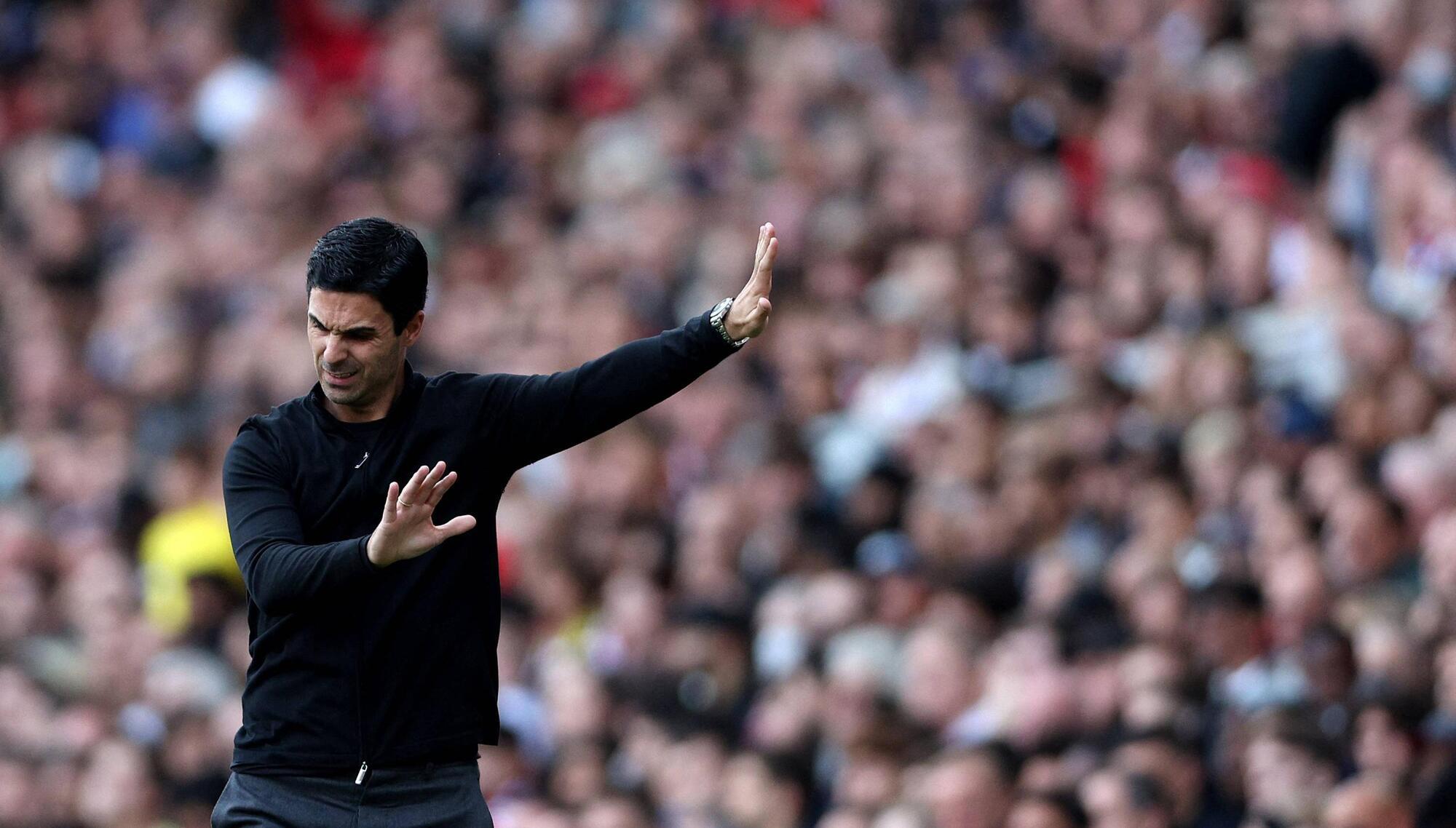
Arsenal's Spanish manager Mikel Arteta shouts instructions to the players from the touchline (Photo by ADRIAN DENNIS/AFP via Getty Images)

Not sure if you’ve noticed too, but all of a sudden freedom is the most prized commodity in sport. Like those of us tied to a desk, all they want now, the sportspeople, is to be set free. To run amok. To trust their instincts. And their gaffers, having spent generations trying to impose order, demand discipline, enforce a system, are now throwing open the gates, taking the handbrake off, releasing the shackles.
Or at least that is what they are telling us.
You won’t travel 10 clicks without finding somebody craving freedom. Or offering it. Or touting freedom as the answer to all their current difficulties.
Could freedom be the new process? Or even the new intensity?
The only surprise is that some teams are able to field at all, with so many players probably off on creativity retreats in Tuscany meditation centres, unlocking their muses via pottery, mapmaking and mindful photography.
This one crosses the codes. Here at home, basketball coach Mark Scannell wants Glanmire to start “playing with freedom” again to respond to cup defeat last week. While the England rugby camp is pretty unanimous that freedom is the only way they can get back on track against Japan. “We want to free ourselves up,” concluded Owen Farrell, a party line that also convinced teammate Jack van Poortvliet: “We want to free ourselves up, play with real excitement.”
Freedom is all the rage in football.
“Darren Moore wants me to play with absolute freedom, admits Nottingham Forest loanee Alex Mighten.” Admits. As if also feeling a bit guilty he’s no longer making his bed first thing, now he has become unmoored from structure.
The prayers of Bournemouth’s Marcus Tavernier have similarly been answered by caretaker gaffer Gary O’Neil. “He wants me to create things and just play with freedom, and that's all a player can ever ask for.”
At Middlesbrough, Michael Carrick wants Isaiah Jones to “play with freedom”. Swindon’s Saidou Khan has gone one step further and lauded head coach Scott Lindsey for sanctioning happiness. “He wants me to play with freedom and a smile on his face.”
Blackburn Rovers boss Jon Dahl Tomasson upset West Ham in the Carabao by allowing his boys “to play with freedom against Premier League opponents”. While Tim Sherwood hopes to reboot Jadon Sancho by urging him “to play with freedom”. Though it may be an even bigger concern if Jadon has up to now been slavishly following instruction.
Of course it was freedom’s James Maddison that probably took Sancho’s place in the England squad. “Brendan Rodgers hands James Maddison the freedom to find his best form,” we have heard, almost monthly, in recent seasons.
Look, Google it yourself, there are dozens of new freedom fighters every week. Recently, acting gaffer Cristian Stellini seemingly got Spurs out of jail in Marseille by allowing them to “play with freedom” in the second half. Paul Merson now feels Antonio Conte might just “pull the handbrakes off and ask his players to play with freedom” against Leeds United this weekend. Though that seems a long shot.
It doesn’t always work out of course. Ireland cricket captain Andy Balbirnie reckoned they would “play with freedom against Australia”. And around a month ago, Stevie G wanted his Villa players to “play with freedom and not to worry about where we're at, or what's gone before.” As it turned out, it took Stevie’s departure to free them up, make them really excited, and put a smile on their faces. Briefly anyway.
So what are we actually dealing with here, I wonder. Is there a freedom revolution underway? Could this be a rebellion against the great industrialisation of sports coaching? A revolt against the micro-managers? What are we paying these gaffers for, if their control freakery has been the problem all along?
How could anyone be free when they have been controlled from the moment their talent was canned and packaged onto a development pathway? Told what to eat and stretch and think. Your distances measured, your output scrutinised. Every step and touch mapped and crunched into arrays of stats. And plotted and compared against teammates and opponents.
Will true freedom only come when the GPS bras are burned? When the gameplans are torn up. When the opposition dossiers are toned down. When the system gets out of the way of the talent?
Or is it the system that gives you freedom? The structure.
There’s a Ted Talk on this, naturally, by ESPN sports journalist Bomani Jones. Called “The freedom of structure”.
“I’ve figured out one thing in life, if nothing else,” Jones reckons. “If you do what you’re supposed to do, from there you can pretty much get away with doing whatever it is you want to do.”
Or as Liverpool coach Pep Lijnders put it in his recent book: “Flexibility, freedom inside the system… This is what our boys want: dominant football, freedom. This is what we as Liverpool dream of: play like Cruyff’s dream team and defend like a red machine chasing like devils.”
We can never get away from the intensity.
But there’s a little bit of a contradiction there too, Pep reckons. To allow people go slightly rogue, you have to stick to the plan. To do whatever they want, players must know what they are doing.
“Trust opens up creativity. How can you ask for unpredictability without giving freedom and trust? How can you expect unpredictability when you constantly change strategy?”
Looks like we can’t get away entirely from the process either.
While Conte tends to keep the handbrake on, across north London they suddenly do look freer, this season. A little bit more like the teams of a certain former manager, who of course gave them no instructions at all, we are told.
They looked rather methodical, Mikel Arteta’s team, in his early days, as he tried to control every moment from just outside his technical area. He is still kicking every ball, in truth, trying to control the process. And maximise the intensity. But maybe he too has learned to trust.
The tireless quest to take every last bit of good out of the World Cup has even extended to the bigger 26-man squads, cutting down dramatically on controvassy opportunities. Can you imagine the drama Callum Wilson would have created this week if he was to be left at home?
We will all have to examine our individual consciences on whether we should watch it, particularly those of us utterly powerless to highlight human rights concerns with the host country, since we haven’t been given lucrative punditry contracts out there like Gary Neville.
Morals aside, there are practical concerns anyway. Ordinarily, we are afforded roughly a three-week abstinence period ahead of a major tournament during which we build the savage hunger needed for a programme of three matches every day. Yet here they are loading on four most days after just a few days of fasting.
Incidentally, word on Thursday night that the Carabao Cup next round would be played two days after the World Cup final sparked an urgent investigation at Examiner Towers. Could this possibly mean there would be one full day — nigh on 24 hours — without any football match being played?
Needless to say, fears were fairly swiftly allayed. Wigan v Sheffield United will be along on Monday, December 18, to resume a familiar pattern of everyday, guilt-free gluttony.
Don’t worry, we’ll do everything in our power to ensure Tommy includes a belated apology in next Thursday’s column for allowing Paddy Patterson make Bubbles look like a choirboy with his post-match Páirc interview. For now, though, fair play.
In a week which restored rugby’s well-earned reputation for magicking an ‘occasion’, Fiji’s boss displayed an egregious breach of rugby values by suggesting Saturday’s international will be a “training session” for Ireland.