Colin Sheridan: Cristiano Ronaldo primed to go supernova in Qatar
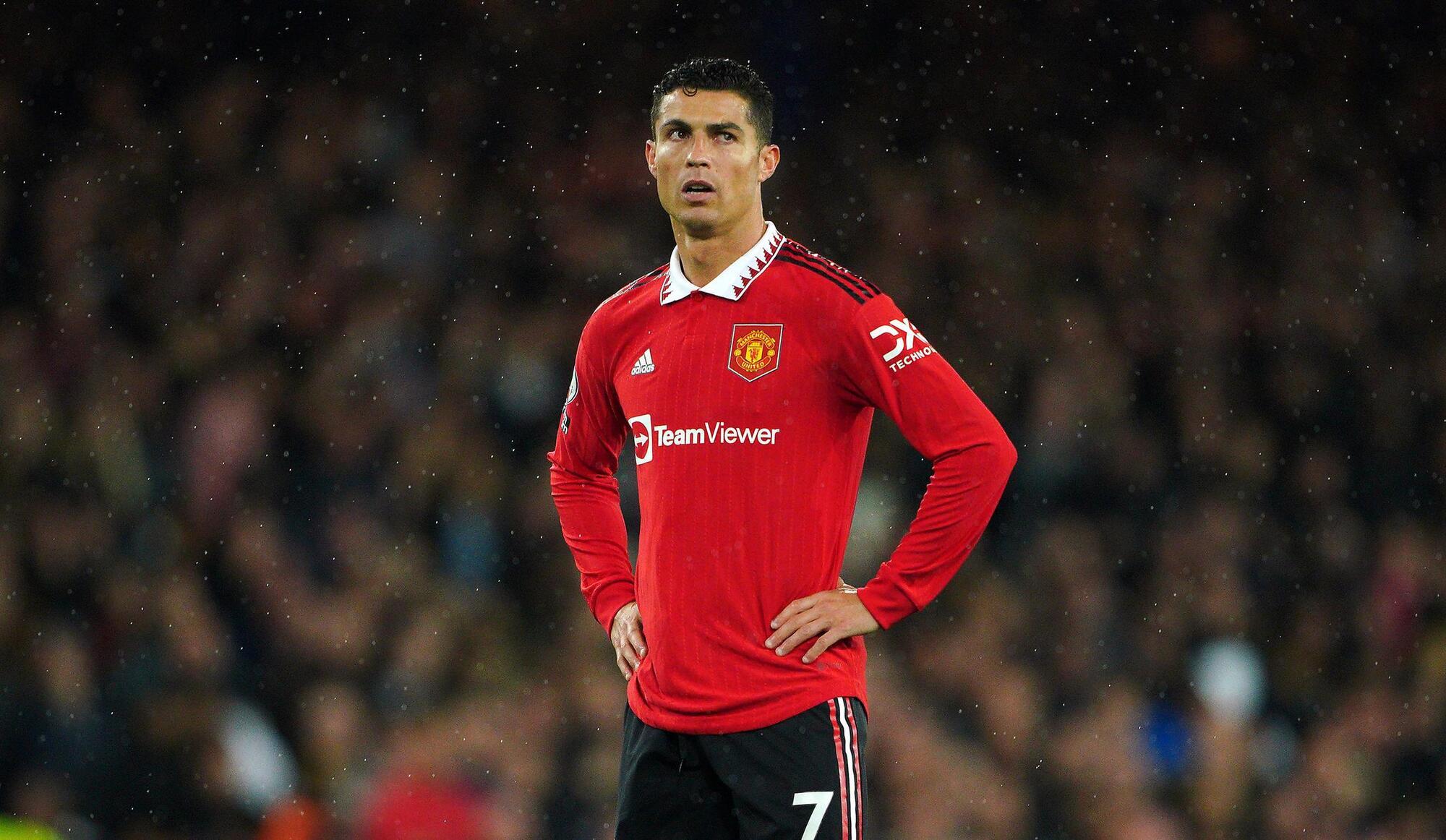
QATAR-BOUND?: Manchester United's Cristiano Ronaldo. Under Solskjaer and Rangnick, his greatness was at odds with the shambles around him. File pic: Peter Byrne/PA Wire
Last Wednesday, the James Webb Space Telescope released a picture of the cosmic landscape called the Pillars of Creation. It was, depending on your energy levels, a profound masterpiece of celestial creation, or something your child would come to you with after throwing paint at a page.
Three towering fingers of empyrean dust and gas superimposed upon a backdrop of vast, seemingly infinite space, itself pockmarked with tiny, magical sparkles, stars, and planets. According to Nasa, the Pillars sit at the heart of a region of space called the Eagle Nebula, or M16, a spot where an awful lot of stars are born (or, in Irish rugby parlance, south Dublin).
Stretching roughly four to five light years, the Pillars of Creation are a fascinating, but relatively small feature of the entire Eagle Nebula, which spans 70 by 55 light years. The nebula is located 7,000 light-years from Earth in the constellation Serpens. The longest finger (pillar) is four light-years long.
It’s said that, if you could fly an aeroplane inside of it, it would take you 4.5m years to get from the knuckle to the fingertip.
It’s really quite mad to rationalise all of this, to contextualise that (a) the
Pillars exist, (b) a telescope, built by humans, is powerful enough to take a photograph that we can look at on our phones, and that (c) armed with all of this knowledge, Cristiano Ronaldo still believes himself to be the centre of the universe.
While a six-year-old who contends the same thing could be forgiven for not having the intellectual capacity to process the existence of the Pillars of Creation and our consequential insignificance as humans in comparison, Ronaldo cannot. He probably saw the picture and assumed the Hubble telescope had captured a snap of his ego.
As a 37-year-old man, a father, and arguably one of the greatest footballers that has ever lived, he should know better, but, that greatness owes much to him believing that he is, in fact, the centre of the universe. His 700 goals are a testament to his incomparable hunger to score.
That many of his team-mates would quicker reach the fingertip of the Pillars of Creation in an airplane — 4.5m years, remember — than receive a pass from him, is the flip side of a coin that has Ronaldo’s head on both sides. He was great because he was selfish. He is so selfish because he was so great. Real chicken-and-egg stuff.
As the Madeiran strode down the tunnel at Old Trafford last Sunday, his team winning and him refusing to come on for his manager, one couldn’t help wonder was this an act of petulance from which this great player will not recover?
As long as this recent iteration of Manchester United was chaotic and rubbish, his dissent had a martyrdom quality to it. Why wouldn’t he kick and thrash and scream while this once-great club, who undoubtedly lured him back under false promises of a glorious second coming, were failing like a dying star? It may have been an accidental narrative, but it was one that suited Ronaldo. Under Solskjaer and Rangnick, his greatness was at odds with the shambles around him.
As Fred fumbled, Maguire mumbled and the club crumbled, Ronaldo still strode the offside line like an ageing movie star surrounded by amateurs.
The more Rome continued to fall around him, the more glorious a Caesar he looked.
Now, under ten Hag, United look good. Not great, just good. That “good”, and the Dutch manager’s obvious resolve to outlast the Portuguese star, has been enough to expose Ronaldo’s galaxy-sized ego as a
problem not worth solving. His
inability to see the broader universe, and his inconsequential place in it, has let the master of tricks to miss the biggest trick of all — that of one last reinvention.
One of Ronaldo’s most admirable traits was his ability to evolve as a footballer; to recognise a failing, and correct or redirect. In the beginning, he was a poor crosser. He corrected it. Later, a poor finisher, something he amended to devastating effect. As his body failed, he changed his game. Now, unable to manipulate external factors to his liking, he had an opportunity to cement the one thing so dear to him — his legacy — by becoming a mentor. Instead, he chose the stat line.
Much like LeBron James has been accused of playing a stupid number of games each season to pad his numbers (in lieu of chasing championships) and break records in the process, Ronaldo has unsurprisingly put individual pursuit above team achievement. He could have used his powers to improve impressionable team-mates, instead, he’s storming off down the tunnel of a career that was extraterrestrial in its achievement, but all too human in its demise.
One of the many wonders of space is that we see stars in the sky long after they’ve exploded and ceased to exist. Notwithstanding his narcissism, Ronaldo’s incredible legacy will long outlast him. Next month’s World Cup will likely be the last vehicle for his genius. He will be worth watching, because if we know anything, it’s that his star is one that will burn hard, not fade away.
Pictures can paint a thousand words, but they can also tell us nothing. Last week the Iranian sports ministry released a photo of climber Elnaz Rekabi alongside Iran’s sports minister, Hamid Sajjadi, after the athletes return on Wednesday from the Asian Championships in sports climbing in Seoul.
Rekabi had made news around the world for competing in South Korea without a headscarf, which is mandatory in Iran and a subject of nationwide protests after the death of Mahsa Amini, an Iranian woman arrested by the country’s notorious morality police, who died in custody after her arrest for allegedly wearing her hijab improperly.
Large crowds of supporters turned out to greet the 33-year-old on her return to Tehran, but Rekabi was reportedly whisked away to meet with Sajjadi, where, sources have told BBC Persian, she signed a “forced confession”. Rekabi did in fact apologise, stating that her headscarf had accidentally slipped off. The same sources have insisted Rekabi has been placed under house arrest since her meeting with the sports minister.
The backdrop to the Rekabi story is a country entering its sixth week of mass protests, courageously led by young women removing their headscarves in solidarity, chanting anti-government slogans and confronting the security forces on the streets, despite a crackdown that rights groups say has killed at least 122 people. All of which has left Iran on the precipice. It’s almost 12 years since Mohamed Bouazizi, a young Tunisian who sold vegetables from a barrow, set himself afire to protest against police harassment, thus beginning the Arab Spring, a movement that inspired a wave of revolts across the Arab world as people rose up to protest authoritarianism, corruption, and poverty.
Next month, all eyes will turn to Qatar for the World Cup, just as they did Russia four years ago. Then, Putin succeeded in convincing most who went there was nothing nefarious to see. Rekabi’s actions, by accident or design, are a reminder regimes will stop at little to maintain control. In Qatar, sport will shine a torch, it’s up to us to notice what it exposes.
A couple of weeks ago, I wrote a column expressing frustration at Ireland manager Stephen Kenny’s inability to articulate himself effectively to the media, particularly in the aftermath of a difficult result.
That frustration was born from the fact that Kenny is arguably one of the most engaging and intriguing figures in Irish sport, something reinforced and enhanced by his brilliant interview with Dion Fanning of , during which Kenny spoke with brutal — and very articulate honesty — about his origin story.
It’s a tale worth listening to, not least because he reveals elements of his backstory many would be ignorant of. As a manager, he may sometimes struggle for words, but as a man his values appear beyond question.
The NBA returned to our screens this week, and with it, egos landed like the first snows of a Wisconsin winter.
First among equals was Philadelphia’s James Harden, who arrived for the 76ers’ season opener wearing a pair of pyjama bottoms paired with a $5,000 sweater. The “arrival walk” for NBA stars has become a thing in the last few seasons, providing a catwalk for the league’s most fashion eccentric stars.
More workplaces should follow suit; imagine a canteen big-screen, depicting scenes of employees rocking up for a day’s work; picture Andy from accounting, killing it in a pair of accidentally retro bootcut jeans, a GAA club top and some oversized headphones, giving a peace sign to the cameras and fist bumping Bláthnaid from HR.
In a working world of monochrome, it would add a welcome dash of colour.