Larry Ryan: Squeaky bum time for football's word police
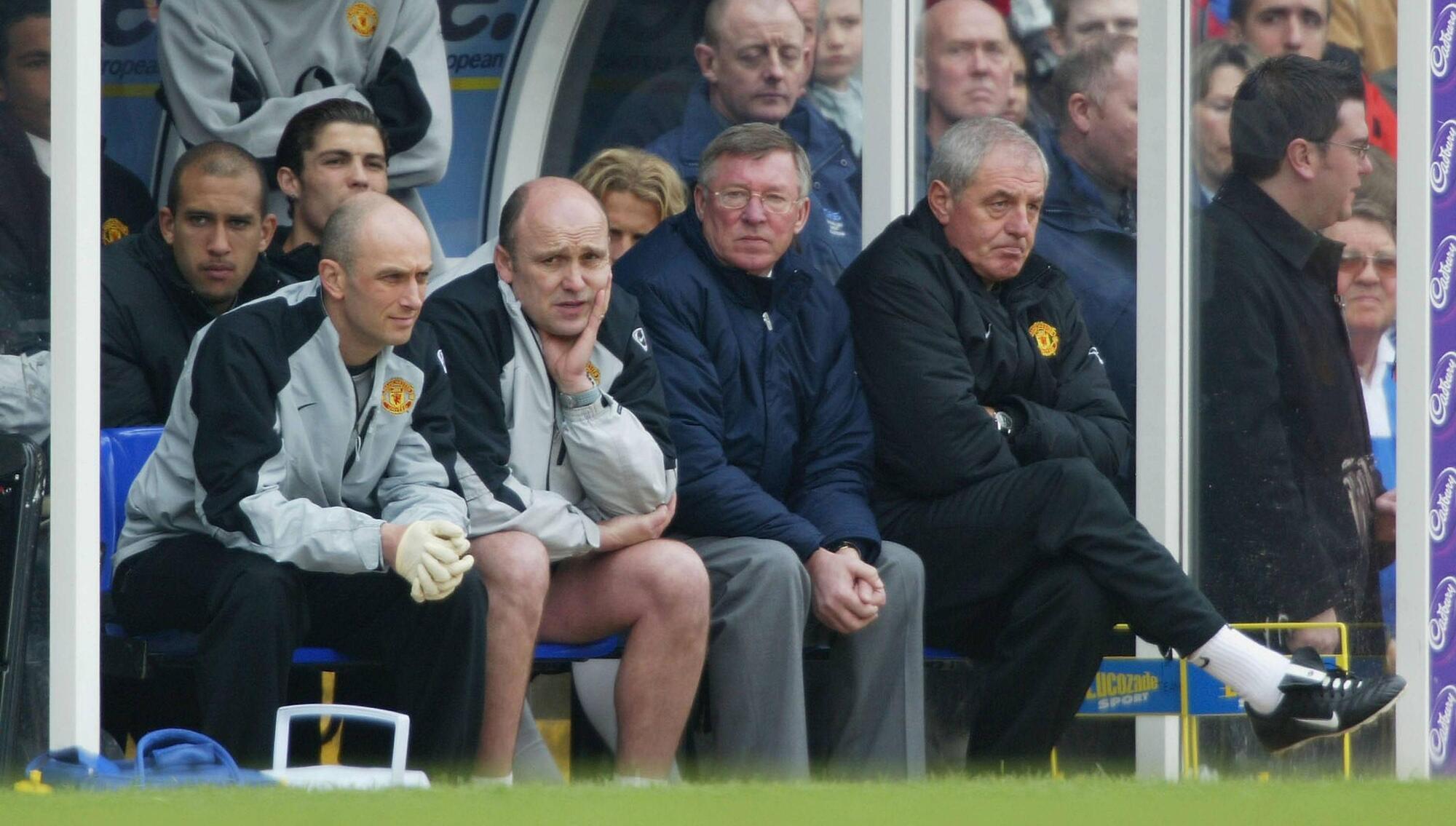
SQUEEZE YOUR BUM TIME: A glum looking Manchester United bench with manager Sir Alex Ferguson (2nd right) during the FA Barclaycard Premiership match between Birmingham City and Manchester United at St Andrews on April 10, 2004 in Birmingham, England. Pic: Stu Forster/Getty Images)

Marty Morrissey’s sphere of influence will never be truly measured. In the dying stages of the Tipperary hurling quarter-final, with Loughmore-Castleiney mounting their customary late comeback against Drom and Inch, Ken Hogan noted, in co-commentary, that it was ‘squeaky bum time now’.
“Thanks for that image, Ken,” noted Marty, as though the expression was entirely new to him and he feared some personal intestinal issues were troubling the Lorrha legend. And sure enough, a matter of weeks later, the folk at Oxford English have added the phrase to the dictionary, lest there be any further confusion. It cannot be a coincidence.
The dictionary now defines Alex Ferguson’s famous saying as “a reference to the sound of someone shifting restlessly on plastic seating during the tense closing stages of a contest”.
Though in truth they are giving Fergie a touch too much credit for his sonorous imagery. Full responsibility for the expression must go to the late great Guardian writer Kevin McCarra, who was at this landmark United press conference in 2003, misheard the boss say ‘it’s squeeze your bum time’, sent the quotes around to the other journos, and coined an idiom that now travels from Tottenham to Thurles and everywhere beyond.
At the end of the day, such are the mysteries of language and sport’s contribution to our everyday dialects. For me.
Also added to the dictionary this week was Jose Mourinho’s signature offering, ‘park the bus’, another phrase that has made a comfortable transition to Gaelic games, particularly football. “To play in a very defensive way, typically by having the majority of outfield players close to their own goal and showing little attacking intent.”
It can only be a matter of time before “I prefer not to speak” is duly applied to anyone keen to get something off their chest.
Among the 650 additions is, incidentally, ‘influencer’. Marty again? And a job-lot of other football phrases that had somehow slipped through the cracks, in preparation, they say, for the World Cup.
Total Football. Row Z. False No. 9. Trequartista. Rabona. Tiki-taka. Gegenpressing, Cruyff turn. Panenka. Zonal marking. They’re all in the dictionary now, and presumably allowed on Countdown.
"This select batch of additions fills a few gaps in our formation,” the dictionary said, by way of bantz (in since 2015).
You could almost take a little offence, on behalf of sport, that some of these have taken so long to gain admission. After all, manspreading has been a word for nearly a decade. And hangry. And butthurt.
Oxford English senior editor Fiona McPherson accepted, on Newstalk this week, that they may not be giving it 110% on the sporting front. That they aren’t exactly at it early doors. Though she does emphasise that it’s a big big ask.
“Any dictionary — and the OED is no exception — is always going to be lagging behind, to a certain extent.
"We won't include anything in the OED unless we can find evidence for it; that it's being used, and being used by the people you'd expect to be using it. So it's all about the evidence.”
There is invariably an incident room worth of evidence to comb through every Soccer Saturday. So you’d like to think they are closely monitoring the true influencers, in this arena, such as Paul Merson.
The popularisation of ‘worldy’ is the Merse’s key contribution to modern life. Though there must be a place in any dictionary for ‘the beans’ as an alternative to goalpost, as well as ‘Desmond’ — that perfect four-goal thriller tribute to the late Bishop Tutu.
Yet maybe the word police are correct not to jump the gun. Is it fair to say the fine work of Merse’s predecessor as football’s lexicographic laureate, Big Ron, is slipping out of fashion, perhaps due to Atkinson's loose use of other words?
Ronglish classics such as spotter’s badge (perceptive pass), amusement arcade (self-indulgent trickster), little eyebrows (header at the near post), and even lollipop (stepover) seem to be going the way of ‘sick as a parrot’ in today’s parlance. Though it was heartening to hear Kenny Cunningham, during Ireland’s recent U21 playoffs, accuse an Israeli of going down in instalments.
No doubt, there will be dismay in rugby circles that their self-consciously Trojan efforts in this department go unrewarded again by Oxford English, who clearly have no truck, or trailer, with the egg. There may have been some complacency, in sheepskin circles, when they got Garryowen included, all those years ago. And yet the floodgates never opened for the torrent of jackalling, latching, can-opening, crocodile rolling and honeypotting they unleash on us week in week out.
Some of our own pillars of the word game deserve, of course, a much wider stage. George Hamilton’s ‘danger here’ should have had international recognition by now. And stalwarts like Cyril Farrell have long deserved a bigger audience. It’s impossible to see any senior editor turn away ‘nuts to a monkey’ to describe any sort of straightforward task.
But can Gaelic football ever return the favour for the flood of soccer terminology infecting the language of Gaels?
Will the lower-division side ahead of a ‘potential banana skin’ in the FA Cup ever be described as ‘waiting in the long grass’?
Could a bunch of gegenpressers be applauded for their ‘savage hunger’?
Might Mourinho one day be accused of offering us puke football’, or of employing a ‘blanket defence’?
And will the blessed day ever come when a gaffer is sacked during a relegation battle and we hear that all is not lost, because "Big Sam has been ratified"?
Could we be approaching this referee abuse crisis all wrong? Instead of enforcing silent sidelines and setting the man in the middle even further apart from everybody else involved in a sporting occasion, mightn't we all be better off, in the long run, to encourage healthy civilised conversation between officials and players and management?
Could we ever see the day when the referee, utterly comfortable in his skin that he’ll be doing his best whatever happens, actually seeks feedback on how things are going for him, on the day? 'Any bit of advice on where I’m going wrong lads would be hugely appreciated.' That might even shock the sideline into silence.
It’s the bottling things up that causes things to inevitably spill over. Maybe we have to formalise some sort of grown-up communication channel. @referee_coach on Twitter, a GAA referee, first wants rules sessions for parents and players and club policies on abuse, but also believes that it's good to talk.
“Create a new role called 'ref liaison'. Marked with a bib, they are the only person allowed to speak with the ref. They should also be responsible for abuse of the ref by their sideline. Have the authority to deal with any abuse on their line.”
Solve this in traditional GAA fashion: if the lad on the bank has some steam to blow off and a contribution to make, he can go through the chair.
Liam Horan, formerly of this parish, launches his short story collection Second Chance and other stories, at the Wild Atlantic Words Festival in Castlebar today. Knowledgeable Noel might even be there, though Noel never needed two chances. No doubt there will plenty of sporting wisdom found between the covers.
Threatening to destabilise the whole meaning of a 'dreaded' vote of confidence.
Well done for knowing when to call it a day and hopefully one of the finest players of a generation gets no ideas about coming out of retirement ahead of Tuesday night.
The utter pig's dinner of a Women's World Cup playoff system must be responsible for the most 'explainers' published in newspaper history.