Kieran Shannon: Don't mock Pep Lijnders for giving us a rare glimpse inside
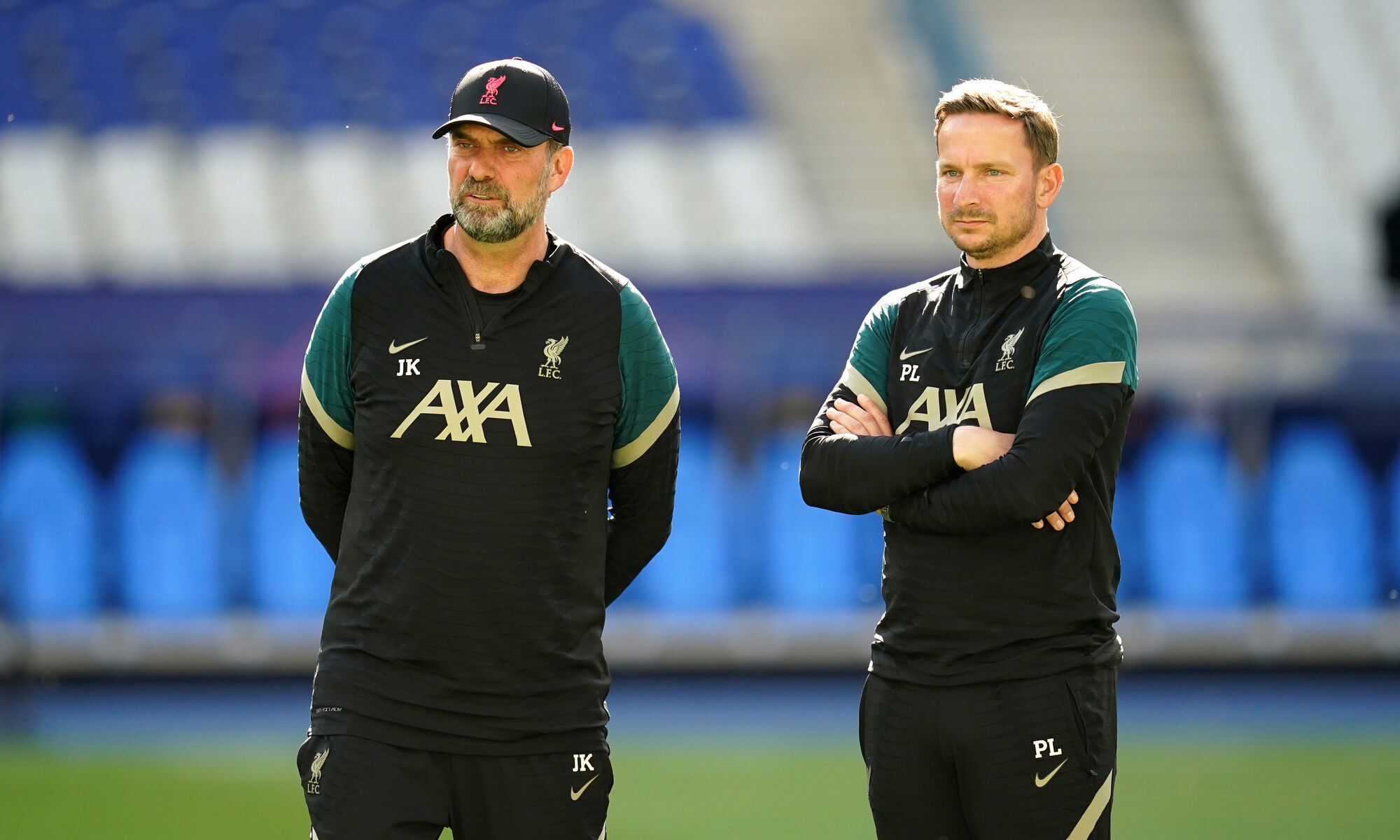
BEHIND THE SCENES: Liverpool manager Jurgen Klopp (left) and Pepijn Lijnders.

Poor Pep Lijnders. There he was merely offering the kind of insiders’ perspective that for a brief time long ago we used to get in Gaelic Games, is quite common now in documentary form in his own sport, and is still the norm on Stateside where almost every championship-winning coach either writes or contributes to a how-we-did-it book.
Yet now that Liverpool have had a wobbly opening month to the season, the likes of Didi Hamann, possibly from all his time breathing the same Montrose air and sitting in the same seats as a host of Sunday Game pundits socialised in the closed, often-paranoid environs of the GAA dressing room, is now publicly speaking in the vernacular of that very dressing room: He shouldn’t have dun that book.
“How he was allowed to do it I’m not sure,” Didi tweeted after a Liverpool display in Naples which exhibited not a degree of the very quality that Lijnders chose as the title of his book: .
“The alarm bells should have been ringing for [Liverpool] fans when the current assistant manager wrote a book while still employed by the club.”
There’s a very simple explanation though why Lijnders was allowed: Hamann’s compatriot, a certain Jurgen Klopp, gave him his full blessing. Writing in the foreword of Intensity, Klopp, with his customary self-confidence and generosity, explains that while Lijnders was “tentative” and “conscientious” when first floating the project past his boss, they concluded that the merits and motives of the book were too good and too pure to dismiss.
“His only motivation for this project was to give our supporters a closer insight into our world. The decisions we make, how we reach them and the reasoning behind them. One of his key characteristics is that he wants to share his joy and passion for football with everyone… I’ve no idea if there is anything such as football socialism but if there is then Pep is at the forefront of that ideology. He believes that by sharing ideas and experiences with each other we enrich the game we love and make the experience of watching and supporting even more fulfilling.
“I’m sure a project such as this will raise eyebrows in some quarters, but to be honest I couldn’t care less. People who read this will feel an even greater connection to our team and environment. It’s not about giving away secrets or lifting a veil. What we do isn’t that serious and we shouldn’t kid ourselves that it’s some sort of special, mystical world.”
Almost 20 years ago, before the GAA world took itself very seriously, I was introduced to a man with a similar outlook and self-assuredness as Jurgen Klopp: Mickey Harte. He’d just been appointed the manager of Tyrone, a county still awaiting its first senior All-Ireland victory, while I was just coming off re-reading some of Alex Ferguson’s diaries he had kept with the late great Peter Ball, documenting some of those thrilling seasons of his first great Manchester United side.
There was also a certain glasnost in the inter-county GAA culture at the time. It was still only a few years after natural storytellers and evangelists like Ger Loughnane and Liam Griffin had been happy to talk liberally about the wonders of their sport, the inner working of their teams and the characters in their dressing rooms, while just the month previous to my initial meeting with Harte his neighbouring Armagh had won their first All Ireland and weren’t reticent about discussing how they had gone about it.
Immediately in Harte I recognised someone who could also lead his county to a first All-Ireland and had both the eloquence and disposition to document the achievement. Would he keep a diary of the 2003 season that we might return to next September and flesh out? Aye, he nodded. I’d be on for that, surely.
Twelve months later Harte had indeed delivered Sam Maguire – and a book we collaborated on called In retrospect, some of it is raw, in its design and in passages of the writing, possibly because of how short a turnaround time we had but more likely because of where the ghost was at that juncture in his career.
One thing though that I’ll hand it – and Intensity: it captures a wonderful moment and season in time.
Something else that plenty of others such as Shane Keegan have lauded it for was opening their minds to the idea of consulting with the players, breaking them into groups, getting their ideas and input. “It made me think about things far more seriously on the levels teams could be taken to,” Keegan once said, “and how I dealt with people.”
However much you could accuse Harte of self-promotion, it was promoting something far greater than himself: a new way of coaching, a new way to think about the game itself.
A couple of years later Jack O’Connor inferred that he wasn’t a fan of Harte’s – or Armagh’s – openness, once commenting: “Northern teams advertise themselves well. They talk about how they did it, they go on and on about this theory and that practice as if they’d just split the atom. It doesn’t sit well in Kerry where a man with four All-Irelands would quietly defer to a man who has five.”
But O’Connor made those comments in a book he wrote himself when he’d just two All-Irelands to his name, privately inspired by Harte’s effort and a sense his own would help followers and other coaches appreciate the challenges and ways of a manager.
Another mid-noughties GAA classic is Christy O’Connor’s where each of the goalkeepers who participated in the 2004 All-Ireland championship opened up their souls to him and the rest of us. Sadly though, such a book would seem improbable now, not least because of the fallout when Declan Bogue in his brilliant extended the O’Connor model to Ulster football.
By that winter of 2011 there had been drastic climate change. Kilkenny were doing all the winning in hurling, driven by a sense that the Cork hurlers of the mid-noughties and even the Tipperary team of 2010 had been a little too self-satisfied in speaking about their methods and achievements. Though Brian Cody would always extend the media the courtesy of granting pre and post-match interviews and a fine steak in Langton’s before every All-Ireland, his regimen’s approach to the media was, as one of his players would phrase it, to treat them like mushrooms – feed them shit and keep them in the dark.
As the decade progressed that attitude would be adopted and championed by another group of serial winners, Jim Gavin’s Dublin, and by extension almost every team trying to catch them. The message became increasingly more controlled, guarded, stilted, bland, making the noughties outlook of the northern teams with its implicit understanding that ultimately we’re all Gaels here, trying to promote and keep alive a game, positively quaint, naïve, anachronistic.
Clíodhna O’Connor, the former Dublin ladies footballer and now highly-rated coach, eloquently identified this mindset in a stimulating discussion with journalist Conor McKeon on last Sunday’s OTB paper review. “The GAA is such a small ecosystem that there’s definitely a sense of ‘Don’t say anything, we’re not giving anything away’ where in reality what you’re doing in one camp, down the road they’re doing much the same thing.
“We don’t like the people who stick their head out or are doing something different. Don’t get too big for your boats, don’t give too much of your individuality even though you are part of this team.”
It’s an Irish thing, she said, and now very much a GAA thing. Such a sentiment was brought home watching clips on social media of the Garth Brooks concerts in Croke Park and various renditions of songs like The River. After Mayo’s 2018 championship exit, a clip went viral of Aidan O’Shea and his teammates giving a stirring performance of the song while drowning their sorrows in a Westport pub. Brooks himself came across it and was duly amused and impressed by “that Aidan guy”. It’s within the realms of possibility that the Brooks camp might have reached out to an O’Shea to join him next week on a Croke Park stage they both know well. But do you think there’s a chance someone even as self-assured and expressive as O’Shea would accept? None. The opportunity and experience of a lifetime would become a nightmare once the trolls had their say.
It’s not just O’Shea that is missing out in this climate and age of reticence. We are. The games are because we don’t know the people who play them as well as those who used to.
In every setup, there is a time to have the drawbridge up: no cameras, no paper and pen, no books. But there are times when there is an obligation and higher purpose and no harm to leave the drawbridge down.
Lijnders has done that. In many ways, it is a tame book, devoid of tension or conflict. There is nothing like an O’Connor or Harte dealing with the quandary of managing enigmatic talents like the Ó Sés or a Ger Cavlan, no Bernard Brogan on his disappointment in Jim Gavin making him the brother to the prodigal son that was Diarmuid Connolly.
But throughout the book there are nuggets for coaches and die-hard fans without exposing the team’s playbook to rivals and opponents. The same with documentaries like . We don’t need to know everything but it helps when we know more.