Colin Sheridan: Given time and expenses, the write around remains a sports writing gift
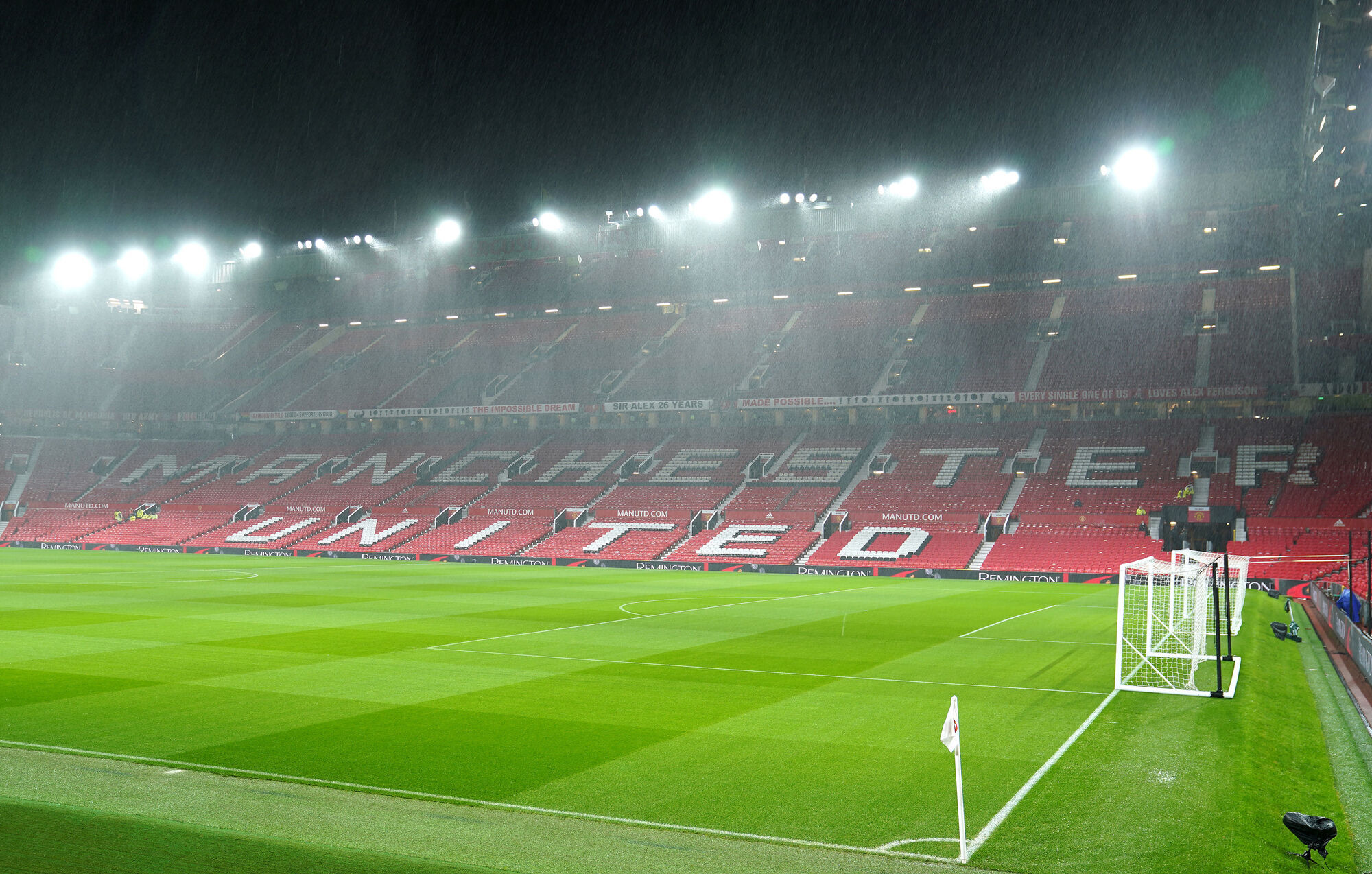
Wright Thompson's long-read piece for ESPN on Manchester United proved the point that New Journalism may be old, but still has a place and an audience
Colin Sheridan: Given time and expenses, the write around remains a sports writing gift

Wright Thompsons long-read piece for ESPN on Manchester Utd proved the point that New Journalism may be old, but still has a place and an audience

Writing in a re-issue of one of his most famous works, legendary sportscribe Gay Talese revelaed that the expenses he accrued during the writing of his iconic 1966 Esquire piece ‘Frank Sinatra Has a Cold’ came close to $5,000, and comprised almost entirely of restaurant and bar bills.


Adjusting for inflation, that’s equivalent to something north of $44,000 in today’s money, which is a heck of a lot of Old Fashioned’s. In Talese’s defence, he too was concerned by the mounting tab at the time, and expressed his anxiety to his Esquire editors mid-process.

“Don’t worry about the expenses as long as you’re getting something out there,” his editor told him. “Are you getting something?” Talese assured the magazine he was in fact “getting something”, and stayed another three weeks in Hollywood attempting to do the one thing he was sent out west to do; interview Ol’ Blue Eyes.

In the end, he failed to do that, owing as much to Sinatra’s sudden suspicion of the media due to coverage of alleged Mafia connections, as to his catching of the common cold, but in failing to actually interview Sinatra, Talese curated one of the most celebrated
profile pieces of the 20th century.

He did so by spending a lot of time (and Esquire’s money) in the company of associates of Sinatra — from his old bodyguards to the “little gray haired lady” charged with lugging his 60 or so hairpieces around the country (imagine the stress of that job!). Talese never used a tape-recorder, and rarely took notes during interviews, which, as he describes them, appear much less like interviews and more like him perched, almost invisible, at the periphery of everything, observing these extraordinary people navigate — as he called them — “ordinary but revealing situations”.

By the time Talese had finished, he had documented over 200 pages of handwritten notes which he condensed into a 55-page article. It’s impossible to quantify whether or not Esquire ever got their money’s worth in tangible terms, but by backing Talese and his curious methods, they became sponsors to a style of writing and reporting that came to be known —quite unoriginally — as New Journalism, a style characterised by subjective perspective, and one practised by Tom Wolfe, Hunter S Thompson, and the recently passed Joan Didion. Talese, who had made his name as a sportswriter, was it’s godfather, though.

Writing his retrospective on the Sinatra piece, Talese noted “While I was never given the opportunity to sit down and speak alone with Frank Sinatra, this fact is perhaps one of the strengths of the article. What could he or would he have said (being among the most guarded of public figures) that would have revealed him better than an observing writer watching him in action, seeing him in stressful situations, listening and lingering along the sidelines of his life?”

For a while there in the mid-60s, nobody listened and lingered better than Talese. Either side of his Sinatra piece, he wrote and published similar style profiles of boxer Floyd Patterson (The Loser, Esquire 1963) and Joe DiMaggio (The Silent Season of a Hero, Esquire 1966), two of the most famous men in America at the time. Each profile a prosecution on the tortured souls of brilliant men rendered human and relatable by Talese’s quill, both written with the same inquisitive eye.

The expense budgets may be much less generous today, and attention spans a tad threadbare, but the appetite for wanting to know those who we religiously watch throw and run and kick and punch is as insatiable as ever. The “best of” lists for the year just passed included Wright Thompsons long-read piece for ESPN.com “Super League rage, Ronaldo mania and the fight for the soul of Manchester United”, a read that proved the point that New Journalism may be old, but still has a place and an audience, once you have a writer skilled and patient enough (and a news org willing to bankroll that patience). Ditto Thompson’s studies on Conor McGregor and Tiger Woods.

Thompson — like Talese — has never needed direct access to his subjects to paint his masterpieces. Access, he has argued, would complicate his process.

Which is probably just as well, as access is as problematic a thing now as it was for Talese in 1963. Sinatra had a team of 70 around him, which made getting too close to him next to impossible, but made picking up colourful crumbs from that posse of 70 a worthwhile endeavour. DiMaggio was no less precious or protected. There were exceptions — Ali’s inner circle was populated by many writers favourably disposed to him (Norman Mailer and George Plimpton in particular), but, for all we lament the glory days of sportswriting, is that struggle for authentic exposure any different to now?

From Leicester City’s James Maddison’s supercars and walk-in wardrobes to Christiano Ronaldo’s “despite my 47 goals scored across all competitions” social media missives, sportstars have always craved controlling their own message. It has become so pervasive in GAA circles that, in order to know what a player or manager feels about something in the off-season, you need to comb the instagram of car dealerships.

Which makes the Talese approach to storytelling all the more relevant. Sports people are and never were our property, but wanting to know what makes them tick is a fundamental curiosity within us all.

x

More in this section

Sport

Newsletter

Latest news from the world of sport, along with the best in opinion from our outstanding team of sports writers. and reporters

Cookie Policy Privacy Policy Brand Safety FAQ Help Contact Us Terms and Conditions

© Examiner Echo Group Limited