Can old hero Martin O’Neill reignite Forest fire?
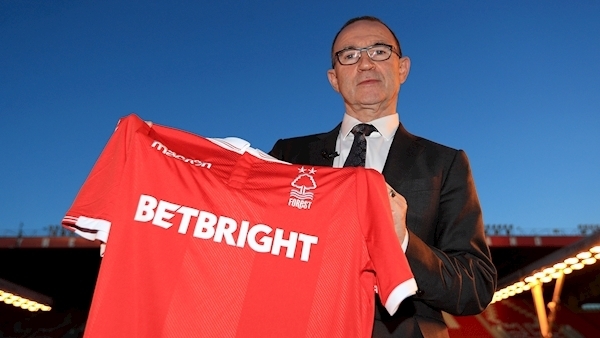
It was no surprise to learn that the club hierarchy were said to have been “blown away” by Martin O’Neill’s pitch for the Nottingham Forest job, writes . And even allowing for the positive spin which always attends the appointment of a new gaffer, it was probably no exaggeration either.
Man-management, the ability to make someone feel, as they say in the game, 10 feet tall, has always been flagged as one of the Derryman’s strongest points, especially in face-to-face exchanges and within the intimate surrounds of a dressing room or even a boardroom.
In a rare departure from the more structured and restrictive formalities of his press conferences as Ireland manager, I even got a little taste of the fabled ‘O’Neill Effect’ myself, when we sat down for a one-to-one interview in Cork last August.

The tape had only just started to roll when the Derryman was already pushing back his chair and jumping to his feet to give me a mini-coaching seminar on how he wanted to see his Irish players “deal better with the ball” as he liked to say. Then, sitting back down but barely pausing for breath, he was grabbing pen and paper to sketch out patterns of play, showing how midfielders and strikers could provide better angles for an advanced full-back to develop the team’s attacking threat.
After the Danish pasting in the World Cup play-off had sewn enough seeds of doubt in O’Neill’s own mind to prompt serious consideration of his jumping ship for Stoke, 45 minutes in his animated, infectious company was enough to raise the spirits and convince that the manager definitely had his mojo back.
“It’s part of my nature to brood but the point is you cannot stay down forever,” he told me, reflecting on his and Irish football’s long winter of discontent. “You have to get up and fight.”
Unfortunately, it would all-too-quickly became apparent that what O’Neill was going to be engaged in fighting was a losing battle, on almost all fronts: first, Declan Rice to an uncertain international future and then, in the game in which the starlet had been earmarked to officially launch an illustrious career in the green shirt, a crushing defeat in Cardiff from which ensued the protracted decline that would finally prove terminal for O’Neill’s stewardship of Ireland.
Five months on, there appears to be little appetite in Nottingham to dwell on the damp squib ending to his time in international football, the excited natives much happier to point to the fireworks of Euro 2016 qualification and those celebrated victories over the likes of Germany, Italy, Austria and, just before it all started to go horribly wrong, Wales.
That’s insofar as what O’Neill achieved – or, as many in England would have it, over-achieved - with Ireland, registers at all. The truth is that Forest fans would be much more impressed with his past successes in club football, overlaid with the undeniably romantic appeal of the return of one of the club’s favourite sons.
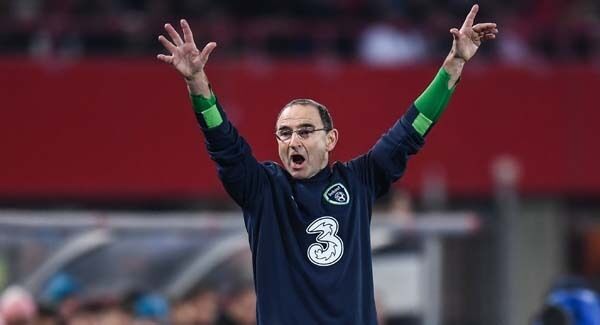
In the dying days of his Irish reign, on a night when his back was almost literally to the wall as he was interrogated by disenchanted hacks, O’Neill defiantly asserted that he was still the man to lead Ireland to the Euro 2020 Finals. And why could he be so sure? “Because I’m good,” he said.
Maybe he did really believe that or perhaps it was just a show of bravado, but it was interesting to note that when he met the media in Nottingham on Thursday, he was giving no such hostages to fortune. Indeed, he even allowed for the possibility of failure, saying that if he didn’t get the club promoted this season or next, he would gladly hand the task over to someone else.
O’Neill faces the first hurdle today, a home game against Bristol Rovers, without Roy Keane by his side, as the man he says he dearly wants as his assistant deals with personal and professional issues before it will be known if Forest’s own version of the ‘Dream Team’ can become reality.
A lot of eyebrows might be raised in Ireland, but former Forest star and
Read More:
“The pair have worked together for the last five years and have clearly formed a bond and trust with each other,”
Read More:
And that’s vitally important for a football manager – to have somebody around you whose opinion you really value. And not because they say ‘yes’ all the time. Sometimes, it’s better to have someone who’ll say, ‘hang on, that mightn’t be the best way to go’.
“Roy has his sceptics, he probably always will. I know football has changed and you can’t do some of the things you did 15 or 20 years ago with the way you speak to people and so on but I’ve worked under Roy, he signed me for Sunderland, and I always found that Roy tells you things straight and, if you can accept that and put things right, he can be a big asset at a football club.”
Back at our interview in Cork, O’Neill finished up by referencing John Milton as a way of describing the journey he hoped to make with Ireland out of the darkness and back into the light.
“If I can draw a horrible, hopeless analogy,” he said with a smile, “it’s a bit like Paradise Lost. Lucifer has been sent down to Hell, he’s lost the battle in Heaven. And he looks around and sees the people and he thinks, ‘I’ve got to get up again, I’ll have to devise another plan to get back up there to Heaven and get my place back’.”
He could hardly have envisaged it at the time but you could say that he finds himself in a kind of heaven now, right enough, rapturously received as one of Brian Clough’s ‘Miracle Men’ back at the club where he enjoyed so much glory as a player. But, having regained Paradise, the hard task ahead – and fascinating to see how it all unfolds - will be to avoid another fall from grace. The very best of luck to him. (And no, I’m not being disingenuous).