History repeating as law will leave its mark in 2019
The influence of law and politics on sport will continue to deepen in 2019. In the second of a two-part series, looks at some landmark sporting anniversaries that fall this year.
This year will be the 50th anniversary of Neil Armstrong becoming the first human to walk on the moon. NASA’s Apollo Programme landed a dozen Americans on the moon between July 1969 and December 1972. In February 1971, Apollo 14 astronaut Alan Shephard hit a golf ball with a modified six iron, making golf the first sport to be played outside our planet.
Returning to Earth and 2019 is a significant year for golf. For the first time in a generation, the Rules of Golf have been fundamentally reviewed and come into effect this month. More broadly, there are lessons for all sports in how golf, one of the world’s oldest sports, is struggling to promote itself to modern sports consumers.
While a decline in global participation levels has plateaued since the economic crash of 2008, golf continues to lose ground in what the sports marketeers call the key demographic ie, those aged between 18 and 34. In 2018, for example, only a quarter of golfers in the US were of that age group.
Golf, it appears, is too costly, too time consuming and too fussy a game for millennials. Moreover, in some key markets both the financial sustainability of public courses (in post-Brexit UK) and the environmental sustainability of private courses (in California, for instance) have been called into question.
All that being said, the hosting of the Open Championship at Royal Portrush will be truly historic for, and a huge opportunity to promote, the game of golf on this island in 2019.
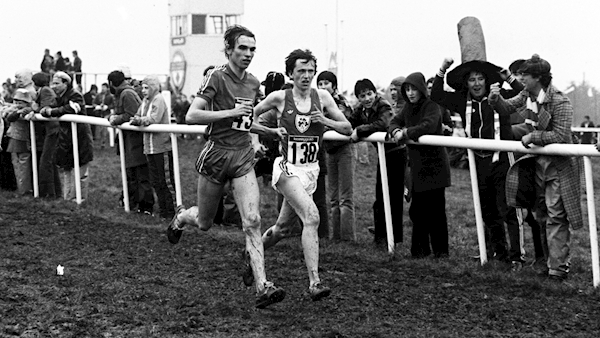
This year brings the 40th anniversary of one the great individual achievements in Irish sport — John Treacy winning the IAAF World Cross-Country Championships for the second consecutive time at the old Greenpark racecourse in Limerick in front of a wet and muddied crowd of 25,000 (or thereabouts, Limerick people tend to exaggerate their sporting attendance — see the year previously for Munster vs the All Blacks.) Ireland came second to England that October day in the senior men’s team event, relegating the Soviet Union to third.
The shadow of Russian athletics continues to follow Treacy today in his role as chief executive of Sport Ireland. Treacy must be commended for ensuring Ireland is an active member of the group of 16 national anti-doping organisations globally who have repeatedly called on the World Anti-Doping Agency (WADA) to hold firm in ensuring Russia’s compliance with global anti-doping regulations.
A key marker on the issue of doping and sport this year will be whether Russia will participate at the IAAF World Athletic Championships in Qatar in late September.
Apart from the doping issue, another topic for Treacy and Sport Ireland to contend with is the regulation of MMA. This is a more nuanced debate than current calls for its proscription allow. Before leaving for Australia in 2017, I was commissioned by Sport Ireland to report on this topic and there may be a regulatory pathway for MMA in Ireland as part of the Irish Martial Arts Commission.
In a personal capacity, I believe MMA in Ireland would ideally have its own regulatory body. Interesting models exist internationally. In Sweden, and here in Australia, legislation permits licenced fights but under strict conditions.
The fundamental problem for the sport in Ireland is not so much how to regulate it but who exactly is being regulated. Though Irish junior and senior fighters had great success at the world amateur MMA championships held in Bahrain in November, most of the fighters came from John Kavanagh’s gym. Can the regulation of a sport be based around one gym?
The Premier League title race between Liverpool and Manchester City will dominate the sporting pages for the first half of 2019. Looking ahead, a key game for Liverpool will likely be their home fixture on April 14th against Chelsea – the last time Liverpool will face one of the top six teams.
The following day will be the 30th anniversary of the Hillsborough stadium disaster which left 96 Liverpool supporters dead.
Reports emanating from the disaster remain seminal in modern stadium safety and design. More importantly, the campaign for justice for the 96, led by the indefatigable Professor Phil Scraton and others, continues to have legal implications outside sport, in terms of police accountability procedures, but also in the way public inquiries (such as the Grenfell Tower disaster) are conducted.
Three decades on and lingering legal proceedings against police officers mean that this year family commemorations will be held in private though at 3.06pm on April 15, the city of Liverpool will fall silent for a minute: The title race of 2019 forgotten, at least for a while; the victims of 1989 remembered, always.
Twenty years ago, on May 30, Manchester City defeated Gillingham on penalties in the Football League Second Division Play-off Final to gain promotion to what is now the Championship. Within a decade, the club had been transformed by its new Abu Dhabi owners. Three Premier Leagues, three League Cup, an FA Cup, and over €1.5bn in spending on players and the club enters 2019 under investigation by Uefa for possible violation of football’s Financial Fair Play (FFP) regulations.
The key points to note in 2019 are: Did City overvalue sponsorship agreement agreements to circumvent FFP; if they did, will Uefa impose the ultimate sanction and ban City from the Champions League; if such a penalty is applied, might this be appealed to sport’s supreme court, the Court of Arbitration for Sport or even to the European Commission as a breach of anti-competition law?
A decade ago, Kerry beat Cork to win the All-Ireland Gaelic football final. Tadhg Kennelly became the first man to hold an AFL Premiership and an All-Ireland senior medal. Kennelly is now a key figure in the departure of several young talented Gaelic footballers to the AFL. How these new recruits (male and female) get on in Australia will be one of the GAA stories of 2019.
Any romanticism about what the AFL calls its “Irish experiment” can be left to one side. The way in which the AFL is organised – salary caps, a draft system etc - means that picking up Irish talent is seen as cheap, relatively risk-free means of rookie recruitment.
Similarly, any notion that AFL clubs might compensate their GAA counterparts for players is fanciful. All that the GAA will get from the AFL in 2019 is the rule change introducing the offensive mark in football. And even here it now appears that the proposed rule changes for Gaelic Football will have the lifespan of a New Year’s resolution – well intended but wistfully forgotten by mid-January.
An immediate case of interest this year will be the litigation taken by former professional rugby player Cillian Willis relating to how he was treated for a concussive injury while playing for Sale Sharks in 2013. The injuries led, he claims, to his retirement from the game. The case due to be heard very soon in Manchester is now solely directed against the treating doctor and not the club. The club it appears successfully argued that they were not responsible for the actions of the doctor who was not their employee and more an independent contractor. Medical negligence claims will add a new dimension to the issue of concussion in all sports in 2019.
Finally, if you want to find more about the law’s impact on sport, and even esports, what better way to start than by attending the international sports law conference to be held in Dublin on February 8 as organised by LawInSport and the Sports Law Bar Association of Ireland. See you there.
- Jack Anderson is professor of sports law at the University of Melbourne.