Regret that Peter Shilton’s suggestion to stage a Brexit debate with his old teammates was not taken up
It’s a tricky thing to visit England at the moment. writes Paul Rouse.

Regret that Peter Shilton’s suggestion to stage a Brexit debate with his old teammates was not taken up

It’s a tricky thing to visit England at the moment. writes Paul Rouse.

Every conversation that lasts any length of time inevitably moves on to Brexit.

Sometimes you get there straight away; sometimes it takes a little bit longer; but you always, always get there in the end, drifting onto the rocks, a siren song in your ears.

But how do you negotiate the conversation? As we know from our own history, having a foreigner consider you unfit for self-government is a profoundly irritating thing.

So it requires a lot of discipline to not empty the tank about the people who will most likely end up running the British government when it leaves the European Union.

This holds true for the odious gang of knaves and fools who dominate the right wing of the Tory party and, also, for what passes for a parliamentary opposition — the leader of the Labour Party, Jeremy Corbyn, reveals himself as utterly useless every time he opens his mouth on Brexit.

And the English commentariat is scarcely better. The newspapers, television, and radio shows, podcasts, and websites, are everyday remakes of old-style cartoons where Tom and Jerry time and again batter each other about the head with blunt instruments of spurious argument.

And then repeat the act ad nauseam.

There appears to be no end in sight to the bitterness — this is underlined by the fact that some of the country’s sporting heroes have ended up in a public slagging matches.

The fact of this happening means you can be left in no doubt that there is a deep and brutal chasm between people of all corners that will not be resolved any time soon.

So it is that — on one side — Chris Waddle, the brilliant former Spurs and England winner, can congratulate Theresa May on her performance and look forward with happiness to England leaving the EU with no deal: “We’ll be fine.”

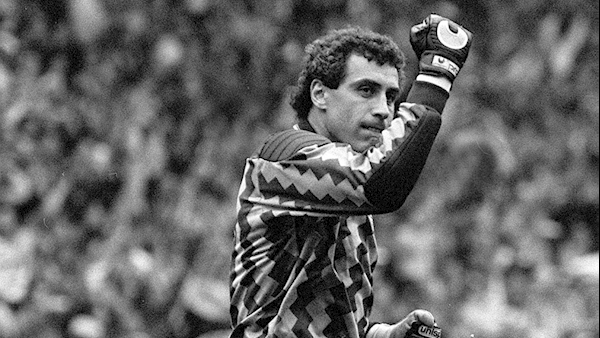
And his former England teammate, Peter Shilton, one of the greatest goalkeepers of any era, can say in admiration of the Brexiteer, Jacob Rees Mogg: “He really knows what he is talking about and puts it across in a calm and calculated manner.”

And — from the other side of the trenches — Gary Lineker returned fire by slagging off his two former teammates, in keeping with his repeated and ardent arguments that England should remain in the European Union.

His fellow England midfielder Peter Reid joined in the fun by telling Shilton he was plain wrong and that Rees-Mogg “doesn’t know his arse from his elbow”. Lineker campaigns openly for a second referendum and his anti-Brexit stance has profoundly irritated some of the people he works with at the BBC.

The BBC’s leading cricket commentator is Jonathan Agnew, himself a former international cricketer. He tweeted Lineker to say: “Gary. You are the face of BBC Sport. Please observe BBC editorial guidelines and keep your political views, whatever they are and whatever the subject, to yourself. I’d be sacked if I followed your example. Thanks.”

Lineker was having none of it. He replied: “Jonathan, I’m the face of my own Twitter account. I’ll continue to tweet what I like and if folk disagree with me then so be it. Thank you so much for your concern, which, I imagine, wouldn’t be a concern at all if you agreed with me.”

The thing is, though, that Jonathan Agnew had actually voted ‘Remain’ in the referendum and he was drawing attention to the BBC’s editorial guidelines on impartiality, themselves essential to the BBC’s perception of itself as a public service broadcaster.

The BBC, for its part, has expressed the view that Gary Lineker had crossed no line in his Brexit observations, not even when he tweeted: “Extraordinary to watch us take our country back and rip it to shreds in the process…”

A BBC spokesperson said that because Lineker was ‘not involved in any news or political output for the BBC’, his personal political views do not affect the BBC’s impartiality.

Or, in other words, the BBC does not wish to fall out with its leading sports presenter and it has duly adopted the sort of Jesuitical positioning that students of Éamon de Valera will be well familiar with.

The fact that Lineker has some seven million Twitter followers, as well as a wider platform born of his celebrity and achievements, has further enraged his opponents.

Basically, he has the means to connect directly with people and he is well liked.

But we’ve been here before with Lineker. Previously, he condemned British opposition to taking more refugees into the country during the 2016 crisis saying: “The treatment by some towards these young refugees is hideously racist and utterly heartless. What’s happening to our country?”

These views rattled the cages of some of England’s most gaseous Little Englanders and led to advice that sports people should stick to sport and that they were out of their depth in broader societal debate.

This is the type of advice that has been — and will be — repeated on numerous occasions to sports people who offer political views on any matter. Depending on who is offering the advice, it is bounced along in a ball of hate or wrapped in an insulting condescension.

In this country, sports people who campaigned according to their personal views on the Marriage Equality Referendum, for example, were offered the same advice to stick to sport.

Gary Lineker
Gary Lineker

But it is not just the notion that sports people can be dismissed as being out of their depth that is at issue. It can also be alleged that they are abusing their position if they seek to advance a particular political cause. This might be considered a sort of Bono Syndrome, where somebody who has gained fame through sport or music is considered to be out of order to press a political position.

This is, of course, rubbish. And is almost always the type of thing offered up usually to target those whose views with which one disagrees.

Anyway, regardless of profession or setting, it is clear is that it now takes serious diplomatic skills to spend an evening with English people who wish to talk Brexit.

This week there has to be genuine regret that Peter Shilton’s suggestion to stage a debate on Question Time with his old teammates was not taken up.

It would have been interesting to see if the old loyalties of wearing the same shirt and sharing a dressing room would have produced a civility in increasingly short supply when it comes to public argument. Maybe that is too much to hope for, but a remaking of proper, respectful debate has to start somewhere.

Over in Lineker’s home town in Leicester in the last few weeks, there has been plenty of gallows humour about the place. This is especially the case when the evening rolls on and the glasses are emptied — and emptied again.

Even hardcore Leavers understand that Brexit is now so shambolic a process, that they are left with little option but to find solace where they can.

And they laugh through gritted teeth when you pronounce yourself to be claiming Britain as an Irish Protectorate and that you wish to be known henceforth as the Duke of Leicester and that you can be paid in kegs. But there’s one thing that is now absolutely certain — for as long as we are all alive, the word Brexit will be common currency and talk of it will run and run.

And it will divide and divide again. And there will be no escape.

Paul Rouse is Associate Professor of History at UCD and is author ofThe Hurlers: The First All-Ireland Championship and the Making of Modern Hurling

x

More in this section

Sport

Newsletter

Latest news from the world of sport, along with the best in opinion from our outstanding team of sports writers. and reporters

Cookie Policy Privacy Policy Brand Safety FAQ Help Contact Us Terms and Conditions

© Examiner Echo Group Limited