Nostalgic hokum won’t restore United’s place in natural order
It was something young Patrick said that brought it home for me. Patrick was a transition year kid in the office on work experience a few weeks ago.
Nice lad, capable of eye contact, straightforward haircut, not the one they have now that looks like a low-flying cumulonimbus perched on top of their heads.
“What’s your team, Patrick?” went the standard introductory gambit ahead of a week making tea and fixing paper jams.
“United.” He rolled his eyes and smiled as United fans are now obliged to do.
“Ah yeah, it’s one or the other, isn’t it?”
“No, I’m actually the only United fan in my class. All the rest are Liverpool these days,” he said with a weariness unbefitting his years.
Admittedly, a small sample size, but I wondered if Patrick’s class was the bellwether for generational slippage in United’s support among the crucial floppy-haired teenage demographic.
These kids, I thought, have little memory of Fergie in his pomp. To them, United are the tedious jokeshop of the last five years, all dreadful football and try-too-hard social media flim-flam.
I thought of my own class at school, where great battalions of United and Liverpool fans faced each other on Monday mornings to exchange the weekend’s slaggings: the United fans in the full strut of their 1990s glory, the Liverpool fans trusting in the doomed promise of the Spice Boys, while those of us who supported neither were
basically Luxembourg, tiny cowering statelets hoping not to catch a stray bullet.
Changed days indeed, and perhaps news of Patrick’s class reached Old Trafford this week, as the plug was finally pulled on the tuneless din emanating from their manager’s office.
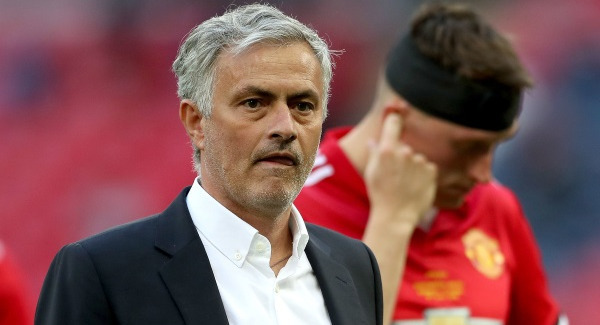
The appointment of Jose Mourinho was just one in a catalogue of decisions by United executive vice-chairman Ed Woodward that, if they were the work of the obligatory gormless buffoon candidate in The Apprentice, would have one suspecting unfair editing on the part of the show’s producers.
That Mourinho’s trajectory at United followed exactly the path everyone but Woodward suspected it would — a whiff of early success soon giving way to the familiar suffocating napalm of conflict and ego — makes one wonder just how much more damage the current regime at United might be able to do.
The appointment of Ole Gunnar Solskjaer as caretaker manager suggests they have plenty more in the tank.
Solskjaer was most recently manager of Molde, in the Norwegian Tippeligaen, that well-known hunting ground for United managers.
Last seen in English football managing Cardiff City to three wins in 17 Premier League games back in 2014, his main qualification for a job that involves preparing United to face PSG in their next Champions League tie is a two-decades old reputation as a beloved goal-snaffling super-sub.

Only in football is this sort of nostalgic hokum still the basis for important decisions.
Now, by many metrics, United’s status seems to have survived the years of misdirection since the steady hands of Alex Ferguson and David Gill were taken off the tiller. They top the Deloitte Money League of football revenues, all manner of social media fan engagement graphs point upwards and Mourinho, in fairness, cajoled them into second in the Premier League last season, though several light years behind champions Manchester City.
And yet under Mourinho, with his ugly guerrilla warfare football, United seemed reduced, a lesser thing.
Watching the camera cut to Ferguson on Sunday as they slumped to wretched defeat against Liverpool was to think of Ozymandias and the crumbling of empires. Shelley’s tale of a desert traveller stumbling upon the ruin of an ancient stone statue ends thus:
Ferguson, it seemed, was watching his monument crumble before his eyes, a fate even poor Ozymandias was presumably spared.
But young Patrick need not despair, as he fights his lone rearguard action for the United cause.

The petty squabbles of classroom affiliation are basically the entire football world in microcosm, for what are the great ambitions of the superclubs but the desire to clamber atop the status pecking order — I’m the king of the castle, you’re the dirty rascal, etc?
Take Tottenham, for example. They showed their new stadium off to their fans this week in all its gleaming, just-slightly-bigger-than-the-Emirates glory.
Their team are edging into the title race and they have reached the last 16 of the Champions League, but the enduring image of these giddy days will be the Twitter video of a beer machine at the new White Hart Lane that somehow fills the pint glasses from underneath.
Everything about Tottenham, even beyond the new stadium’s magic beer machines and much-touted fromagerie, screams ‘upwardly mobile’.
This is a club who threaten to upset the natural order of things, who under Mauricio Pochettino have matched and often out-performed United despite spending around £100 million less on wages per season and appear to be doing everything that once made United great.
And yet, for all that, Tottenham remain below United in the food chain. United want Pochettino.
The big beast has turned its head towards its prey and the hunt it is on.
Reports have emerged that Pochettino is interested and all the talk is about ambition, the job being “too good to turn down”.
Tottenham fans hope Pochettino is merely using United’s interest to prise investment in his squad from Daniel Levy’s tight grip, that he surely couldn’t abandon the romantic quest of his Spurs project, not now.
But the coming weeks and months will be excruciating for them as United circle, offering their man the keys to heaven, making their case to being the English game’s apex predator once again.
The headlines have begun linking Eddie Howe to Spurs’ potential vacancy, as the wheels begin to inexorably turn.
Patrick’s classmates might barely remember a time when they were actually any good, but they may well see the full weight of United’s status in the coming weeks and months.