Sexton a shoo-in to add world player of the year crown to success-strewn year
New Zealand are about to be knocked off another of their perches on Sunday night, for the second time in eight days.
If their monopoly of the World Player of the Year award does not end in the swanky setting of the Salle des Etoiles in Monte Carlo, there will have to be a stewards’ inquiry.
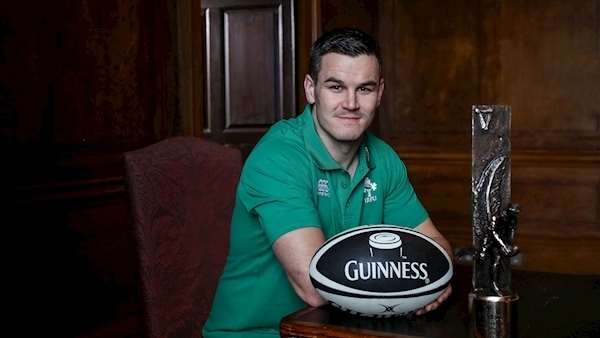
Having picked up the Rugby Writer’s Ireland Player of the Year award last night, no hurdle has been too intimidating for Johnny Sexton this year, starting with the long-distance drop goal to drag Ireland to the winning post in Paris and finishing with a unanimous points decision over the current world No. 1, Beauden Barrett.
Had the organisers extended the equine metaphor and picked their nominees from the Champion Hurdle winners at Cheltenham, they could have chosen Hurricane Fly, Istabraq, Desert Orchid and Rooster Booster instead of Barrett, Faf de Klerk, Reiko Ioane and Malcolm Marx.
Whether on four legs or two, this is surely one occasion where Ireland’s commander-in-chief only has to turn up to win.
Kiwis have won it eight times in the last nine years – Barrett, twice, Dan Carter, twice, Richie McCaw, twice, Brodie Retallick and Kieran Read.
Shane Williams is the lone Welsh winner (2008), Jonny Wilkinson the solitary Englishman (2003) and Keith Wood the only Irishman, during the award’s inaugural ceremony in 2001.
‘Uncle Fester’ is about to have some overdue company.
If not the judges will have some explaining to do.
There are eight – two from England (Maggie Alphonsi, Clive Wooward), one each from Argentina (Gus Pichot), Australia (George Gregan), France (Fabien Galthie), Ireland (Brian O’Driscoll), New Zealand (McCaw) and South Africa (John Smit).
No need for All Blacks to panic yet
Those who have kept an ear to the ground since last Saturday night may have heard a faint groan blowing in on the Atlantic winds from the far side of the globe.
Do not be alarmed, it will be the sound of another postmortem on faraway shores.
Ireland’s victory provoked a headline in the New Zealand Herald referring to a ‘Dublin disaster’, a ludicrous over-reaction that may have prompted the uninitiated to wonder how many had perished.
They even managed to pin some of the blame for their failure to live with Ireland’s intensity on Australia, suggesting that the non-competitive state of the Wallabies had made the Rugby Championship soft, a tournament too easy for the All Blacks to win.
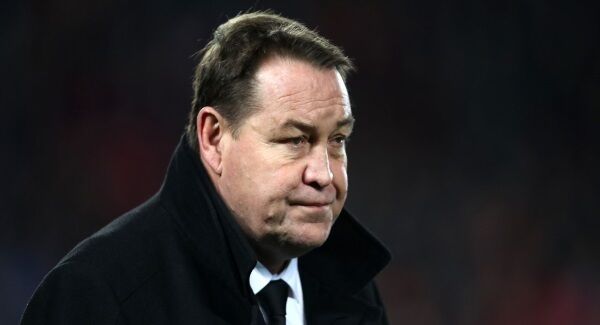
One columnist has gone as far as to suggest that the time has come for Steve Hansen to go, that the team has gone stale under his supervision.
Perhaps it is worth pointing out that Hansen has won two World Cups and built a success ratio of almost 90%.
As head coach, the All Blacks have played 95 matches, won 84, drawn 3, and lost eight.
If it’s time for him to go, what hope is there for the rest?
English costs conundrum
Those in the know estimate that English rugby will have raked in some €65m from a month of Test matches at Twickenham, figures the rest can only dream of.
That was on top of a profit of some €30m from the last World Cup.
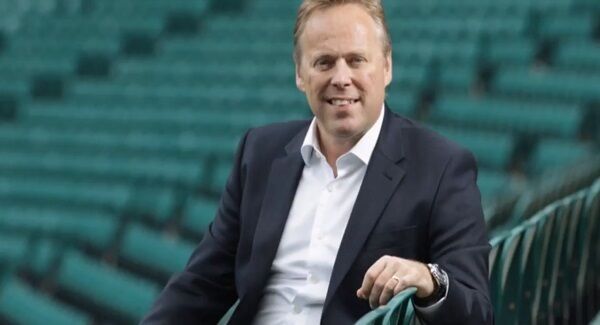
Yet the RFU is in the throes of a financial crisis, as illustrated by chief executive Stephen Brown’s sudden resignation last week following 64 redundancies during the summer.
How can you make €65m and be in hock?
What became of zero tolerance?
What, you may well ask, has happened to World Rugby’s policy of ‘zero tolerance’ towards blows on the head?
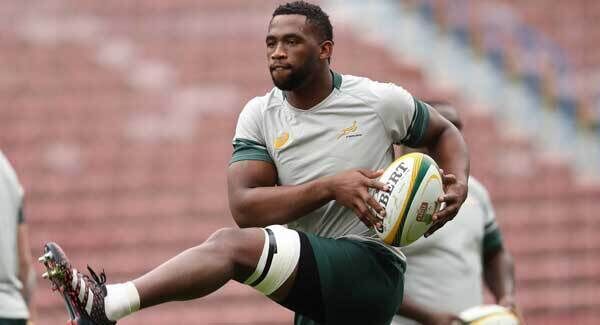
The Springbok captain Siya Kolisi used his head to butt Scotland centre Peter Horne in the face at Murrayfield last weekend.
In arriving at the conclusion that Kolisi had no case to answer, the citing commissioner did so in defiance of World Rugby’s directive.
It says: “A player is deemed to have made reckless contact during a tackle... if, in making contact, the player knew or should have known that there was a risk of making contact with the head of an opponent but did so anyway.”
Minimum sanction: Yellow card.
Maximum sanction: Red.