How ‘anti-congestion’ zones could help our GAA stars shine
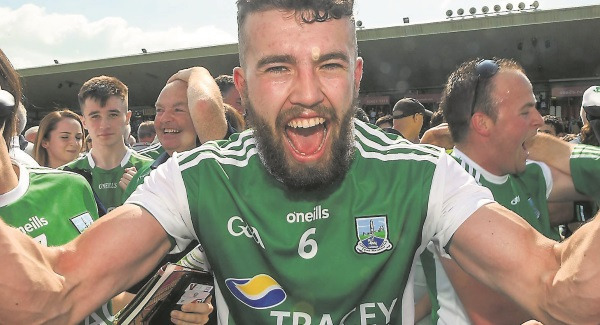

The GAA’s championship fixture schedule in football is an uneven mix of provincial, qualifier, and Super 8 fixtures.
The Connacht football championship takes a leisurely six weeks to play six knockout matches while, in contrast, this weekend alone we have three provincial finals and eight round two qualifier matches.
Moreover, if either Kerry or Cork win the Munster final, they will make the Super 8 after just two matches and then have a three-week break before the start of the Super 8.
If Mayo are to make it through the back-door route, they will have to win another three of four potential qualifier matches within a month and only have a week’s break before the Super 8s begin on the weekend of July 14 and 15.

It is easy to pick out faults in the system and there will be time enough to review it from September onwards. For now, it suffices to say that up to this year’s introduction of the Super 8s, the senior inter-county championship was the most old-fashioned competition of its type existing in Gaelic football.
Ironically, club championships around the country have experimented with various formats: From the basic, tiered model of junior, intermediate and senior grades, to championship seedings being linked to league placing, to “champions league” groupings ensuring a minimum of three games, to the use of divisional or amalgamated teams at senior level.
Many county boards have good ideas on how best to ensure an evenly spread schedule of championship games among evenly matched teams.
This type of innovation within counties is absent at inter-county.
Outside of the “Dublin dominance” issue, some level of tiered competition is badly needed in the football championship.
Hurling has benefitted from having five round-robin-based levels of competition. The finals of three of these — the Christy Ring Cup, Lory Meagher Cup, and Nicky Rackard Cup — are being played in Croke Park at the weekend.

The present football system, where teams might only get two championship games in a season, must be hugely frustrating for inter-county football managers.
In the aftermath of the first-round qualifier game between Meath and Tyrone, much of the focus was on the Meath manager, Andy McEntee, and his aggressive behaviour towards the referee. Referees getting Garda escorts at the end of games is the most dispiriting sight in the GAA.
It also has a trickle-down impact on club referees, who are usually on their own at such games and can be subject to vile abuse by club managers and officials seeking to blame another for their own inadequacies.
The GAA disciplinary system should come down strong on this wherever it happens and the attitude of “ah sure it was a done in the heat of the moment” is no excuse for behaviour the brings the GAA into disrepute.
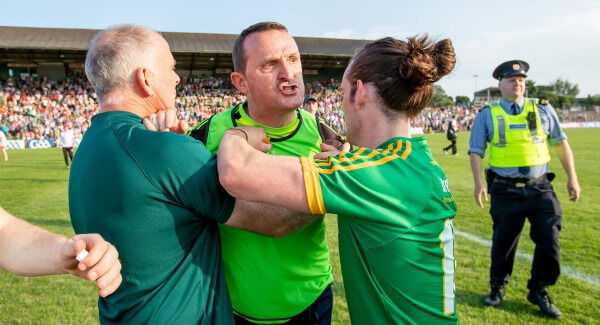
Having said that, McEntee should be given the opportunity to explain himself and what has been slightly forgotten are the points he made in interviews immediately after the game.
He specifically contrasted the fact that in hurling, Waterford, the victims of a poor umpiring decision in the Austin Gleeson “phantom” own goal incident against Tipperary, at least had the opportunity to right things in their two remaining (of four in total) Munster round-robin games.
In contrast, as McEntee lamented, Meath were out for the year in mid-June.
Given the amounts now spent on inter-county teams, managers’ time and commitment and the skewed training-load to game-time ratio for players, surely more championship games in a more condensed format is needed?
In this, one of the more interesting post-match interviews of this year was given by Cork hurler Colm Spillane after the drawn game against Limerick on June 2.
The post-match analysts were of the view that tiredness, due to Cork’s third game in a row, was the main reason they did not capitalise on Limerick having a man sent off early on.
Spillane was interviewed immediately after these comments and, when the tiredness issue was put to him, he dismissed it with alacrity. The players, he said, loved the regular games and the short, sharp, skill-based training sessions that accompanied them during the week.
The coverage of the GAA championships on TV also brings another issue of contrast.
At the end of the coverage of the Tipperary and Clare hurling game on June 10, the broadcaster switched to their Croke Park studios for the Leinster football semi-finals. The beaming faces in Thurles were replaced by those at a dry wake.
Unprompted, a downcast Tomás Ó Sé and Colm O’Rourke bemoaned Carlow’s negative display against Laois and also threw in a few barbs about Fermanagh’s style of play.
The predictability of the upcoming Dublin v Longford semi-final did not help the mood either. Defensive skills can be appreciated, but attacking play is attractive.
Nevertheless, the criticism aimed at Fermanagh (0 titles from 130 years in the Ulster championship) and Carlow (one in 130 years in Leinster) could be directed elsewhere in the GAA.
Here, in Australia, a similar debate has erupted in the AFL. This season’s average scoring rate is the lowest in 50 years. Instead of asking coaches (who universally have a short-term view of the game) to alter their approach, the AFL’s high-profile playing rules committee has suggested some radical rule changes.
These changes include “anti-congestion” rules reducing the number of players on the field and capping the number of interchange subs that can be used.
There is the idea of mandating that, on restarts, players must return to certain set zones on the field (“anti-density rule”).
Moreover, there is a move in AFL to have even more on-field umpires. Getting clean possession of the ball in Australian Rules is vital, given the mark.
Having an umpire free to follow the play and others to police backs who are grappling or blocking a forward’s run is seen as vital to promoting a free-flowing game, as it might be in GAA.
The rule in the International Rules series that handpassing is restricted to a maximum of four in a row before a player must kick is also worth considering.
Looking at ways to encourage the tackled player to release the ball rather than hold on to it and draw a foul might also be something for the GAA to adapt from AFL.
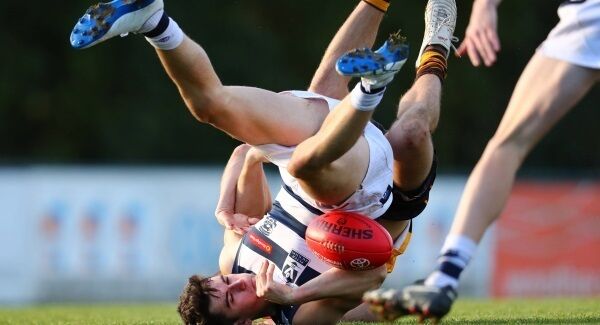
The basic idea of rule changes should be to promote safe, skilful play and one of the best ways to do this is by protecting the most skilful players.
This year is the 30th anniversary of Ireland’s foray at Euro 88. The final was marked by a wondrous goal by one of the greatest European centre-forwards of all, Marco van Basten.
Van Basten had to retire prematurely due to ankle injuries, a move which prompted the “from behind” tackle ban in football. You only have to contrast the treatment that Maradona received in the 1980s and 1990s to the protection afforded to Messi to see the benefits of such changes.
In contrast to the AFL and soccer, since Jarlath Burns’ term ended, we have heard nothing from the GAA’s playing rules committee and the vacuum is being filled by the opinions and agendas of pundits.
Speaking of opinions and agendas in Gaelic football, the key game of interest at the weekend is arguably the Ulster final and Fermanagh’s attempt to win that elusive provincial title.
Last weekend, some of the team and management met DUP leader Arlene Foster. She passed no comment on their defensive style, wished them well and tweeted: “Its Fermanagh’s year.”
Pleased to wish my neighbours in @FermanaghGAA all the best for the Ulster Final. I might not have had many tips for them - but a lovely welcome from the team and management . . . It’s Fermanagh’s year. https://t.co/5fSpMVhaXY
— Arlene Foster DBE PC #ProudofNI. (@ArleneFosterUK) June 16, 2018
Most of us would probably welcome incremental change as to how the GAA football championship is run in the future.
Given our past, most of us on the island would also probably say that Foster’s gesture is, for now, as incrementally welcome as it gets.