Still nagging concern that Ireland expend huge energy posting scores
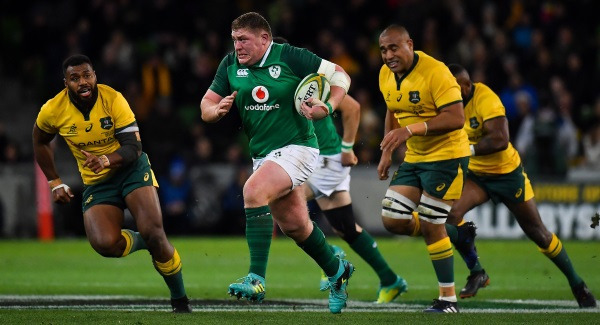

International rugby of the highest quality was on show in Melbourne Saturday in what is turning out to be an enthralling test series. One suspects even the traditionally one-eyed Wallaby supporters will be pleased that everything now goes down to the wire when their compatriots meet Ireland for a third consecutive weekend in Sydney.
By all accounts, that test has been sold out for weeks with the large Irish community based in the city committed to securing their tickets weeks ago. As a consequence, Ireland are expected to have an even bigger following than they enjoyed at AAMI Park on Saturday night where the support for the team was inspirational.
The pride and satisfaction on the faces of our exiled community was there for all to see. At the 13th time of asking, 39 years down the track from the famous series win in 1979, Ireland have finally beaten the Wallabies on Australian soil.
It might have been a long time coming but it was well worth the wait. The challenge for Ireland now is to back up this highly impressive showing by repeating the dose, something Australia failed to do after their success in Brisbane, next Saturday.
Ireland were left very frustrated and disappointed with the way they played in the opening test and after the dressing down they received from defense coach Andy Farrell early in the week, there was always going to be a reaction .
We’ll see what good old fashioned Irish ticker is about, won’t we.
How right he was.
Saturday’s performance was about much more that the ticker though. Ireland were clearly the better side yet the worry remains that, once again after dominating both territory and possession, Australia were still in a position to win the game at the death, despite being held scoreless in the entire second half until two minutes to go.
Ireland enjoyed a well deserved 12-point lead entering the 78th minute yet almost conspired to lose. A silly yellow card to Jack McGrath a minute earlier opened the door for Australia that they almost took when narrowing the margin to five. At that stage not only were Ireland reduced to seven forwards but were forced to replace Devin Toner with Joey Carbery having run out of back up resources up front. Thankfully there was no scrum during those hectic closing minutes.
That vulnerability remains a concern as Ireland have to work harder than most opponents to register points. The sustained pressure they exert from the multi-phase approach they launch inevitably leads to penalty concessions which Johnny Sexton, more often than not, converts.
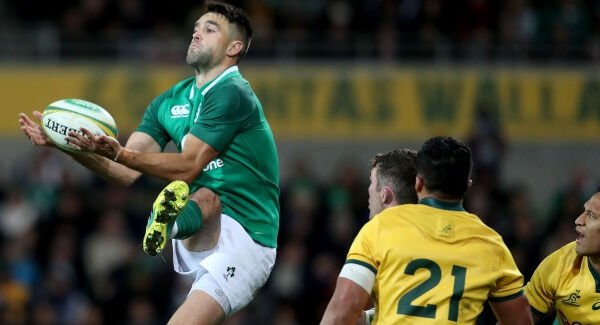
It is the exhaustive work required to secure those points, with tries even harder to come by, that leave Ireland exposed. Over the course of the first two tests Ireland have enjoyed an average of 62% possession yet have only managed to score two tries. At least there was a bit more variety to Ireland’s attacking game this time out.
Where we continuously go through phase after phase to register a try, Australia tend to hit up only once before stringing two or three wide passes to exploit the width of the pitch. In some respects the approach is reflective of the varying strengths and skill sets of the two squads and that contrast in style is what makes this series so captivating.
As so often happens in a series like this, it is the circumstance and mindset of the players that dictates the outcome. Nothing focuses the mind more than defeat. An under pressure Australian side carried that mentality into the Brisbane test and it drove them to victory.
Ireland were not quite at the same pitch and suffered as a result. It was a case of role reversal coming into this one and not even the concession of a sublime try to Wallaby centre Kurtley Beale after only 84 seconds could derail an Irish side already under big pressure coming into the game to deliver a performance and a positive result.
In training all week, Ireland focused on addressing the issues that cost them in Brisbane, namely being more aggressive and ruthless at the breakdown, reducing the handling errors, tightening up their scrum and making better defensive reads.
While the consistently brilliant David Pocock had his moments in this one, he exerted nowhere the influence he enjoyed seven days earlier. In that he was eclipsed by a monumental performance from Ireland’s captain Peter O’Mahony who took it on himself to outplay the inspirational Aussie.
O’Mahony effected three crucial turnovers, at key moments in the game, all of which yielded penalties as the Wallaby discipline fell apart in a brilliantly competitive opening 40 minutes of rugby that yielded 30 points and left Ireland leading 16-14 at the break.
It could have been more as Joe Schmidt was left seething when referee Paul Williams blew for half time after the Wallabies had knocked on yards from their line just before the hooter. Ireland should have been allowed feed the scrum in a very advantageous position but were denied by a wrong call from the New Zealand official.
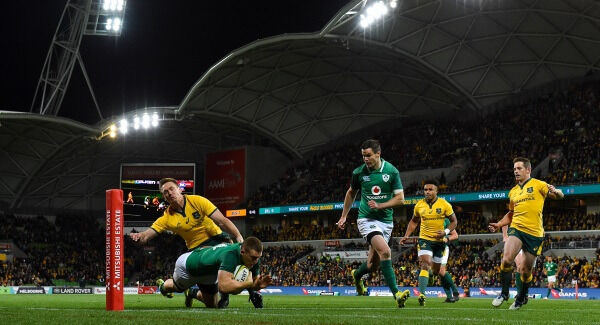
The ruthless streak that yielded 13 points from a converted Andrew Conway try and two Sexton penalties when Marika Koroibete was yellow carded for a dangerous tackle proved crucial, especially when Australia failed to register a single point after Cian Healy was similarly dismissed after the concession of a penalty try from a successful Wallaby lineout maul.
Ireland’s set piece was rock solid throughout and in this Schmidt’s somewhat controversial selection of Niall Scannell over Sean Cronin was fully justified. Scannell had a monumental game. His scrummaging was superb throughout while his line out deliveries, from his very first demanding throw to James Ryan at the tail, were executed with pinpoint accuracy. He also carried forcibly.
To beat Australia, Ireland identified they had to curtail the influence that Beale, Pocock and Israel Folau would have on the game. While Beale, like Pocock, had their moments, both failed to come near the impact they enjoyed in the first test and Folau was largely anonymous.
The aerial supremacy he enjoyed last week was no longer there, primarily due to the fact that Ireland ceased the folly in kicking down his channel while Australia had so little possession to begin with, they weren’t going to kick it away in the hope that Folau might retrieve it. Then they did Ireland coped much better in the air.
After two highly physical and attritional tests, the outcome of next weekend’s decider might well come down to injuries and who is in better physical shape. The Wallabies have already been dealt a potentially fatal blow on that front with their influential scrum half Will Genia ruled out with a broken arm. Their best second row in Adam Coleman is also very doubtful after picking up a facial injury.
For Ireland, Conway, Healy and Dan Leavy all had to be replaced due to injury and all will be monitored in the hope that they will remain in the selection mix. Of the 32 man Irish squad on tour, Ross Byrne is the only player not to see any game time after Tadhg Beirne became the 1,105th Irish player to be capped on Saturday night. Whether on not Byrne will make it into the match day squad for the final test remains to be seen.
What is crystal clear is that, while Schmidt had one eye firmly fixed on Japan and the World Cup next year when he came out here, everything is now geared on the short term and winning a historic series in the third and final test. The future is now only five days away.