Rewriting the history of the origins of Irish soccer
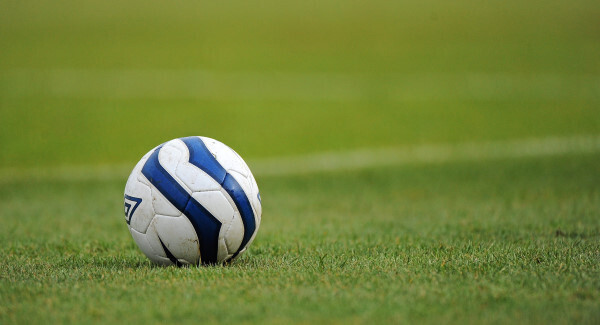
This weekend brings the anniversary the first playing of soccer in Ireland — or so the story goes, writes Paul Rouse.

Rewriting the history of the origins of Irish soccer

And that story as it is told appears a relatively straightforward one, a story with the sort of clarity that lends itself to an easy telling.

Central to it is the Belfast businessman, John McAlery, who is credited with bringing soccer to Ireland and of building the foundations of the game in this country.


It was McAlery who is recalled as the one who brought two Scottish teams (Queen’s Park and Caledonian) to Belfast on October 24, 1878 to play an exhibition match. Following that match, McAlery is also credited with founding the first soccer club in Ireland — Cliftonville in 1879 — and then founding the Irish Football Association in 1880.

In short, these deeds are enough to see McAlery generally accepted as ‘the father of association football in Ireland’. This is something that has generally been accepted by historians, journalists and those of the general public who are interested in such matters.

Recent research by Martin Moore — published in an international sports history journal as The origins of association football in Ireland, 1875-1880: a reappraisal — demonstrates that ‘the story is not quite as straightforward’.

Instead, it would appear that the notion of McAlery’s role has ‘presented a simplified story that overstates his importance and overlooks the involvement of others.’

What is agreed is that the organised form of football being played in Ireland in the mid-1870s was rugby. There were some 70 clubs and schools using rugby rules.

The rules for Gaelic football had yet to be invented (although there is a limited evidence of forms of folk football being played in parts of Munster) and although rules for soccer had been written in London in 1863, the game had not set down roots in Ireland.

Martin Moore has now established that a match that was previously lost to history was played ‘under the Association code of rules’ at the grounds of the Ulster Cricket Club in Belfast on Saturday, December 11, 1875. This match was reported in the Belfast Newsletter and the Northern Whig.

Reports of another soccer match, also played in Belfast, on March 3, 1877 saw members of the Windsor Football Club (who had played rugby in Belfast since 1870) play a match among themselves. This was supposed to be a trial for a soccer match against a visiting Scottish team, although it appears this match against the Scots was never played. Either way, among the players who played soccer that day in Belfast were at least four Irish rugby internationals. This adds to the work of David Toms who noted that a soccer match was played in Mallow between two school teams — Penn’s of Mallow and Lismore College from Waterford — on Wednesday, November 28, 1877.

That match ended in a 0-0 draw, amid ‘unbroken good humour and hilarity’ according to a report in the Cork Constitution newspaper.

The point of all of this is that soccer was played in Ireland before the supposed ‘first match’ between two Scottish teams in 1878. The likelihood is that there were other matches, beyond the ones we know of now, played in towns or cities or villages and which went unreported.

This is not to argue that the 1878 match was not important. Martin Moore is clear that it was a pivotal moment. Nonetheless, he takes issue with the way in which the role of John McAlery has been exaggerated in making this match happen.

For example, contemporary reports credit JA Allen, the captain of the Caledonian Club in Scotland with making the initial overtures to Belfast men and of actually securing the ground on which the match was played.

And as Moore pithily notes: “The first source to expressly credit McAlery is McAlery himself in May 1885, some six-and-a-half years after the match. In the course of a letter to a Dublin newspaper, he claimed: ‘Alone, I did it.’ “

Now, there is nobody suggesting that McAlery did not have a role in organizing the game, but as Moore writes: ‘The probable explanation is that McAlery was involved, but that the credit should be shared with others.’ Certainly, the blue plaque at the Cliftonville grounds that claims that McAlery ‘introduced association football to Ireland’ is overblown.

In passing it is worth noting that a journalist covering that first match sneered at the players who went around ‘butting at the ball like a pack of young goats’ and predicted that soccer would never take off in Ireland. Punditry revealed itself to be a difficult undertaking right from the beginning!

In the years after 1878, the relationship with Scotland was influential in the growth of soccer in Belfast, with teams and players crossing the Irish Sea. The flow of labour across the water facilitated this process and helped to build in Belfast the foundations of Irish soccer.

By November 1880, five Belfast clubs and two more from Derry founded the Irish Football Association. That Association began to field an international team and organized the IFA Cup.

B

y then soccer was hinting at pushing its way across Ireland. Tom Hunt has recorded how a soccer match was fixed for Mullingar in late 1878 and another was fixed for Sligo in 1879 as Paul Gunning records. Later, in October 1879 a soccer match was played in Tullamore between members of the local rugby club and St. Stanislaus College.

The reality is, however, that it was only well into the 1880s and 1890s before the game began to make any significant headway outside of urban Ulster.

By then, of course, the GAA had been established and had invented rules for a game which it called Gaelic football. This game spread quickly and had been played in every county in Ireland by the end of the 1880s. Rugby, too, remained strong, notably in certain schools and in certain suburbs, But, despite the clichéd image of rugby as a game of the middle- and upper-middle-classes in Ireland, it was also beloved of working-class communities in other urban areas.

And the truth of it is that the patchwork of football-playing clubs that were established in Ireland cannot be easily divided (or divided at all) by class and identity.

For example, the spread of soccer to Dublin was initially driven by students of Trinity College and others from the Medical School. That it came, in time, to be dominated by working-class involvement has led to this fact being neglected — equally, it remains the case that the Irish universities (the preserve of an elite under well into the 20th century) organised an annual intervarsity competition.

It is — as usual — in these complications of the narrative that the real treasures of history are to be found.

They remind us once again that in the past — as in the present — the neatly-boxed off answer is invariably too neat to be accurate.

x

More in this section

Sport

Newsletter

Latest news from the world of sport, along with the best in opinion from our outstanding team of sports writers. and reporters

Cookie Policy Privacy Policy Brand Safety FAQ Help Contact Us Terms and Conditions

© Examiner Echo Group Limited