No-one in Kerry’s dropping the ball this time
The chairman of Kerry GAA was on home turf last Saturday, leaning over the railing behind the goals at the impressive Brosna pitch he did his quota of heavy lifting on.
That Tim Murphy was grimacing had less to do with his own club struggling in a Division 3 Co League game against Ballymac than it had Kerry’s loss to Roscommon in the All-Ireland U17 football semi-final a few hours earlier.
Few had seen that coming, an untimely reminder that no sooner is progress assumed than it begins to unspool.
Those at the head of affairs in Kerry GAA know it well, twice skirting with barren spells, and all determined to avoid repeats.
Earlier in the day Murphy had joined his county board secretary Peter Twiss to showcase the county’s new €8m Centre of Excellence at Currans, a future factory for all GAA grades and genders in the county.
Twiss winced at the thought of the county luxuriating in its splurge of recent under age and colleges success.
“I love when someone comes into a meeting and says ‘no, we can do better’. That is precisely what you want to hear. I would absolutely get scared if someone is telling me ‘we are doing great’. That is a disaster,” said the Milltown-Castlemaine official.
Tim Murphy, in his previous role as development officer, was working hand in glove with then chairman Patrick O’Sullivan to get Currans off the drawing board and into development, but he always had one eye on pitch matters.
“Éamonn Fitzmaurice did an incredible job on the transition he had to oversee, it has been all but seamless. He was in a no-win situation when he came in at the end of 2012. We were told we had nothing coming through player-wise and in that scenario, the whole issue of having nowhere proper to train in the winter moved front and centre,” Murphy says.
“We are lucky to have a man of that calibre. I work with him as the board’s liaison officer to the senior footballers, and the amount of time he puts in above what people see is seven days a week every week.”
Below the line, however, “systems and structures”, as Tim Murphy likes to call them, were being shaken and stirred.
Especially on the coaching side.
“The key point is the development squads,” Twiss maintains. “(Coaching officer) Donal Daly’s involvement was vitally important. He wasn’t afraid to ask what can be done better, nor afraid to bring in others. Sometimes you can be defensive in those positions, you don’t want someone venturing into your territory. These things don’t happen over a month or two. These things take a strategy,” the secretary said.
“And the proof of the pudding was a Kerry minor trainer going into a team and finding that they had an awful lot of ground work done. His time was not wasted on trying to catch up with what other counties had done. He is doing what he is supposed to be doing — making them a team.
“Before the coach might have been — indeed was — spending too much time getting them up to a level he deemed appropriate. Soon we had young fellas coming in from development squads that were now ready, their homework done, ready for the exam.”
On Sunday, the Kerry minor footballers face Cavan in an attempt to reach and win their fourth successive All-Ireland final in the grade. There has been corresponding and equally remarkable success in the second level schools’ A grade with All-Irelands shared between Dingle’s Pobalscoil Chorca Dhuibhne and St Brendan’s, Killarney.
The available evidence would suggest that whoever predicted a poor harvest off the Kerry conveyor belt was woefully misguided, but Peter Twiss believes underage trophies are not always the best metric for adult success.
“Minor success can be exaggerated in the context of the seniors. I was never that bothered when the 20-year gap was quoted (no All-Ireland between 1994 and 2014).
“Sometimes a team that doesn’t win a minor All-Ireland might give you more players going forward than one that does.”
What the new six-pitch Centre at Currans, near Farranfore, will do, is bring all the best coaching, medical expertise, and developing talent together through one front gate.
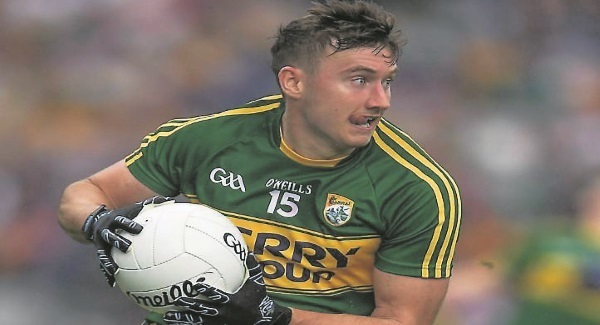
Come January, a teenage tyro can look across the pitch and see James O’Donoghue strutting his stuff.
“If I’m a minor and I see James practising or eating in the next room, well that’s where I want to be,” Twiss explains. “You are almost teasing the guy — if you put that effort in, you’ll be eating in there with the senior squad. It’s elitist, and that’s the way it should be with elite sport. You need that, you should appreciate the concept and shouldn’t apologise for that.”
Tim Murphy believes that similar development paths for coaches must underpin an unprecedented under-age explosion of success.
“The structure must incorporate the managers and coaches, and encourage them to move up along the line. So we have a plan in place to bring them up along the ranks to the U17s and U20s in time to come, as selectors. The people involved in development squads will get an opportunity to be involved with the county.
“Donal (Daly) would be spearheading it, but we would also be involving senior, U20 management, and minor too to feed into a unified system down the road.
“The aim is to make sure the best coaches get the opportunity to come through — and when they come through, get exposed to the highest level of football.”
Last weekend’s U17 loss to Roscommon was a timely warning for the minors, who are raging favourites to reach another final this weekend.
“If things aren’t going well in Kerry, you won’t be long finding out about it,” Murphy smiles. “The Kerry public are extremely demanding, and that’s the key driver, that we maintain our standards.
“We don’t have a director of football per se, but there is an understanding between senior, U20 and minor management, that there is continuity and joined-up thinking between the three teams — not just coaching the style of play but also player welfare and development in terms of their medical and physical wellbeing.
"That’s something we are working hard on this year, and will feed into an overarching plan which will embrace everything from our seniors down to our U14 development squads.”
“There’s a central theme to all this, whether it be teams or a Centre of Excellence. How can we be better?” Peter Twiss adds. “That’s been a driving force. There’s never been an acceptance in Kerry of a level where we don’t have to look any further.”
Maybe at some point there was. And while no-one has a date or a time, there was a silent rattling of cages about the time Kerry surrendered tamely to Down in the All-Ireland quarter final of 2010.
For all the exceptional work done since, Kerry has still only annexed one All-Ireland senior football title (2014) in the interim, so it’s not as if anyone can walk away from the conveyor belt.
Kerry minor manager Peter Keane says: “For sure, we’ve had good players over last three or four players, and good players win games. That can’t be overlooked. People will say ‘Kerry always produce players’, but now we are getting the right type of players.
“Go back to 2006, the minor final loss to Roscommon after a replay. Kerry’s minor midfield that year was David Moran and Tommy Walsh. I don’t think we’ve had as competitive a midfield pairing possibly until 2014, when Kerry won their first minor title in 20 years.
"You can have nice corner forwards, but if they are not getting the ball, we are going out the gate saying ‘where are we going with those small players?’. Whereas if there is lovely ball going in it’s a case of ‘isn’t he a beautiful player?’
Patrick O’Sullivan appreciates a different sort of beauty. Hard currency.
The previous Kerry chairman pulled a lot of dollars from a lot of deep pockets through his ability to network his way through key boardrooms in New York over the past few years.
“Patrick was ahead of his time,” Peter Twiss maintains.
“I’d say very few GAA chairmen achieved what he did in America. He has great vision and he has a greater appreciation of the Kerry GAA brand than most others. It was only when we went to America we had our eyes opened to what the brand means.
“I never saw anyone like him for tapping into that passion for Kerry. It’s worldwide.
“People from Chicago and Sydney have already been here in Currans, looking at the place and are overwhelmed by it.”
Kerry has €1.5m and change to find to pay for land purchase and developments to date. Four floodlit pitches will be good to go in November, the other two pitches will be developed as and when needed and fundable.
But Tim Murphy, a quantity surveyor by trade, feels they’ve got the Centre of Excellence right.
“We wanted it to be the best, we wanted it to reflect Kerry’s status in the association nationally. We travelled the country, and looked at facilities everywhere. We looked at the best and least attractive aspects in each, and to be fair to each of them, we received sage advice.”
Two physio rooms, six pitches, eight dressing rooms — and a very small reception area.
Kerry were determined to prioritise the important stuff when they finalised plans.
“People get carried away,” Twiss says. “Receptions and hallways shouldn’t be the central part of a facility like this. It’s what the players require, the practical things, like the gym, the dressing rooms, the pitches. Having a wonderful reception that takes up half the building is of no practical use to us. Our reception area is small, which sends out a message. The main business is the players.”
Éamonn Fitzmaurice and Peter Keane would concur. It means both can coach and nurture talent and not fret over where their inter-county squads will train next winter or the one after.
They can, as Keane says, “make sure there’s no young fella above in Tarbert in a drawer that we don’t know about”.
Unlikely. The pick of the three-in- a-row minor winners are already seeping into the senior squad for Sunday’s All-Ireland semi-final with Mayo.
Such has been Sean O’Shea (Kenmare) and Tom O’Sullivan’s (Dingle) progress that there’s mild surprise they haven’t featured this summer.
They will — and soon.
Either way, the future-proofing looks strong and robust, with a new home and a double chance at September this weekend.
“Kerry have a lovely habit of hanging around most years,” minor coach Peter Keane smiles.
“If you are not going to be hanging around, you’re not going to be there when they are giving out the cups. The important thing is to be alive.”
And kicking.