Lions brand has become a huge cash generator since first tour

t remains one of the biggest challenges facing a Lions tour party — applying old world values to a modern professional outfit.
To win a series, 41 players and the extended coaching and management group have to gel quickly and, most importantly, recognise that, individually, they are part of something far bigger than themselves.
Apart altogether from achieving the goal of being competitive on the field and, at a minimum, extending the series to the last day of action, the Lions now play an even more important role in helping to sustain the financial viability of the game in the big three southern hemisphere countries.
The European market offers the rugby authorities here far greater capacity to attract bigger and better television deals along with more lucrative sponsorships. That capacity to drive revenues is creating a massive financial divide between the two hemispheres which threatens the very existence of the game as a professional entity, especially in Australia.
The more money available to the club game in England and France, the more the likelihood of a player drain to this part of the world. The knock on effect of that is an inability, in South Africa and Australia especially, to facilitate five Super Rugby franchises in each country.
They simply don’t have the depth in quality to adequately service those sides and the falloff in standards, especially this season, is there for all to see. That has already started to impact on the quality of both the Springboks and the Wallabies at international level. The Lions brand and its capacity to generate money is now helping to bridge the gap in revenue streams for those SANZAR countries.
Much has changed since the elongated treks of the amateur era when players were away from home for up to three months. Recognising tradition dictated that a collection was made from the club members of players selected to help cover the cost of ringing home once a week and have some additional spending money, given that the accumulated daily allowance for players in the 1980s amounted to no more than £15 a week.
Some players, depending on their employers, had to take unpaid leave while those who were self-employed often suffered financial loss as a consequence of touring. The financial burden on the amateur player could be severe, hence the support from club members from all over the home countries.
With a fee of £70,000 (€82,500) paid to every player who lasts the full tour to New Zealand, the need for any financial support for the modern professional has gone. Win the series and a further bonus of up to £25,000 — depending on the number of tests won — awaits.
The cost of running the current Lions tour will top £14m (€16 million) with insurance cover for the players alone coming in at over £1m.
Given the vast sums generated, it may surprise some that the net dividend accruing to each of the four home unions from the 2013 tour to Australia only amounted to £1.5m.
In addition to that, however, the respective unions receive a fee, equal to the players’ tour fee, for every player included in the travelling party. That amounts to £770,000 (€907,000) for the IRFU alone. No wonder the cash starved Scottish Rugby Union were so put out with Warren Gatland’s decision to include only two of their players in the original squad.
The £1.5m dividend paid to the individual unions four years ago paled into insignificance when one considers the Australian Rugby Union banked a gross figure close to €45m from television rights and ticket sales alone which enabled them clear accumulated debts approaching €13m.
That tour also served to generate €100m for the national economy.
Why then are the home unions agreeable to a scenario where they pocket considerably less than the host country?
It’s all to do with attempting to balance the vast quantities generated on the back of the November international series hosted in the northern hemisphere.
New Zealand, Australia, and South Africa usually guarantee sellout crowds for all the home unions at ticket prices far in excess of what they can charge down under.
An 82,000 full house at Twickenham, something the All Blacks will always produce, generates £5m in ticket sales alone with an additional £8m in sponsorship and broadcast rights for the RFU.
hile the other home unions won’t match that £13m bonanza due to the smaller capacity at the Aviva Stadium (51,700), Murrayfield (67,000) and Cardiff’s Principality (74,500), they still manage to pocket vast sums.
This grates with the NZRU, in particular who are lucky to attract over 25,000 when any of the individual home countries visit them at the end of a long season, usually with understrength squads.
The money generated by our unions not only facilitates higher player salaries on average but also contribute to that player drain from the southern hemisphere nations as their players are enticed away by the lure of bigger pay packets.
The Lions brand has become a huge cash generator since the first professional tour to South Africa in 1997. Back then, Scottish Provident paid £250,000 to have their name on the iconic Lions jersey, which was deemed generous at the time.
Four years later, NTL paid over four times that for the same privilege.
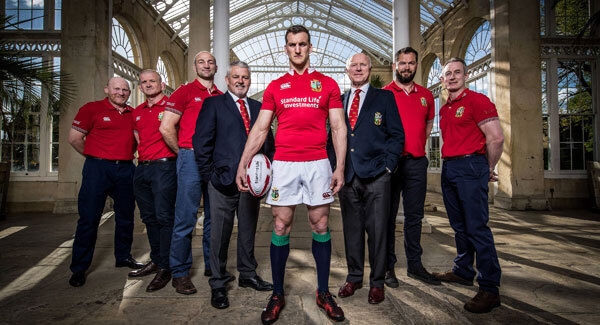
This time out Standard Life Investments, a wholly owned subsidiary of the 1997 title sponsor Standard Life plc, have had to fork out more than £5m to secure the same jersey naming rights which shows just how far the Lions, as a commercial brand, has travelled in 20 years.
When the Lions tour manager John Spencer stood up to reveal the names of the 2017 squad at the Syon Park, Hilton Hotel in London last April, he had to preface the hugely anticipated announcement by first name-checking the tour’s six Principal Partners as Standard Life Investments, Qantas, Land Rover, EY, Canterbury and QBE. In addition, the Lions boast an additional 10 official sponsors or suppliers. It’s a lucrative business.
Attempting to satisfy the demands of all those sponsors, whilst getting on with the serious business of honing a totally new group of players into a test combination, is a challenge in itself. At least Gatland has a waft of support staff who control that and make sure the attaching demands placed on the players are shared across the entire party.
The vast sums paid to the players for the six-week tour more than compensate them for having to fulfil those commercial engagements, hence nobody overly complains. A successful Lions tour will also contribute handsomely to a players’ marketability on his return home which can extend for years, especially in a Lions year, even if the party fails to win the series.
The structure of the tour, with very limited preparation time and a horrendously challenging itinerary, mitigates against a Lions series win even before the players step on the plane.
At least the administrators from the four home countries know that, apart altogether from the success or failure on the playing side, the revenue generated by the NZRU will serve to keep them happy for a while and ensure that they fulfil their obligations in terms of visiting at least one of the home unions on an annual basis.
Only trouble here is, if the Lions prove to be as uncompetitive as they were in the 2005 New Zealand series whitewash, next time round the sponsors may not be willing to part with quite as much cash. If that happens for successive tours, everybody loses.
That is why, for the financial viability of the international game in particular, there is far more riding on a competitive series than many appreciate.
With that in mind, it would help if the administrators here didn’t send Gatland’s squad off with one hand tied behind their backs.
- Follow Donal on Twitter: @LenihanDonal