Joe Schmidt must put quick end to French renaissance

It’s hard to believe 10 years have passed since the French spoiled the big Irish party on the occasion of our first ever rugby international at Croke Park. If John Hayes’s tears became the defining symbol of that historic clash against England two weeks later, Vincent Clerc remains the enfant terrible from that opening game.
Hayes harbours treasured memories of his role in the annihilation of England on that landmark occasion, a decade ago next Saturday, as it happens. However the Bruff stalwart must harbour nightmares at finding himself abandoned in midfield in the dying moments of Irish rugby’s debut outing at GAA headquarters. It may be lonely around the fields of Athenry but, for a prop forward, it’s utter isolation when left stranded in open space, in a mismatch against a fleet footed winger.
There was only going to be one outcome there with the Toulouse flyer, who made a habit of scoring crucial tries against Ireland over the course of his career, touching down beside the post to rescue a game Ireland felt was their destiny to win.
That’s the thing with the French. You never quite know what to expect. From losing to Tonga at the pool stage of the 2011 World Cup in New Zealand, they progressed to the point where they could, and possibly should, have beaten the hosts in the final itself, at Eden Park of all places.
Opinion on the well-being of the current French squad is wide and varied to the point where nobody is quite sure what to expect when they return to Dublin next Saturday. What we do know is that, in a period when they have enjoyed their least successful run in the Six Nations championship — they haven’t finished higher than fourth at any stage over the last five seasons — Ireland have struggled to get the better of them.
Joe Schmidt has a pretty impressive record against all comers at club and international level, but the French have served to cause him most headaches over the course of his Six Nations tenure to date.
His record stands at two Six Nations victories from three but all were one-score games — a one-point defeat in Paris last year coupled with wins by two and seven-point margins in 2014 and 2015 respectively. In addition, Schmidt presided over that comprehensive 24-9 pool win at the 2015 World Cup in Cardiff.
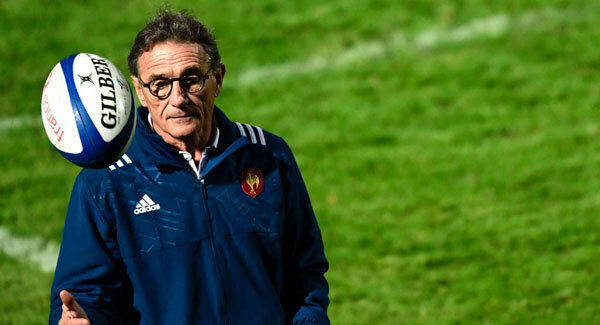
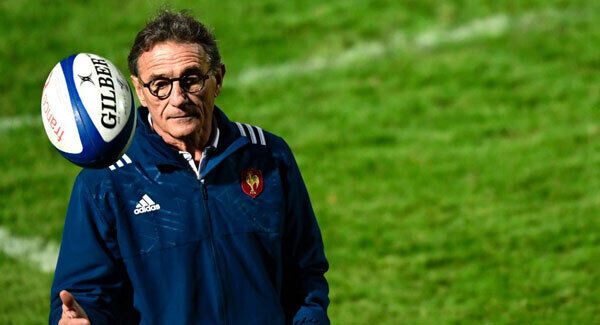
What their opening two matches in this year’s championship confirms is that France are improving under the tutelage of Guy Noves, appear far more united as a group than under the previous regime and have been offered a licence to express themselves. Under big pressure to win last time out against Scotland, which they did, they arrive in Dublin in a very positive frame of mind. That makes them dangerous.
That said, they are far from the finished article, still make too many unforced errors and are guilty of forcing things when they are not on. What they do have is a forward unit capable of dominating — they enjoyed 75% possession in the opening quarter against England at Twickenham — that allows them set the agenda.
They tend not to kick the ball away when they have it and as a result teams spend a lot of time defending against them. In many respects they are the polar opposite to Ireland, in that Schmidt places a huge emphasis on taking the ball into contact, relying on good technique and clear ball placement to recycle and build multi-phase rugby.
On the other hand, Noves encourages his players to stay on their feet and play out of the tackle. Perhaps the biggest surprise to date has been the ability of the massive French forwards to last the pace, supplemented with positive introductions off the bench, for the full 80 minutes.
A big factor here is the fact that the players are no longer subjected to the daft scenario of recent seasons where the vast majority of their starting team had to return to club action in the Top 14 in the down weekends of Six Nations action. They are now fresher and more prepared coming into their championship games and the benefits are there for all to see. Ireland enjoyed a clear advantage on that front in recent times but that has now been closed off.
The other thing that is making a difference is consistency of selection. Having used 52 players in his two seasons at the helm to date, Noves now has a clear picture of what approximates his best team. That consistency has aided team morale and the squad appears happy and is playing for each other.
Selection is also an issue that will have occupied Schmidt since the last outing in Rome now that Johnny Sexton, Andrew Trimble, and Peter O’Mahony have all returned to full training. The biggest decision facing Schmidt is whether to start Sexton in place of Paddy Jackson, who has served the cause so well in the absence of the Leinster general, starting seven of Ireland’s last nine internationals.
The thing we know is, if Sexton proves he is 100% fit to play in training this week, Schmidt will start him despite the fact that he has clocked up so little game time since the defeat to New Zealand on November 19 last. The ability of a player to deal with that comes down to the mentality of the individual. History would suggest that Sexton, like Brian O’Driscoll before him, is comfortable in handling it.
It is not without risk however. Welsh stand in head coach Rob Howley made an error of judgment in substituting Ross Moriarty — a leading candidate for the man of the match award at the time — replacing him with Taulupe Faletau after 53 minutes in that cracker against England in round two.
Like Sexton, Faletau was very short on any recent activity due to injury and made little or no impact when introduced while Moriarty’s presence, with and without the ball, was sorely missed in the last quarter when England went on to rescue the contest.
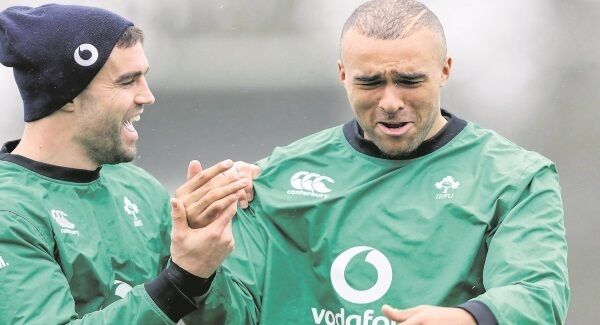
Sexton and Schmidt have a really good understanding and, as such, both parties can be relied upon to make the right call. Having Sexton back in harness with, what promises to be Ireland’s three most difficult assignments of the championship to come, does offer the team a timely boost. His long-term relationship with Conor Murray and familiarity with the Leinster midfield combination of Robbie Henshaw and Garry Ringrose serves to add more to Ireland, both in attack and defence.
With or without Sexton, Ireland will need to show a marked improvement on that opening day performance in Murrayfield. In that respect it will be interesting to see whether the facile nature of the win over Italy in Rome will prove a help or a hindrance.