'The Hurley Maker’s Son' reveals how hurling is embedded in rhythm of life for some
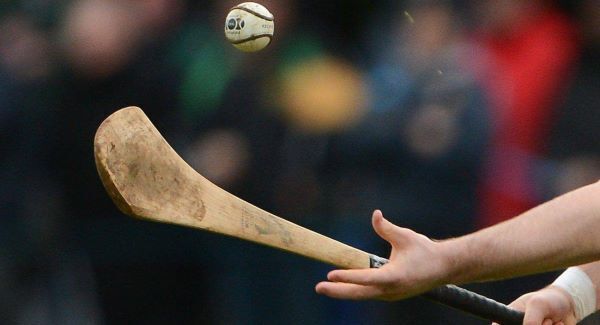

He was felling the final tree of a day’s work in a forest near Athlone when the upper part lurched and hit him on the temple.
He collapsed bleeding into the sawdust on the ground. Two of his sons were working with him. They ran for help. The owner of the wood sought to revive him, but couldn’t.
For 40 years, Larry Deeley had cut down trees: the work was dangerous but his death came as a profound shock.
This shock — and the depth of grief that flowed around it — opens Patrick Deeley’s new book, The Hurley Maker’s Son. It is a magnificent book.
The book is a memoir of Patrick’s life growing up as the son of a hurley-maker in the old hurling area of Tynagh in East Galway. This was a place where hurling was utterly embedded in the rhythms of life.
It says much for the importance of hurling in East Galway that it was one of those few areas where the game continued to be played in the decades between the Famine and the founding of the GAA in 1884.
In 1966 — when Patrick was 13 — Tynagh made it back to the Galway senior hurling final. They hadn’t won it since the 1930s and defeat in that 1966 final proved a bitter pill to swallow.
But the memories of that match remain vivid. This was a day of dust rising in the square as hurleys flew, a day when Paddy Fahy wiped “a swathe of blood from his forehead casually as another man might discard his cap”, a day when love of hurling as spectacle was sealed.
Patrick, himself, played away all through his childhood — hurling games with his brothers descending into frequent rows, games with the neighbours and then, of course, games with the school and with underage teams in his club.
There is much of this that will be familiar to anyone who has grown up in a hurling area or a hurling house — that feeling of holding a hurley for the first time is beautifully described, and so are the moments of broken windows and muddied whitewashed walls.
But there was a crucial difference in this instance: he was a hurley-maker’s son.
This brought a different meaning to hurleys, a different way of looking them and ultimately a different understanding of what they were.
The hurley-making process was lovingly tended by his father and the commitment to producing hurleys that were of the very highest mark is obvious to see.
The sawmill dominated the small farm and was central to its life.
Nonetheless, it is difficult to feel nostalgic for that world — there were too many flaws, too much pain for that to be the case.
The struggle to make ends meet on a small farm, with a timber business where the margins were exceedingly narrow, was unrelenting.
It was a struggle that was not helped by the failure of clubs to pay for the hurleys they had ordered or by the inevitable accidents that came along.
And then there is the context of that struggle: rural Ireland from the 1950s to the 1970s.
Patrick loved his parents and respected them and understands everything that they did for him. And yet displays of fondness were in short supply: ‘I scarcely recall a single kiss or hug between any of us. For some children such absences may have been irrelevant — but for Patrick it was an absence that was keenly felt.
In this, of course, as he freely admits, he was very much product of the times, because “such things just weren’t done”. But this is not a sort of Angela’s Ashes for East Galway — there is too much joy in the book, and an absence of self-pity, for that to be the case.
Instead, it recreates an era in a way that is unsentimental and respectful and honest: anyone who grew up in a rural area or in a small town will recognise parts of their own lives in the book.
This really matters — he may be the hurley-maker’s son, but the book is about much more than hurling.
There is, for example, the stories of that great playground for children that is the family farm with its endless capacity for games of hide-and-seek and for climbing trees.
The phrases heard when growing up stayed lodged in the mind: Uncle Mattie who dismissed a neighbour as someone who would “begrudge piss its steam”. And then into adolescence and just waiting, waiting, waiting for things to happen.
It may have appeared for that child that this was a world that would never end and that his parents “both would always be there”.
But it did end — and when Deeley writes of how he is perceived differently — and feels differently — when he returns home after moving away to the city, it is something that will be immediately recognised by anyone who has moved from home to a different area.
And this is what makes The Hurley Maker’s Son so special: like the very best books, it creates an atmosphere that is entirely unique — an atmosphere that never really leaves you.
The book ends almost where it began, a few short weeks before his father’s fatal accident. Patrick walks out to the field behind the sawmill to say good-bye and father and son simply say to each other: ‘Mind yourself’.
As he writes so painfully at the end: “These are the last words that pass between them, but the boy will talk to the father for the rest of his life, and the father, though dead and gone, will talk to him.”