Limerick must stop playing the victim
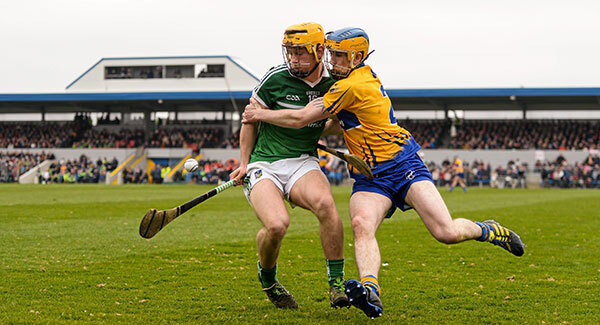
If you didn’t know better, you might think Limerick and Cork predicted the league trouble ahead of them as early as last summer. That Limerick forecasted a seventh season in the doldrums of Division 1B. That Cork envisaged the probability of relegation from Division 1A for the second time in four seasons.

Limerick must stop playing the victim

Eight months ago, Central Council took the decision to retain the current league format for Division 1A and 1B, which had been recommended by the Central Competitions Control Committee (CCCC). Although several of the leading hurling counties, particularly Limerick and Cork were against the proposal, they were outnumbered.

Limerick’s opposition to the status quo being retained was self-explanatory. At that stage, they were five years playing in the second tier of the competition. Despite being promoted to the old Division 1 in 2011, the rejigging of the system saw them demoted to Division 1B. They had called for Division 1 to be split into two groups of seven teams and were backed by Clare, Kilkenny, Waterford, Offaly, and Carlow. Cork wanted an eight-team Division 1 with a seven-county Division 2. They argued the six-team Division 1A was “too competitively structured”. How prophetic those words read now!


Cork and Limerick believed their proposals would be voted on towards the end of last year, only to realise they were up for decision in August. Limerick chairman Oliver Mann said it was a “sad day when the wishes of the majority of the counties taking part in Division 1 of the league are over-ruled”.

GAA president Aogán Ó Fearghail hit back at the suggestion the vote was brought forward and took a shot at Limerick. “I think what Limerick thought was of their own position,” he said before adding, “Limerick probably forgot that there is a Division 3 and 4 also. Those counties are equally important for hurling.”

Limerick shouldn’t be ashamed of their self-interest, especially when it was no fault of their own, but an administrative decision that saw them deprived of their just reward for gaining promotion in 2011. But their chances as well as those of Cork of convincing Central Council to effectively increase the number of Division 1A and 1B league weekends from the current six was always going to be faced with opposition. Considering the optics as much as the fixture-planning dilemma it would have caused, the last thing the CCCC wanted the GAA to be seen doing was adding more matches to the inter-county season.

Hurling, though, is lacking them. After Sunday week, the gaps for some counties until their championship starts are colossal. Galway face nine weeks between their relegation play-off and a Leinster quarter-final on June 5. Cork will be seven weeks without a game. Should Limerick lose their league quarter-final against Dublin, they will have 11 weeks to bridge until they face Cork or Tipperary in a June 19 semi-final. That isn’t good for either Limerick or hurling as a whole, as it wasn’t when Kilkenny disappeared for 12 weeks last season.

Such a situation won’t happen if Limerick win through to a league semi-final, of course. Likewise, they and Cork mightn’t have so much to give out about if they were beating enough teams. In Limerick’s case, though, the stink of Division 1B is hard to shift. Having attended three Division 1A games this year and watched another three on TV before working in Ennis on Sunday, I can testify that the disparity in quality between the groups was stark. It is no coincidence that the last four teams promoted from Division 1B were all relegated from Division 1A the previous season. They got out before it got them. Limerick routinely belie their lowly league status come summer but they have become institutionalised by their environment these last six springs.

Just as fixtures foiled Limerick’s hopes of adjusting the league, they also hampered their chances of beating Clare on Sunday. The value of the calendar year has increased in their eyes. Had the All-Ireland club final taken place in December instead of last Thursday, they would have had their Na Piarsaigh players. Had they their Kilmallock men last year, would they have lost to Offaly, which ended their promotion aspirations?

After Cork were relegated in 2013, their administrative might was enough to convince the GAA to review the league structure and the awful compromise of league quarter-finals was introduced. Were they to lose to Galway on Sunday week, it’s unlikely they would be so successful in making another attempt to rearrange the league. As it is, they can hardly complain about the chance of surviving, having lost all five games at the expense of a team who suffered defeat twice.

Regardless, Limerick’s complaints will fall on deaf ears, as they have done so often before.

Playing the victim, as righteous as it might seem, will no longer work.

From 2011 to Paul Ryan in 2013 to John Conlon’s steps on Sunday, they have been wronged but that litany of injustices can’t be a crutch if they are to move on and up.

Don’t mourn death of league semi-finals

Good riddance Division 1 semi-finals. Football will hardly miss you. Central Council’s decision on Saturday to jettison the two matches was done for scheduling reasons but the idea of rewarding half the top flight with semi-final places was flawed to begin with, long before Donegal’s visibly indifferent approach to last year’s last-four game against Cork.

It wasn’t Mayo’s fault but their progression to the 2013 semi-final having lost four of their seven round games undermined the league structure. That Mayo in 2012 and Donegal last year made the top four on the back of winning just three of their seven regulation outings signalled something had to be done.

So, from next year only the top two will make the final with the bottom two being relegated (as is currently the case). That will bring its own difficulties.

The chances of more dead rubbers in latter rounds should increase, although they’re not guaranteed.

The gap between league and championship campaigns will increase for two more counties. Kerry stand a good chance of reaching a semi-final this year but were they to finish third or fourth next year on the basis of the current scheduling, they could face 10 weeks without a match. Those are the breaks but the pros of rewarding the top two and punishing the bottom two outweigh the cons.

Have the GAA finally killed the dual star?

So that is that for the dual player, it appears. From next year, there will be more than two weekends when football and hurling league round games are scheduled alongside one another, meaning unless players proficient in both codes are bionic or blessed with the power of bilocation, they will have to pick one code over the other.

The decision was taken to free up more space for club fixtures but the call has well and truly come at the expense of the dual player. As if they didn’t know already, they are endangered species. On Sunday week, Clare’s footballers could be facing Kildare knowing a win will see them jump to Division 2. That same day, the hurlers take on Tipp in a Division 1 quarter-final. Podge Collins’ commitment to both will truly be tested.

The sentiment behind GAA director general Páraic Duffy’s call to squeeze the length of the Allianz Leagues for the benefit of clubs is well-placed. At the same time, you can’t help but feel the organisation is losing part of its Corinthian spirit when the truest form of an amateur player is made to chose one code over another.

Email: john.fogarty@examiner.ie

x

More in this section

Sport

Newsletter

Latest news from the world of sport, along with the best in opinion from our outstanding team of sports writers. and reporters

Cookie Policy Privacy Policy Brand Safety FAQ Help Contact Us Terms and Conditions

© Examiner Echo Group Limited