The highs and lows of professional football
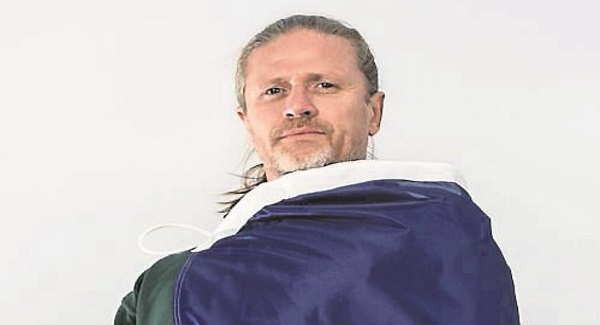

hat football, even at the professional level, is a broad church was brought home to me over the past seven days through encounters with two very different players and personalities — Emmanuel Petit and Alan Dunne.
Petit you know, of course — a winner of World Cup, European Championship, Premier League, and FA Cup medals, a former Arsenal great whose biggest regret in football is that, after leaving Barcelona to return to England, he turned down Alex Ferguson’s repeated offer of a place at Manchester United.
And Alan Dunne? The closest he ever came to Manchester United was when Millwall player-manager Dennis Wise broke a promise to the player by choosing himself instead of Dunne for the 2004 FA Cup final which United won 3-0. So, apart from a League One medal for promotion to the Championship in 2010 — when he was also named Millwall’s Player Of The Year — Dunne’s career is notable for somewhat less glittering prizes, like the fact that he holds the record for being the most sent-off player in Millwall’s history, a feat which, given the club’s hard as nails reputation, is clearly no mean feat.
.@alandunne2 will be signing copies of his book in the main car park shop kiosk ahead of #Millwall v @SUFC_tweets pic.twitter.com/3dvWLsdHnX
— Millwall FC (@MillwallFC) March 17, 2016
As for career regrets, the biggest for Dunne, Dublin-born but London-bred, is that he never managed even a single cap during the Steve Staunton and Giovanni Trapattoni eras when he was playing his best football as captain and defensive mainstay at The Den, a cold shoulder which leaves him to conclude: “I don’t think people were aware that I was Irish.” On the face of it, almost literally so, these two products of the professional game — Petit now retired at 45 and doing media work; Dunne at 33 winding down his playing career at Leyton Orient and looking to a future in coaching — present a vivid contrast.
Petit has reverted to his trademark ponytail (“That’s because of my wife. I can’t cut my hair, it’s in my marriage contract”) while Dunne favours the skinhead look. He did have what he refers to as “curtains” in his youth but, though he never lived the full bovver boy life off the pitch, his shaved to the bone skull was part and parcel of the whole package he was only too happy to inflict on opponents as a raging Lion.
As reported in these pages earlier this week, our conversation with Petit, always thoughtfully and at times emotionally conducted by the Frenchman in fluent English, addressed some of the most challenging issues of the day, from the Paris attacks and his fears about further violence at Euro 2016 to what he regards as a disturbing rise in racism in his home country.
But even on the safer ground of his great achievements in football, Petit hardly conformed to type.
“If you come to my home, there is nothing that would remind you of my past as a footballer just only two things: replicas of the World Cup and the European Championship,” he told us. “All of the medals, all the shirts, mementos, I gave them to charity and I kept only two medals, three medals… maybe four (laughs). I think the first French Cup that I won and then the double with Arsenal.
“Yesterday I opened the safe to get my passport and I saw the World Cup medal and the one for the European tournament but one day I will give them away also. I know these things can be very special for some people and for collectors but I’m not a fetishist. It’s not that we won the World Cup, it’s the image that we sent through winning it and I am very happy with that. I won’t say that that is the past but it is part of it. I’m very proud of it but I want to write something else.”
As it happens, Alan Dunne has already written his story — the newly-published (with Chris Davies) — and the bullet points on the inside flap give, shall we say, a tangy flavour of what lies within: ‘How I Had To Pay For A Player’s Dental Bill After A Head-Butt’; ‘How I Reacted When A Drunken West Ham Fan Who Had Invaded The Pitch Was In My Face’, ‘How I Came To Be Photographed With A Naked Model Who Was Holding Nothing But A Plate Of Toast’.
And, back in his home town last week, Dunne still seemed to be conforming to type when, by way of illustrating how intrusive camera phones and social media can be, he complained, with apparent sincerity: “You can’t park in a disabled bay and get away with it anymore because someone has taken a photograph.
“You might have just parked there for a minute to pop into the shop and grab something and you might be all over the papers.”
So far, so tabloid — but then you come to the final chapter of his book, the one he says he agonised over writing, and suddenly the caricature of a bad boy footballer evaporates to be replaced by the moving back story of a young lad who struggled against the odds to fulfil his dreams.
His mother, Elizabeth, was only nine when she was knocked down by a car and dragged for a quarter of a mile in her native Wexford.
Injuries to her face and leg required multiple skin-grafts and led to a life of constant pain, medication, depression, and alcoholism.
Having moved to England in 1984 when Alan was just two, his mother and father did their best to bring up five children in sometimes desperately challenging circumstances, including a period when they were homeless and living in B&Bs in Paddington. The death of his beloved Mum in 2000 saw the break-up of the family. “My relationship with my two brothers and two sisters is not as close as it would be if our mum was still alive,” he says.
But he remains very close to his father, Paul, whom he credits with getting him away from the north London street gangs of his teens and steering him instead towards a career in the game he loves.
“He knew me better than I knew myself,” Alan said last week. “He told me at 15, ‘don’t stay here or you’ll end up in jail’. I said ‘no way, they’re my mates and all good lads’. But, two years later, all of them were in jail.” A father himself now, who says he hopes his book will help young players avoid some of the mistakes he made, Alan Dunne may never have hit the football heights of Emmanuel Petit but he has no doubt that he still has much to be grateful for.
Not all the game’s successes can be measured in medals.