Disharmony and unease as gaelic football goes soul-searching
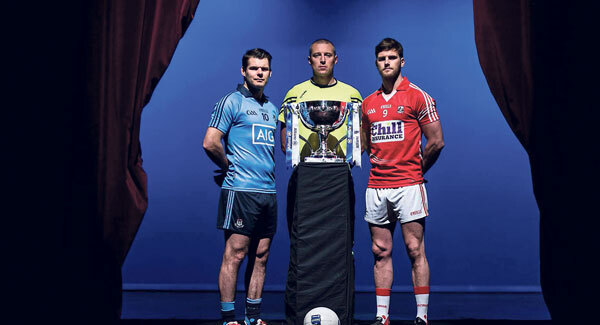
It came as no surprise to read that Ard Stiúrthóir CLG, Páraic Duffy, sees very little wrong with the Allianz National Football League about to begin again this weekend.
Disharmony and unease as gaelic football goes soul-searching

Why would he? On the surface of it, the league is about as democratic a mechanism as there is for allowing counties compete for national honours.

A seven-game series against teams of apparently equal standard should give all teams a genuine measure of where they stand in the hierarchy and of what, if any, progress is being made.


A quick glance at the four sets of eight teams in each division this year tells us any team can beat the other on any given weekend. It is, as Pádraic Duffy wrote during the week “clear counties attach great significance to retaining or improving their league divisional status, manifested in the increasing intensity with which the competition is played from year to year”.

The league, with its four division layout, seems like an accurate statement of hierarchy. But is that hierarchy too embedded now? And are the teams further down the food chain feeling that maybe the time has come again for change?

The only change Duffy urged was already outlined in his discussion document in early November - the need to “give serious consideration to dropping the semi-finals in Division One and to playing the finals of all divisions on the weekend after the final round of games”.

It is obvious the overriding reason for this would be to free up one or two weekends for the playing of club games at a time of serious fixture congestion. That is all well and good at a superficial level. But we need to know more about what the whole thing feels like deep down in counties like Longford where manager Denis Connerton revealed a certain percentage of players invited on to his squad this year refused that invitation, preferring to give more time to their clubs.

You’d want to have a calloused soul to ignore the warning signs that keep emerging year on year. The most recent attempt at real change, that once again ignored former uachtarán

Seán Kelly’s proposals for championship reform, has only further alienated those counties who need a leg up. I don’t know how much longer those counties starting their campaigns in Division 3 and Division 4 this weekend can keep players interested.

While Duffy’s own 11-point package at the end of last year did much to suggest ways of improving the game and of freeing up time for the club, I have never in my time involved in the game sensed as much introspection and disharmony as I have this past winter.

From the committee room to the terrace to the sideline to the pub to the social media sites, where an ever increasing cynicism underpins much of the commentary, there is an appreciable absence of joy and a growing sense of unease about the direction the game is taking.

Perhaps those of us who ply our trade in the media should acknowledge our own distorting influence on the debate too. But there is more to this than just the vacuum of winter being filled by idle talk of the demise of football, of two tiered development or of the growing chasm between club and county.

Football folk are genuinely concerned the game they know and love is evolving and mutating into something which they have no desire to be a part of and that concern is merely being reflected by those in the fourth estate.

It is into this arena all teams step this weekend and it is in this context that the next few weeks and months of games are so critical to the GAA. This league campaign has a crossroads feel about it and the journey ahead seems like one that will test our faith in our games like never before.

We need to believe the games matter. We need to believe the ways of playing the game are evolving for the better. We need to see the players are having fun and between here and the end of April, we need to be talking about the game itself and about the players that adorn it as opposed to constantly harping on about ways the game could be changed and about how it used to be better.

I’m not so sure the game was better before. Maybe it just seems that way. In his report this week, Páraic Duffy says it is clear to him “our current elite players are fitter, more skilful and more creative than at any time in the history of the game.

“It is also the case the level of scoring is higher than it has ever been, that there has been a drop in the number of fouls committed and cards shown, and that the quality of long-range point taking in last year’s senior championship was exceptionally high.”

All of that may well be true but even a passing glance at the history of league football gives us warmer memories of a time when the capacity for what the Italians call the Meraviglia - a sense of wonder astonishment, amazement or surprise - was greater.

Thirty years ago this season, Laois won only their second national league title, 60 years after claiming the inaugural title in 1926. It is 20 years since we had the small wonder of a Mayo team making a decent assault on the All-Ireland championship from Division 3. Two seasons later, an Offaly team under Tommy Lyons won their first and only league Division 1 title. Such achievements appear unthinkable now.

The longer time goes on, the more prophetic Mickey Harte’s point about no team outside the self-perpetuating elite of Division 1 being capable of winning an All-Ireland becomes.

What has been happening that has made it thus? Perhaps in our obsession with reforming championship football we are ignoring the starting point for all such reform, a restructuring of the league as it is currently constituted. Maybe we should be looking at the entire competition calendar and most especially the league.

We have been reminded a number of times this week alone that the spring of 2009 was the last time a county outside of Cork and Dublin won the league title. In other words, Cork and Dublin have shared the last six league titles between them. Why is that? And why, if the league is truly as democratic as we’re led to believe, can’t other counties break that stranglehold? The two promoted teams from last season, Down and Roscommon, showed how ill prepared they were for top class football when exiting the championship against Wexford and Fermanagh respectively.

The thought of Wexford and Fermanagh brings me back to that magical day in Parnell Park in 2008 when both counties played out a riveting Division 3 final. Little did we think as we settled into the main course of Kerry vs Derry in the Division 1 final that later that summer, Wexford would make the All Ireland semi-final and Fermanagh would go as close as they’ve ever gone to winning an Ulster title.

Given the widening chasm between the haves and the have-nots, expecting a repeat in 2016 seems naive at best. Right now, Dublin are favourites to win the league outright this spring. That makes sense too as few teams in recent years have shown a capacity to experiment and still win, as Dublin have.

Jim Gavin has made the conscious decision to go after the latter stages of the league in each of his three years in charge because, despite all public utterances, he knows the league represents his best chance of getting a proper game this side of August weekend.

For this weekend’s opponents, Kerry, survival in Division 1 while giving stage time to understudies seems to have been the aim in all of Eamonn Fitzmaurice’s three seasons in charge. Perhaps they will feel this season they will need to give a bit more to the league in order to get more back. Anytime they did so in the noughties, they ended up winning the All Ireland.

Of all the top teams setting out this weekend, Mayo are of course, the most intriguing. They hold the longest tenancy in Division 1 and even if it may take until round 3 against Donegal at the end of the month to see them open up, I look forward to seeing how Stephen Rochford and Tony McEntee, who both placed such a premium on good quality kicking out of defence when in charge of club teams, transfer that imperative to the inter-county game.

Rarely if ever has the need for an attractive, well thought out kicking game seemed so urgent. And so, as we leave the winter talk behind us, and the games themselves begin to occupy our thoughts and conversations once again, we must acknowledge that things could be a whole lot worse.

But they could be a whole lot better too.

More in this section

Sport

Newsletter

Latest news from the world of sport, along with the best in opinion from our outstanding team of sports writers. and reporters

Cookie Policy Privacy Policy Brand Safety FAQ Help Contact Us Terms and Conditions

© Examiner Echo Group Limited