Time for GAA to revalue loyalty
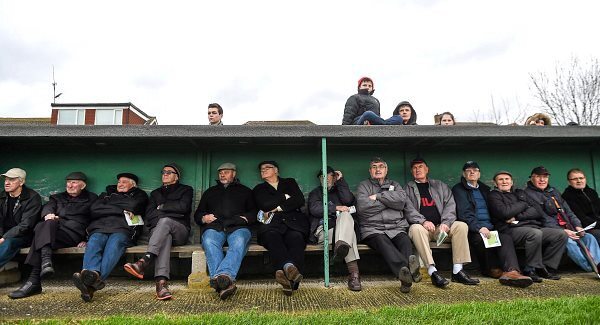

It’s used to empower the paying public, make them feel more than just an audience and at the same time holding them to a higher standard.
We’ve always believed patrons is how the two bodies would like to imagine those who congregate behind the 12th tee-box or fill the stands of Croke Park — encouraging and applauding good play, keeping a respectful silence at all other times, never wavering in demonstrating impeccable etiquette — not how they actually are.
It’s an ideal, yet the US Masters is devoid of a lot of the inane boorishness that ruins other golf tournaments in the States.
Whether that’s people’s obligation to honour the traditional values of the first Major of the year or the tournament’s regimental list of rules for patron behaviour (eg, no sitting on the grass, no autographs), nowhere else in golf do spectators act more like members of the club.
Admission is a factor too. You don’t need a ticket to gain entry to Augusta but a badge.
In truth, it looks more like a pass but badge-wearing sounds more like an endorsement.
And they are as rare as hen’s teeth. If you are lucky to be offered one via the annual limited lottery, you have first refusal on a badge until you die or chose not to renew, perish the thought.
The point is once you’re in, you’re welcome.
You mightn’t have a green jacket but you’re part of the furniture if not the club.
The season ticket would be the equivalent in the GAA. Now so popular in Dublin and Mayo football, there are waiting lists, as there is in Augusta.
Chose to drop your subscription and it’s to the back of the queue for you. Now in its eighth year, the scheme has been a veritable success although there have been some consternation expressed about how the price of the ticket has increased over the years (the GAA have countered it had been under-priced for quite some time).
Over the past couple of seasons, there have been other problems too such as the quality of seating for season ticket holders at championship matches.
Last year, Kerry subscribers complained about their seats for the Munster SFC final games in Killarney, although the finger of blame was redirected at the provincial council who had jurisdiction over the stadium for the matches.
While there has been many a headache for those who have had difficulties with their attendance record at games being acknowledged by the GAA’s system so that, as per agreement, they could purchase an All-Ireland final ticket when their county has been involved.
The GAA should do everything in their power to ensure such dedication is appreciated.
However, there is an even more troubling matter for Croke Park with their distribution of championship tickets between clubs and general sale.
Two Tipperary clubs were moved to bring motions to their annual convention about the matter.
Ballina argued for compensation to clubs as the sale of tickets via retail outlets and online had impacted on their membership.
Killenaule called for clubs to be provided with more tickets than those issued via SuperValu and Centra.
Their stories are shared in several other counties where anecdotal reports suggest the quality of tickets for games outside of All-Ireland finals are better than those on offer from clubs.
In 2013, three million GAA match tickets were sold through SuperValu and Centra outlets.
Two years ago, Wexford were forced to suspend their ticket sales for the hurlers’ All-Ireland quarter-final against Limerick when they realised they couldn’t satisfy the demand for stand seats.
Tickets for the game had been on sale online and in retail outlets prior to them beating Waterford in their qualifier.
The question of membership-for-tickets, raised by Ballina, is a thorny issue for the GAA but any impact on membership should be considered seriously.
The echoes left by Irish rugby’s footloose, fair-weather following in Thomond Park and the RDS these past few months are quintessential examples of what can happen to a sport when the good times stop rolling and what’s left is an eroded, disenchanted base.
GAA members aren’t just consumers but they are consumers, nevertheless.
There is no entitlement attached to carrying such a card but if clubs truly are the cornerstone of the organisation, their members should be prioritised.
Even for those members who don’t match their financial support to their club with time, the money they provide should be acknowledged.
As quaint and enriching as it may feel to be described as a patron, the truth is it’s a catch-all word. Among spectators are members and non-members.
The GAA doesn’t have to discriminate, simply look after its own.
Loyalty always comes with a cost but some value wouldn’t be out of the question.
Eamonn Fitzmaurice confirmed the inevitable on Sunday when announcing Paul Galvin had played his last game for Kerry.
The man himself had mentioned before Christmas that it was unlikely he would return having come out of retirement earlier last season.
Saying goodbye a second time, Galvin didn’t need to wave and, on paper, his largely eventless cameos against the likes of Cork in the Munster final replay, Kildare and then Dublin in the All-Ireland final hardly merited any grandstand farewell.
Yet there was still magic in his bones.
Kieran Donaghy testified to that when describing the chance his team-mate created as Kerry sought a goal in the closing stages last September:
“Paul Galvin came onto a great breaking ball he won. He put in a fabulous ball on the outside of his left boot and it was set up for me to go get it.
“I got it and landed and there was two or three Dubs sewing it into me as best they could.”
Some, mostly those predisposed to criticising the 2009 footballer of the year, will put Galvin in the “never go back” pile.
Stacking him atop the “never die wondering” heap would be more apt.
Less than three months after Noel O’Sullivan’s casting vote granted the affiliation of the Irish Guards to the London County Board, the Kerry native was ousted from his role as County Chairman as he was about to enter his fifth and final year.
O’Sullivan was successfully challenged by Granuaile Hurling Club’s John Lacey, whose club have now proposed reversing September’s decision to allow the British army regiment field a team in this year’s London Junior Football championship.
Foreseeing the potential for an unmitigated PR disaster, it’s reported Central Council have ordered the vote, which was to take place last night, to be postponed until after this weekend’s management committee and Central Council meetings.
What an embarrassment it would have been to reject such a mature and noble decision that seems only in keeping with the removal of Rule 21, 15 years ago.
It could yet happen but at least Croke Park has seen fit to intervene. Hopefully, their influence will discourage such a recommendation from ever seeing the light of day.
john.fogarty@examiner.ie