Looking forward to a bloated feast of soccer at Euro 2016
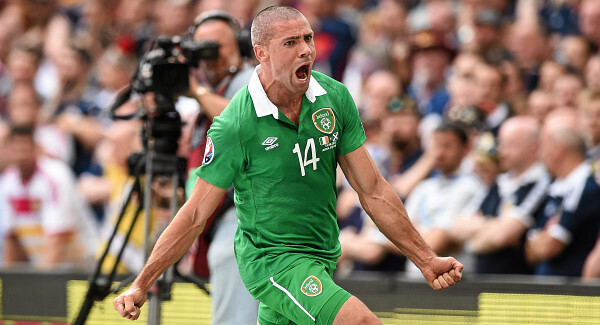
There is never a good reason not to watch a football match, writes Liam Mackey

Looking forward to a bloated feast of soccer at Euro 2016

An icy blast might be following hard on the deluge, and beneath gloomy skies you’d struggle to spot what my old man used to call ‘the cock step’ — the tiny, incremental lengthening of the days — but as I ticked the boxes in my media accreditation application for Euro 2016 this week, I half fancied I could already feel the warmth of sun on my face and detect the aroma of freshly baked croissants and café au lait.

Yes, for those of us of the footy persuasion there’s nothing quite like the prospect of a European Championship or World Cup finals in the summer to help keep the winter blues at bay, especially when you know your own country won’t be on the outside looking in — an unhappy experience with which we in Ireland are not unfamiliar but which, for Euro 2016, is the grim fate which has befallen some notable names, chief among them the Netherlands, of course, but also Serbia, Denmark, Bulgaria, Norway, Bosnia and our luckless old friends Scotland. (Doubly luckless on this occasion, you might say, bearing in mind that the SFA and the FAI were to the forefront in pushing for an expansion of this year’s finals to 24 teams).


Martin O’Neill’s team have, of course, already benefited from that generous development by availing of a third-place finish in Group D to get themselves into and then through a play-off against the Bosnians. But the manner in which some of the newcomers to the Euro finals booked their passage was even more impressive, with Northern Ireland topping their group and Wales, Albania, Iceland and Slovakia all finishing runners-up in theirs to qualify directly for France. Austria (as Group G winners) and Ukraine (via the play-offs) have also qualified for the Euros for first time, although both have previously been in the finals as co-hosts, in 2008 and 2012 respectively.

I don’t suppose we’ll be hearing too many complaints from those quarters about the expanded finals but there are still plenty of voices in football insisting that the move to 24 teams will somehow devalue a competition which, so the theory goes, has always thrived on the notion small is beautiful. (No offence to original 80/1 outsiders Greece but while their 2004 win was many things — stirring, shocking, seismic — beautiful it was not).For Irish supporters in particular, comments made by Germany manager Joachim Low two years ago might make for interesting reading now.

“I think increasing the number of teams in the European Championship is questionable and the same goes for the qualifying tournament,” he said. “It reduces the sporting value of not only individual matches but also of the entire tournament.” “Reduces the sporting value of individual matches,” eh? Try telling that one to Longy, Lowy.

But Low was not alone. And plenty of influential voices continue to bemoan the prospect of a “bloated” Euro 2016, which they fear will be shorn of classic encounters and overloaded with dead rubber games.

Quantity obviously doesn’t ensure quality but it doesn’t necessarily diminish it either. 1982 was the first World Cup to feature 24 teams, up from 18 in 1978, and that didn’t go too badly as you might recall, the tournament bequeathing to posterity a series of stellar goals and luminous performances by a team to rival the Dutch side of 1974 as the greatest never to win the World Cup — the much loved and ultimately greatly lamented Brazil of Zico, Socrates, Eder, Falcao et al.

Amongst many other highlights, Spain ’82 also served up one of the great World Cup finals upsets as Northern Ireland beat hosts Spain, as well as two of the most thrilling games in all football history — Italy 3 Brazil 2 and West Germany 3 France 3 (the former winning that gripping semi-final on penalties) — before the whole thing climaxed in a memorable 3-1 Italian victory over Germany in the final, an occasion which also left us with the undying image of that incomparable goal celebration by a certain Marco Tardelli, formerly of this parish.

Of course, it wasn’t all sweetness and light but even though the spectacle of West Germany and Austria conspiring to eliminate Algeria — minnows who had already sprung their own huge shock by beating the Germans — was a disfiguring scar on the tournament, there are many who would, with good reason I think, still rank Spain ’82 second only to Mexico ’70 as the greatest of all World Cups.

The FA Cup might be a shadow of what it once was in terms of its grip on the popular imagination but surely only the most ruthlessly elitist will fail to be engaged this weekend by the return of the third round and the hope it holds out of giant-killing and other uplifting fairytales.

And I don’t see any good reason why international football should miss out on the fun. Could Albania do an Algeria this summer? Or Northern Ireland a, well, Northern Ireland? Glancing through some of the group fixtures for June should quicken the pulse of anyone with a feel for the dynamics of the international game: France v Albania in Marseille; England v Wales in Lens; Portugal v Iceland in Saint Etienne; Northern Ireland v Germany in Paris. Not to mention the prospect, dear to our hearts, of Martin O’Neill’s men going up against Sweden, Belgium and Italy.

Part of the beauty of football is that — unless you’re about to play Gibraltar — you really don’t know what’s going happen next. Back in October 2012, Arsenal played Reading in a League Cup match — hardly a solid gold box-office attraction for the neutrals, you might think. The result? 7-5 to the Gunners after they’d come back from going four down.

Calling the result “a miracle”, Arsene Wenger remarked: “You always see new things in our game, that’s why it’s never boring.”

But my friend Declan Lynch had the better line. Having tuned in with modest expectations only to be happily ambushed by one of the most extraordinary matches ever seen on television, the experience inspired him to coin a phrase: “There is never a good reason not to watch a football match.” How true that is. And the more the merrier, say I.

x

More in this section

Sport

Newsletter

Latest news from the world of sport, along with the best in opinion from our outstanding team of sports writers. and reporters

Cookie Policy Privacy Policy Brand Safety FAQ Help Contact Us Terms and Conditions

© Examiner Echo Group Limited