Skins chief executive: GAA the 'last bastion of the absolute true spirit of sport'

Jaimie Fuller of SKINS, the makers of sports compression gear, dumped all the expectations early in the conversation. One mention of the business of sport and he was off.
“There are two issues here — the business of sport and the other issue, which is by far the more important one, the role sport plays in society and the community.
“The need for sport to be clean doesn’t mean we should all be happy losers or jolly fellows — you can still go hard, push it, fight, but there’s a line you don’t cross.
“When you realise the massive impact that sport has in shaping communities, on values, and particularly on the young, we’re talking about a movement that can eradicate apartheid from South Africa.
“If Fifa had used the power of sport properly, it could have eradicated indentured slavery in Qatar ahead of the World Cup.
“Fifa could have said to Qatar, ‘we will engage with you ahead of the World Cup but there needs to be reform’, and Qatar would have said ‘sure, if that’s the price we’ve got to pay’.
“So whether it’s what happens on the field, and how that influences our young people, or off the field, and how that impacts on societal progress, this issue is fascinating.
“I came to Ireland to see that last bastion of the absolute true spirit of sport not being ruined by professionalism and money.
“I’m convinced you can have your cake and eat it, that it’s not just a case of ‘well, if there’s money there then we just take it’. That there is no choice.
“I’m convinced it can be done, but it start with great vision, great leadership and people who absolutely believe in what I just said, and in protecting sport.”
Fuller has been vocal about the conditions workers are enduring in Qatar, and has been to the country to see the situation for himself.
“One thing — this isn’t about stadia, it’s about all the infrastructure around the World Cup — roads, airports, hotels, and so on, and the stadia are included. Fifa’s strategy means when there’s a focus on the actual stadia, there are certain best-practice standards in place, workers there have special treatment and so on.
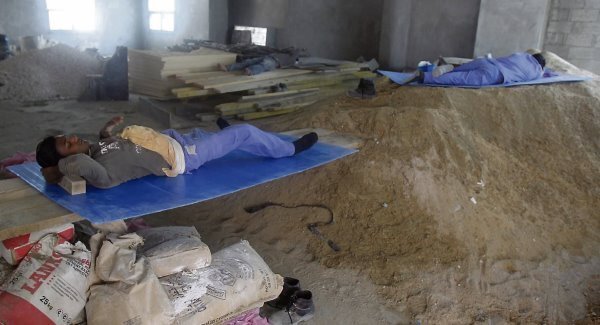
“When I talk about Qatar and the World Cup, I mean the general infrastructure, and that is devastating. Appalling. When you speak to these poor guys and look them in the eye, they’re almost dead. They’ve given up hope, which is the worst thing that can happen to a person.
“These guys know they’re trapped. They know they have no right to change their jobs, no right to go home — many of them are from Nepal, and when the earthquake struck a lot of them wanted to go back to attend funerals, to organise funerals, and they were denied permission.
“They’re not being treated as second-class citizens, they’re fifth-class citizens. They’re slaves. Their conditions are beyond description. I shot a short video on my iPhone of their cooking conditions, lavatories - I’m talking about toilets overflowing, completely unusable, 10 or 12 people per bedroom.
“That’s all without even referring to the deaths, the lack of transparency about what’s going on. It’s dreadful.
“I’m an endorser of a World Cup in Qatar because as bad as things are, the notion of creating jobs for two million of the poorest people in the world is huge — subject to the right conditions. I’d be the first to champion Qatar if they provided the right conditions, and I wouldn’t be alone in that. They have to be dragged into the 21st century.”
SKINS sponsor four countries in the Rugby World Cup: Australia, USA, Tonga and Samoa.
“World Rugby is doing a great job, though we’re campaigning for special circumstances to be recognised for the Pacific Islands — Fiji, Tonga, and Samoa are three countries with a third of a vote at the World Rugby table, whereas Scotland have two votes.
“We see an imbalance there. In addition, at least 12 of the teams competing at the World Cup have Pacific Island players in them. We feel these islands should get extra resources, particularly with the windfall from a World Cup, and that World Rugby should help them a bit more.” Being that outspoken on those issues surely points to a tension between activism and the company’s commercial objectives, surely?
“There is a need to bring those two together. Bluntly, all these things take up a lot of time, and a lot of money. It’s funded out of our marketing budget and it doesn’t kick back commercially.
“Not only do I want my business to be successful, the more successful it is commercially the more I can do in this area. And there’s much more I want to do in this area. The values of our company are shaped around the true nature of competition, and anything that impacts on that, we feel an obligation to speak out.
“Everyone else in this game is out to make as much money as they can, and we feel strongly that we need to leave it better than we found it. We think we can take a leadership role in shaping change like this in the industry, and that others will come on board. That’s got to be for the betterment of sport.
“But it’s a challenge. There are internal debates — I have guys who work based on sales figures, and they see me spend 50 grand on a campaign and they’ll say, ‘Jaimie, that’s 50 grand we could spend on advertising, which would lift sales, so that affects my bonus.’ “We have good discussions on those matters but everybody understands that what you believe in, what you stand for, should supercede short-term commercial gain. We believe in that.”
They also believe in lateral thinking when it comes to representatives and brand ambassadors. Skeletons in the closet need not disqualify.
“When we defined our values around the true spirit of competition,” says Fuller. “We said that needed to shape our corporate culture — everything we do, like the sports we go into. For instance, we won’t get involved in MMA (mixed martial arts) because we don’t see that as fitting in with our values.
“We’ve had the opportunity to sponsor teams and clubs which would be very good commercially but we didn’t feel they suited us.
“You mentioned skeletons in the closet.
“A couple of years ago I convinced Ben Johnson to front an anti-doping campaign, and for the last two years, I’ve been in active discussions with Lance Armstrong.
“This is not about saying ‘you have this in your past and I want nothing to do with you’ when that’s superceded by ‘I think I can do something to change this’.
“Ben agreed to front a campaign on doping to raise awareness of the issue and even ex-dopers can do something. That’s why I’ve been talking to Lance to get him to be an ambassador for anti-doping, if you like.”
We spoke when Fuller was visiting Ireland and the All-Ireland football final was on the horizon, a game he was “desperate” to see.
“I turned down tickets for the Singapore Grand Prix to get to it.
“I admire the way the game works in the community, the spirit and ethos — we’re making a video to show in other countries, to show to them that the spirit of sport we’re talking about is alive and well in Ireland.”