Wenger going around in circles
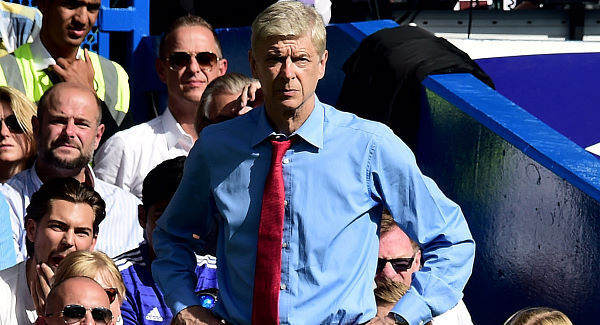
That Wenger is, as Mourinho insisted last week, “the only manager not under pressure”.
There are many reasons, on a basic behavioural level, why esteem for Wenger has proved more durable to the vagaries of football results than has regard for Mourinho.
But as far as football results go, it is indicative of how the pair’s one-sided relationship has panned out that Wenger would immediately respond to the latest jibes by putting himself under more pressure.
Of course, whatever Mourinho says or thinks, it’s been many years since Wenger has been much more than a week away from pressure, from being abused at a train station.
If anything, Wenger’s supposed pressure-free existence is much like Ryan Tubridy’s gig on the Late Late; near- constant vitriol from some quarter or other, compensated for by the prospect of a job for life. Albeit Arsene may be working harder to supply entertainment.
Rather than jostle in the fair with your Ancelottis and Ranieris and Peter Reids, Wenger has instead constructed his own in-house rollercoaster carousel, a fun-filled ride packed with violent ups and downs but ultimately spinning in circles until everyone comes to rest back where they started.

As far as Arsenal’s seasons go, all we know is the ending.
And in many ways it is magnificent; this consistent marshalling of inconsistency into results that satisfy the money men and a product that tantalises supporters with the prospect of satisfaction any day now.
So it was a quintessentially Arsenal week. Turning a corner against Leicester only to find it was a roundabout. And whichever exit they take against Manchester United tomorrow will undoubtedly double back to the same junction.
There is a pattern there in itself, in so far as many of Arsenal’s highs tend to come against teams like Leicester and the lows against good teams. And fortunately for Arsenal, there are many more Leicesters than there are good teams.
But time was Olympiacos would have been counted among the Leicesters. And defeat on Tuesday threatens to detour Arsenal’s season away from the customary Champions League knockout exit.
So the events of this week demand a little extra investigation.
At least, as the pressure clouds loom, Arsene was being asked new questions; such as why he didn’t pick his best goalkeeper, instead of the old questions about why he was picking any of his goalkeepers.
Some would regard this as progress rather than regression, the availability of a goalkeeper Arsenal should be fielding.
As it happens, Arsene found the line of questioning unimaginative: “I think you lack creativity in the media, and you follow a bandwagon that is very, very boring.”
At this point, it’s probably a little rich for Arsene to be complaining about anyone else’s tired narratives, but it was interesting that he was keen to focus on one of those familiar old stories.
“We learn from victory and learn from defeat. The disappointment is that it’s happened before.”
On this occasion, he was talking about the concession of a third goal immediately after they’d scored themselves, just as Arsenal did against Monaco 10 months ago.
The re-emergence of bad habits is one of the many constant themes of Arsenal’s seasons.
The most violent recent lurches on the rollercoaster came two seasons ago, when, in title contention, they shipped five at Anfield, losing the game within minutes, before regrouping, then doing it all again at Chelsea a month later, to the tune of six. Each time, their full-backs looked on in horror, from positions far far up the field, as the goals rained in.
There are several variations on this theme, such as Arsenal’s tendency to dominate a match then concede from the opposition’s first and often only attack, usually from a set-piece.
Arsene’s nearly namesake David Wegner, a psychologist at Harvard University, has studied why sports people repeat the same mistakes.
“It is the ironic return of repressed thoughts,” suggests Wegner. “When the pressure is on, the unconscious attempt to avoid errors consistently increases their likelihood of occurring.”
It is why some golfers or pitchers or darts players suffer from the yips or dartitis. And there is no scientifically-proven cure, though there is much advice, which is generally the way of these things.
Wegner feels the best approach may be an acceptance of any symptoms rather that trying to avoid them. Which, in football terms, might be described as the Kevin Keegan way.
“Soft and weak, Arsenal,” was the theory of that other great psychologist Roy Keane this week, but yet another sports shrink Garret Kramer has a slightly more nuanced take on mistake avoidance that might be more helpful.
“Mistakes are bound to happen when our innate understanding of life conflicts with some learned understanding.”
In general, Wenger’s reaction to setbacks is to a period of conservatism, a temporary leash on his instincts. Going into that defeat at Anfield, for instance, he was bullish. “We have to not forget to attack. Our game is about that.”
Chastened, a few days later, Arsenal forgot to attack and played out a scoreless draw with a woeful Manchester United. Or, as Arsene invariably puts it: “We played a little bit with the handbrake.”
By the time they arrived at Stamford Bridge, they had won at Spurs, and may have remembered what their game was about. Another pattern in Arsenal’s endless circle of life.
“People tend to repeat offences because they try to fix the associated errant feeling immediately. From this blurred perspective confusion escalates, self judgment runs wild, and the lesson will always be lost,” writes Kramer, who might as well have been predicting a dull scoreless draw tomorrow, which may just be storing up more repressed thoughts for another day.
Arsenal have always been able to dig in for six or seven games to keep the show on the road, but it isn’t learning unless gut instincts change.
In doing enough to stay on the merrygoround, Arsene may just be preventing Arsenal ever getting off.
Heroes & Villains
Having a great World Cup. On Tuesday, they went for Judge Judy ahead of Tonga v Namibia. Good captaincy.
Who knows if they make sense? But for the love of God, can we just implement them, just so we never have to hear the clamour for a “Champions League format” again.
Wenger was wrong because Ospina threw one in. Just as Japan were right because a try came of it, and England wrong because it didn’t.
If the Fourth Place Trophy race floated your boat, this should really get the blood pumping. Though it didn’t do much for West Ham or Southampton.