Hurling: Where the best games are ones you’ll never see
Bear this in mind, though. As farcical and as disgraceful as the predicament the camogie teams of Dublin and Clare were put in last month was, The Camogie Association still runs the best and fairest and most sensible championship schedule and structure in all of inter-county GAA, male or female, and one certainly far superior and equitable than its hurling equivalent.
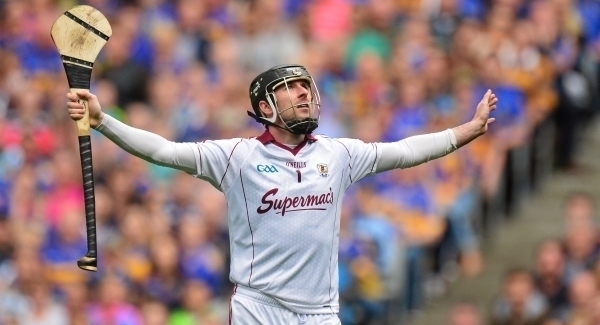
When Tipperary were sent crashing out of the championship by Galway last Sunday, it was the fourth consecutive year that the team which had won the Munster championship had its season terminated in the very next game after a layoff of five weeks or more.
As we’ll show, that’s simply continuing a trend that’s over a decade older than that. It’s as if when it comes to the identity of its All-Ireland hurling finalists, or more particularly how their Munster champions are being impeded for winning that provincial championship, the GAA doesn’t give a toss.
I remember writing about this very point at length seven years ago this week. Again Tipperary had been beaten narrowly in an All-Ireland semi-final. Again it had been a thrilling match. Again there was a reluctance to detract in any way to the brilliance and the romance of the victors; in that instance, Waterford, through to their first All-Ireland final in 45 years. But again now we have to return to it, for it was happening seven years prior to that as well.
In 2001, Tipperary also won the Munster championship. Their next game wasn’t for six weeks, against a Wexford team that had played three games in that timeframe. Sure enough, Tipp didn’t win. Mind you, they didn’t lose either, scraping a draw. The dust and rust shaken off, they won the replay by double figures.
Two years later it was the same for Cork. A draw the first day against a Wexford side with serious momentum; the second day.
As I’d write that time in 2008: “The facts are irrefutable. Five times the Munster hurling champions have had a five or six week-gap before their All-Ireland semi-final and all five times they’ve failed to win that game. Waterford were foiled in 2002 and 2004, just as Tipperary were last week, while Tipp and Cork were taken to those replays by Wexford in 2001 and 2003.
“Contrast that record to 2005 to 2007, when provincial champions had a break of only three to four weeks before being obliged to play All-Ireland quarter-finals. In all six games, the provincial champions survived. Five of them won at the first attempt, while in 2007 Waterford drew with a Cork side gunning to make a fifth All-Ireland final on the trot. Do you think Waterford would have escaped had they another two weeks kicking their heels?”
Since then, it’s been pretty much the same story. In 2009, alright, Tipp hammered a Limerick side waiting to be put out of its misery. In 2011, Tipp also prevailed over an emerging Dublin team, but only just, the gap between the Munster final and that All-Ireland semi-final an undoubted factor in their underperformance. But they were the exceptions. Eleven of the last 13 Munster champions that have won automatically through to the All-Ireland semi-final have failed to win that semi-final, all of whom have had a layoff of five weeks or more.

Of course, Kilkenny are the exception to the five-week layoff, but then they are exceptional. And as their standout player Richie Hogan highlighted and articulated so well last week, the system is hardly ideal for their players either.
So far we’ve seen Hogan only play three times this summer. No other sport — apart from Gaelic football — fails so dismally to showcase its best players and teams, even when they’re having a winning year, like Kilkenny currently are.
No other sport allows such a disparity in match preparation; while Tipp are gathering rust waiting for five weeks, Galway are gathering momentum, from being in that ideal groove of playing every second or third week.
That variance is all the more pronounced at this time of year. Earlier in the season you might have a five-week gap between Munster championship games but at least you can get challenge games. Who could Tipp have played the last few weeks? Kilkenny?
As Hogan said, players want to play, not train, in the summer months, ideally, every second or third week. His former teammate Tommy Walsh once said he almost preferred the league to the championship because you constantly got games.
There is another way: How camogie do it. They still have their league, they still have their provincial championships. Then, in mid-June, the All Ireland championship starts. Two groups of five. Every team has a similar programme: Four guaranteed matches each (true, the authorities will have to add a proviso for when two teams are tied on points, but you’d think now they will). The All-Ireland semi-finals are played on the same weekend, guaranteeing both finalists a similar layoff and run in to the final.
The camogie schedule puts its sisters in ladies football to shame as well. The Galway ladies footballers played 10 games in the league, including three in February. Their league final replay against Cork was played on May 16. They didn’t have another game until the Connacht final on July 13, which they won. Their second game of the championship was last weekend, a narrow two-point defeat to Cork in the All-Ireland quarter-final.
Now their year is over, even though they may well be the second-best team in the country. Two games in the three best months of the year, yet three games in the wet and the shit of February. Either that’s a complete joke of a calendar or else the joke is on us thinking their football like hurling is supposed to be more of a summer game than a winter one.
Last week, when Nicky English was asked on a podcast about what he made of Hogan’s comments, the former Tipp star was initially against a Champions League format, on the basis there wouldn’t be enough competitive teams to make enough of the games relevant. But he was only speaking off the top of his head, probably unaware that over the past three seasons alone we’ve had eight different counties contest the All-Ireland semi-finals.
As the conversation went on, English warmed to the idea. “The thought has often struck me that some of the best hurling games are internally in Thurles or Nowlan Park or Salthill and nobody gets to see them,” he’d tell BeanBag Sports.
When Eamon O’Shea stepped down as Tipperary manager last Sunday, he spoke movingly about how he’d always treasure working with his players at training on a Tuesday or Thursday night. It wasn’t just because of his fondness for the romance and the value of what is done away from the lights. It’s because 95% of the time during the summer, it’s where he’d see Seamus Callanan & Co weave their magic.
Hurling; where many of the best games are ones that you’ll never see, or ones that don’t really matter.
There’s no other sport like it alright.