It’s time to shut sledgers up for good

This brings me back to my own distant and undistinguished playing days, and a hot evening spent in the old field in Clonakilty in the company of a former inter-county player.
I was wearing the number two jersey — insert your own puns, by all means — and was warned by our full-back going out that this gentleman liked to talk, and advised to act accordingly — ear plugs may have been mentioned, or even a box in the mouth — but nothing prepared me for the reality.
To paraphrase Soft Cell, it was a non-stop erotic cabaret, without over-emphasising the middle part of the album title (though he volunteered an unusual reason for the referee coming back late after half-time): a never-ending stream of conversation, apercus and sallies that ran from the throw-in to the final whistle. The only time there was silence was when he was going to make a run for the ball, which was a handy cue for when to grab his jersey.
It wasn’t abuse. That was coming from the full-back, 20 yards away, who was roaring at my marker to shut up on the grounds that he was putting me off; this was echoed by the subs from my man’s side, who were pouring invective in the opposite direction at the full-back.
For about a week afterwards I had a slight buzzing in my left ear.
Joking aside, this on-field abuse is one of the new issues for all field sports to challenge. Curtailing verbal excesses might seem a step too far, but consider how we all sniggered when it was first mooted that racist chants at professional sports stadia would be stamped out.
A combination of zero tolerance for howling vile abuse with the self-policing nature of social media and mobile devices means that it is now very difficult for someone at a sports event to get away with abusing the participants.
How are those participants going to get away with dishing out the same abuse, then? We know that practically everything which occurs between the white lines is quantifiable and measurable: is it only a matter of time before those tiny pods that players carry on the backs of their jerseys to track their speed and movement include an audio component which collects their less edifying comments?
This has nothing to do with Tyrone versus Tipperary a couple of weekends ago, by the way, and the swift mythology sprouting about that game. The intersection of popular favouritism with gnarled experience had the expected result, with Tyrone carrying home the prize, but the complaints have been long and loud since then.
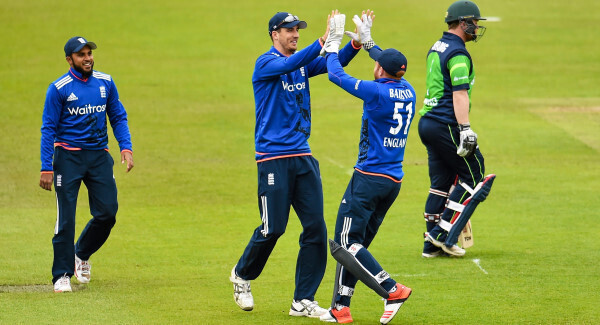
That shouldn’t prompt a rush to legislate, but this is a rising tide of distaste which isn’t confined to the GAA. The game described by an English writer as being “in the grip of a moral panic that feeds the illusion the sport is descending into barbarity” is cricket, believe it or not. If there are fears about this becoming a real problem in cricket, then how long before it seeps in everywhere?
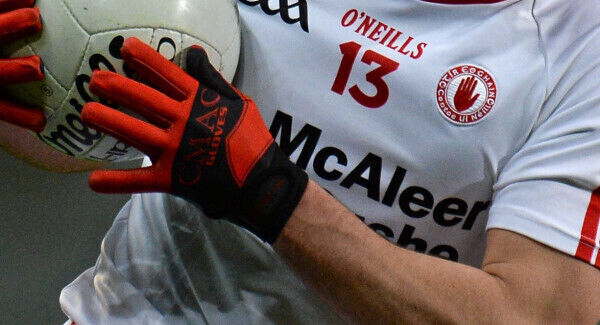
Regarding the ongoing controversy about sledging and bad language on the field, by the way, I can give a pretty exclusive taste of the kind of talk favoured by Tyrone. It’s full on, just to warn you, but it’s up front and on the level. This is a Tyrone quote from a recent interview.
“Switch to vodka. Leave the brown alone. Have yourself dry-cleaned once a week. Steer clear of the dog runs. And for God’s sake, don’t f*** it up.”
Thus spake Tyrone, the puppet currently starring on Broadway in a play called Hand To God. He was recently nominated for a Tony Award. Yes, he’s white with red trim. Just saying.

The narrative was once a familiar one, and may still be found, but it hardly remains in its original form. Private transport, backpacking in Asia and access to college have all ravaged its component parts.
Youngster leaves school in Cork, joins civil service, decamps to the capital, throws in his lot with the local GAA club. That was the arc of my granduncle’s association with the GAA until he passed away last weekend in his mid-80s.
Does that still happen? The reference to private transport above isn’t tongue in cheek: there was a time when a player moving 30 miles for employment had to sever his ties to his home club, on the grounds of convenience alone. Nowadays the road network and a second-hand banger ensure his departure is not as final.
Frank Foley’s local GAA club in Dublin was Kilmacud Crokes, an organisation of a different order to most GAA clubs — most sports clubs, come to that — but the names may be changed to suit a multitude of stories. He went from Glen Rovers in Cork to a small outfit which became a huge institution, Kilmacud, and ended up a trustee of the latter. He is being laid to rest this morning in Dublin. One of the men who, in their quiet way, helped to make the GAA what it is.
Another one of those men passed away unexpectedly last week. Mick Burns of Castlehaven and Cork was a forceful presence when the West Cork club were climbing the ladder to glory, and this writer spent a spectacularly unproductive afternoon marking him one afternoon in a league game. (For clarification, he most certainly was not the chatterbox referred to elsewhere on this page).
I bumped into one of Burns’s old teammates on the street last week and he was still shaking his head at the suddenness of his departure. We all are.
Ar dheis Dé go raibh an bheirt acu.
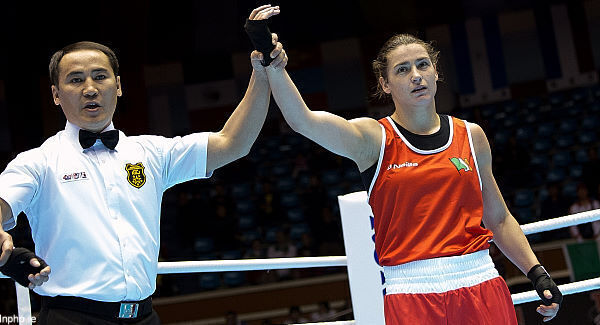
Everyone welcomes the advances in visibility for women’s sport, the rising tide boosted by the likes of the women’s rugby team, ladies footballers and Katie Taylor.
Or do they?
You need only look at the toxic knuckle-dragging that broke out on social media when questions were asked about a sexist reference to a League of Ireland physiotherapist to recognise that there’s a good deal of ground to make up yet.
On that basis I recommend a new book by Caroline Criado Perez, Do It Like A Woman … And Change The World, a volume which outlines the size of the challenge.
Criado Perez became well known partly for pointing out that English bank notes were lacking female faces, and eventually the Bank of England responded by putting Jane Austen’s face on £10 notes, but mostly because the reaction to Criado Perez’s reasonable point was a barrage of rape threats on Twitter. Seriously.
A good deal of ground indeed.