Wallabies see writing on the wall, so they adapt to try and change it
Before looking forward to the inaugural Champions Cup final at Twickenham on Saturday, I feel compelled to examine the implications of an announcement last week that attracted minimal attention on this side of the world.

Wallabies see writing on the wall, so they adapt to try and change it

The Australian Rugby Union finally sought to address the issue of their player drain to Europe by opening up the possibility for overseas-based Wallabies to continue their international careers.

The parameters are clear and transparent. Give seven years service under contract to the ARU and accumulate 60 or more caps, and you will remain in the equation for selection. That decision will have big implications for the international game in Australia and perhaps, in time, New Zealand.


With a small base to select from in the first place, Australia can ill-afford to continue to lose a vast swathe of quality internationals to the European club game.

The Wallabies are struggling to compete as it is while the majority of their franchises operating in the Super 15 are also experiencing major difficulties in keeping pace with their New Zealand and South African counterparts.

The Australian sporting public are spoiled for choice when it comes to professional sport, with rugby union not only competing against its league equivalent but also with cricket, Australian Rules and soccer. The Aussie fan doesn’t stomach losers and demands value for money when attending a sporting event.

The ARU are haemorrhaging money and badly need to address the competitiveness of their regions and national side. After the 2013 Lions tour alone they lost five players in Digby Ioane, Ben Mohen, James O’Connor, Kane Douglas and George Smith who started at least one test.

In addition three more of that side — series captain James Horwill, vice-captain Will Genia and 104-times capped Adam Ashley-Cooper — are all European bound after the World Cup. While O’Connor has since returned to the Queensland Reds, another key figure in Quade Cooper may be joining Toulon.

No international side can cope with that level of player drain without a serious impact on performance levels. Good and all as Joe Schmidt is, imagine if he had to deal with eight of Ireland’s leading players all heading off to the southern hemisphere within a year of each other?

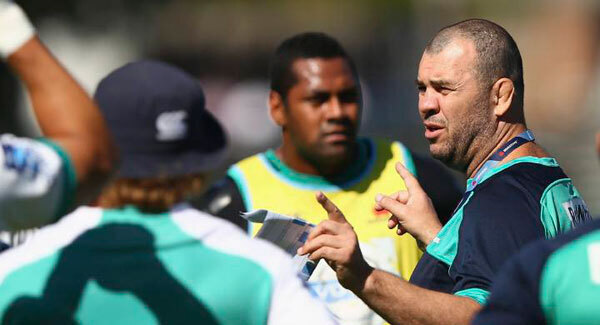
That is exactly what Michael Cheika faced but in typical fashion, the former Leinster supremo wasn’t about to accept his fate without a fight.

If Australia are to remain a competitive entity in the Rugby Championship and at World Cups, they simply had to address the issue. It is no coincidence that Argentina’s biggest results since joining the big three in the Rugby Championship — their only win and draw to date — have come against Australia.

In a World Cup pool featuring Wales and England next autumn, there is every possibility Australia could fail to make it past the pool stage of the global tournament for the first time ever, so something had to be done.

Even New Zealand were beginning to feel the effects of the player drain and started addressing the issue a few season ago by granting some players sabbaticals overseas — remember Dan Carter’s injury-hit season with Perpignan — while others such as Richie McCaw and Conrad Smith were offered a six-month career break on full pay.

In order to address their inability to match the massive money on offer in Europe and Japan, the NZRU gave their blessing to the likes of World Cup winners Jerome Kaino and Sonny Bill Williams to earn a bigger wage packet abroad as long as they agreed to return to the fold with one of their Super 15 sides at the outset of a World Cup season.

Both have done so, with the Auckland Blues and Waikato Chiefs, and are certain to make the All Black World Cup squad.

South Africa changed tack under current coach Heyneke Meyer who realised that all his European-based stars could be back home within a nine-hour flight and one-hour time difference. It made sense to him to pick them and every Springbok side taking the field at present has at least four overseas-based players.

Cheika was dropped in at the deep end less than a week before Australia headed off on their European tour last November after the shock resignation of Ewan McKenzie. Offered the chance to coach at international level, Cheika was willing to take on the challenge but on his terms. He had the ARU over a barrel. As a result he persuaded his employers to allow him continue to coach the Warratahs in the Super 15 for one more season.

Cheika did a good job in demanding circumstances on that tour but quickly realised that his player base had to be extended. Ever the smart business man, his fingerprints are all over the new regulation.

While the current change will only add three overseas players to the immediate selection mix, the vast experience offered by having Matt Giteau, Drew Mitchell and George Smith back in the equation will have an immediate impact at the World Cup.

Their presence will also serve as an extra incentive for those contemplating a move overseas to bide their time and satisfy the new eligibility criteria if they wish to retain the option of playing international rugby.

The new criteria offers a twin benefit for the Wallabies and a reasonable compromise to any player in his mid-20s looking to pursue his playing options in Europe. Quality players now accumulate 60 caps over a comparatively short period of time.

George North recently became the youngest player in the game at 22 years of age to accumulate 50 caps and the Aussies have never been afraid of picking young players. It will be interesting to see if New Zealand follow the ARU lead any time soon, given that they are now witnessing their younger All Blacks like Ireland-bound Francis Saila and Charles Piutau fleeing the nest.

The other question raised by the ARU stance is, will European clubs resist the temptation to lash out big money for a player who wishes to continue his international career and as a result could be away for long periods of the domestic season?

So to London, and the first ever Champions Cup final which brings to a conclusion the inaugural season of European action under the direction of the newly constructed EPRC.

While the pool stages of the new competition offered little or no appreciable change, the rushed nature of the knockout phase, coming so soon after the Six Nations championship, has come and gone with undue haste.

The marketing of the final throughout the season has been nothing like that carried out by the ERC in previous years and as a consequence next Saturday’s decider at Twickenham is set to be played out in a stadium less than half full.

Given that EPRC would have guaranteed the RFU a rental fee based on a minimum attendance of around 55,000, it is likely that the newly formed tournament directors will struggle to cover their costs on the day.

We even have the bizarre situation where English fans who bought a ticket for the Aviva Premiership final at half the cost of the European equivalent were offered a free ticket for the Champions Cup decider. Not a great reward for those fans who committed early and bought their ticket in advance of the semi-finals!

With most of the Irish-based ERC staff also set to finish up with the EPRC at the end of the season, the new organisers face massive challenges over the next few months. The club owners in France and England fought hard for control but are struggling to come to terms with the nuances of running the two European competitions.

On the field, they would not have wished for an all Top 14 final but that is what they have and must deal with the challenges that presents. Toulon are on the verge of a first ever hat-trick of European triumphs but surely Clermont Auvergne’s time has come. Toulon are favourites but for a variety of reasons I sincerely hope the long serving Aurelian Rougerie and Julian Bonnaire finally land that long overdue European cup medal. Their club and long suffering fans deserve their day in the sun.

More in this section

Sport

Newsletter

Latest news from the world of sport, along with the best in opinion from our outstanding team of sports writers. and reporters

Cookie Policy Privacy Policy Brand Safety FAQ Help Contact Us Terms and Conditions

© Examiner Echo Group Limited