Jockeys face a clear and present danger - every day
In 2007 John Carter published a book about horse racing, following a group of people involved in the sport around one major course.

Jockeys face a clear and present danger - every day

Newmarket: A Year at the Home of Horse racing tracked figures such as bloodstock agents, trainers and owners through the seasons, but Carter remembered one group a little more vividly than the others. The jockeys.

“That was my first time speaking to jockeys in any detail, and I realised theirs was a fascinating community. I thought there might be a book in it, Bloomsbury (the publishers) thought horse racing was an area they’d like to move into, so . . .”


The result is Warriors on Horseback: The Inside Story of the Professional Jockey. It gives both historical context and present-day perspective, but one attribute has always been a constant for the jockey.

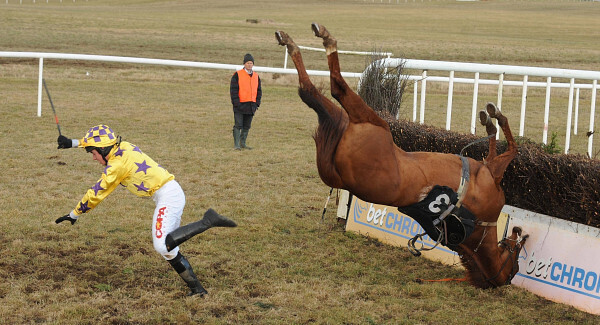
“The bravery,” says Carter. “It’s not just the threat of injury, it’s the inevitability. All jockeys are injured, and even the best of them are left with scars and injuries.

“They live on fresh air, largely, and can’t eat as they normally would — the majority would be two stone under their natural bodyweight. Those kinds of challenges and deprivations aren’t what most people face from day to day.”

Starving oneself to make weight is clearly a dangerous practice, particularly when the people starving themselves need all their strength to handle horses. Carter says matters have improved in terms of managing weight loss.

“It can be hard to know but based on the feedback from the Professional Jockeys Association and the jockeys I spoke to, there seems to be a more enlightened culture, certainly, now about weight loss. They get a great deal of help from the Professional Jockeys Association so lack of knowledge wouldn’t be an excuse for bad habits in that area.

“Certainly there appear to have been fundamental changes in the area and it seems to be a much more professional approach than would have been the case even twenty years ago.”

Still, that doesn’t address what Carter describes as the fundamental question: “It was simple — why do they do it, why would you choose that as your career when you know you’re going to be injured and spend all your time on a diet?”

Early on in the process Carter’s question was answered.

“I spoke to a jockey who’d ridden in the seventies and eighties, John Snaith, who suffered a severe injury at Aintree and spent six weeks in a coma.

“When he came out of the coma he was told to stop riding, essentially.

“I asked if he would have taken a different route if he’d known that injury lay ahead of him in his career, but his answer was absolutely not: ‘I loved riding,’ he said. ‘You couldn’t find anything to match the thrill of riding — or winning’.”

Carter moved to a contemporary jockey for another opinion, and heard the same sentiment expressed even more vividly.

“I also spoke to Martin Dwyer, the Derby-winner, and when he talked about winning the Derby you could see how it excited him, even though he’s a seasoned professional.

“He simply said that you couldn’t explain the thrill of riding a live animal at forty miles an hour against other people, also riding live animals at forty miles an hour.

“He pointed out that when you added winning a big race on top of that, then it was a thrill that adrenaline junkies found hard to top anywhere else.”

Carter points out that that thrill doesn’t make much economic sense: “I’m a fairly logical person, and looking at it logically you wouldn’t become a jockey. You wouldn’t do it for the finances and you wouldn’t do it for your health, people do it because they love doing it. Simple as that.”

Mind you, the successful ones live on in unexpected ways.

“The American jockey Tod Sloan came to the UK early in the twentieth century, and he revolutionised the game.

“Not only did he have an unusual riding style, up on the neck, but his philosophy was simple — to take the lead as soon as the race started and burn off the rest of the field rather than pacing himself and coming with a late rush.

“He and his horse were usually a long way in front of the others, hence the phrase that came into use, that you were ‘on your Tod’, on your own, out in front.”

Has the standing of the jockey improved in recent years? Carter thinks so.

“The culture of racing has changed and where jockeys stand in the hierarchy of racing may have changed to a degree.

“I think Frankie Dettori has been very influential in that, he’s so extroverted and enjoys being in front of the camera that he’s sold racing very well — I think that’s helped to change jockeys’ standing, though there’s also a very deeply ingrained culture within horse racing.”

* Warriors on Horseback: The Inside Story of the Professional Jockey is published by Bloomsbury.

More in this section

Sport

Newsletter

Latest news from the world of sport, along with the best in opinion from our outstanding team of sports writers. and reporters

Cookie Policy Privacy Policy Brand Safety FAQ Help Contact Us Terms and Conditions

© Examiner Echo Group Limited