French panache a thing of the past
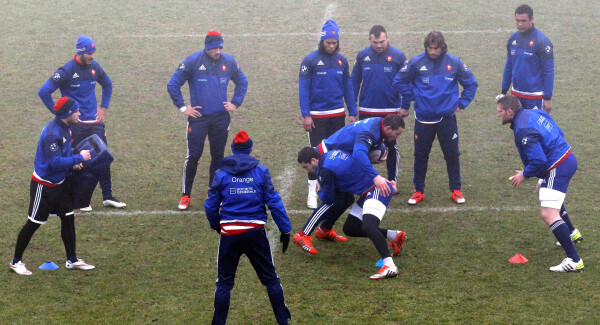

French flair has been a myth for a long time, and there’s a number of reasons for that. Chief among them is that the Top 14 is a real league, whereas the Guinness Pro12 isn’t, because it doesn’t have relegation. For whoever goes down, there’s a huge drop in finances and prestige; the whole town suffers, because it’s a massive way of life here.
The incentives are clear. The league is so result-dependent performances go by the wayside, getting four points is all that matters, no matter how you manage it. Creativity among French players is suffering as a result.
Others will tell you France’s problems are rooted in the number of foreign players in the Top 14, but I don’t buy that. There’s 30 professional teams so there’s buckets of contracts available. All the French have to do is get things right from numbers 1-23 in the national team, but that hasn’t happened in the last couple of years.
The talent is there, and the French are now protecting that talent more, having copied the Irish by limiting the number of games their top guys can play. There’s a vast selection of players and competition for places, but when they put the final pieces of the jigsaw together, they aren’t the sum of their parts. They’re the team with the most potential in the Six Nations, but they just don’t have that collective force at the moment.
Part of the reason for that is they insist on picking naturalised players over perfectly good homegrown alternatives in some cases, which is causing consternation here. You can’t read Rugbyrama or L’Equipe most days without hearing from a former French great or a coach who is disgusted the likes of Morgan Parra and Brice Dulin aren’t playing, whereas South Africans Rory Kockott and Scott Spedding are.
That’s a failing of World Rugby; the rules around naturalisation are terrible. If you arrived in the country in your childhood years then it’s a little different, but there are too many project players and it’s undermining international rugby. Imagine if Johnny Sexton hadn’t been capped by Ireland — one more year at Racing Metro and he could be playing for France. That’s farcical. The Irish team’s greatest strength is our unity, we appreciate our history and are a proud nation, but if that gets diluted by guys who are only there three years, then it becomes a weakness.
Deep down, the French players know it’s already affected them. It’s little things like the language — it’s complex, and as well as foreigners can speak it, they’re still speaking a different French to the locals.
French fans are known for quickly turning on their side when things don’t go well and there’s a lot of negativity around the team here. I watched their win over Scotland on TV in Dublin on Saturday night and I thought France had shown areas of improvement; they didn’t look like scoring a try, but they looked the likely winners throughout. Then I arrived back in Paris on Sunday and anyone I spoke to about rugby was just slating them, saying how lucky they were to win and that the performance was dreadful.
There’s a bit of a contradiction built into all of this, because France are at their most dangerous when they’re being written off and their backs are to the ball. Ireland are expected to win tomorrow, but if France can get into a lead or stay within a score, they have the players to do serious damage from counter-attacks. If the ball falls into the arms of Wesley Fofana, Yoann Huget or Teddy Thomas, they can go the length of the pitch and score — not every player can do that.
What they haven’t shown us yet is their attack off set-piece; I’m a big fan of Camille Lopez, but he played far too deep against Scotland and will have to challenge the gain-line more tomorrow. He’s a bright 10 who can maximise the threat of Mathieu Bastareaud and Fofana in midfield.
I’ve never seen Bastareaud pass the ball as much as he did against the Scots. We all know about his ball-carrying and off-loading abilities but if he continues to pass the ball before contact, it’s going to make him hard to analyse. Previously teams could gang-tackle him knowing he wouldn’t pass, but if he’s deciding now to go to the line and pass at the last minute, it’s a big addition to his game. Robbie Henshaw or Jared Payne won’t want to be left one-on-one with him.
Nonetheless, until France find some rhythm in their game plan or some consistency, Ireland — who know their roles and execute them so well — won’t overly fear them. Joe Schmidt’s side will play with a lot of intensity and keep the ball in play a lot; they’re happy to go to ground and create rucks all day, looking for quick ball from there, whereas France will ‘reste debout’ — remain upright — and try to play the ball out of the tackle to keep it alive.
That’s not say Ireland won’t have confidence in their set-pieces, though. Mike Ross rewarded Schmidt’s faith in him against Italy — he always finds ways to win penalties at scrum-time — and Paul O’Connell will back his lineout too, so Ireland will have huge options on their own ball. The return of Sexton is massive; the advantage of having an experienced 10 is he can mix his game. Ireland’s attacking focus was very narrow against Italy, but when you have an out-half playing his first Six Nations game, that’s to be expected. I’d say that game went at 100mph for Ian Keatley; the more time he gets there the more comfortable he’ll be, but he won’t get that chance this weekend.
Despite Sexton’s lack of game-time, I think he’ll be better than before he was forced to take all that time off. As he didn’t suffer badly with the concussion — and didn’t have a limb in a cast or any other restrictive injury — he’s been working hard with the ball in training. He was very smart in terms of making out a mini pre-season for himself. He might be a little off the pace for the first 20 minutes, but he’ll be fine after 50. If he happens to hit the ground running, that’s a bonus.
I think Ireland will win, because they have to — England were the most impressive team in round one and their victory in Wales means Ireland will likely need a Grand Slam to win the championship. Four out of five victories won’t do the job, because I can see England putting 50 points on Italy this weekend. Stuart Lancaster deserves huge credit as they seem to have a really good culture and atmosphere in the team, even with the amount of injuries they’ve had. Before the tournament it was Wales I feared the most, but now I wouldn’t be surprised if their championship hopes were ended by Scotland this weekend. Scotland’s dander is up, they’ve achieved some consistency and will be targeting this one. By Sunday evening, Ireland and England could be the last championship contenders standing, which would set up their clash in Dublin on March 1 nicely.