Trying to squeeze 15 months of GAA into 12 months
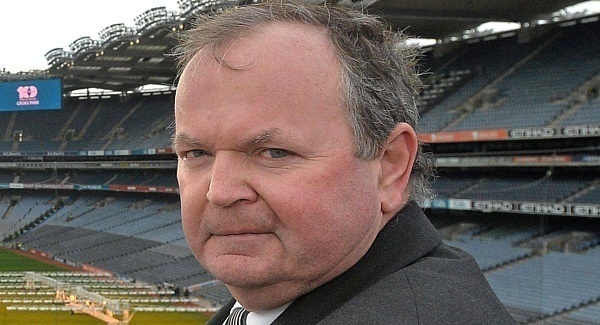
Today in Croke Park, Central Council will be presented with proposals from a sub-committee charged with devising a plan to introduce a calendar GAA season from 2016, writes John Fogarty.

Trying to squeeze 15 months of GAA into 12 months

It includes GAA director general Páraic Duffy, president Liam O’Neill, director of games administration and player welfare Feargal McGill and GPA chairman Dónal Óg Cusack.

Commissioned by Central Council on foot of their approval in principle of the Football Review Committee’s original recommendation, the group’s blueprint will involve moving the national club finals from March to the previous December and pushing each of the All-Ireland finals back by at least a week.


O’Neill has stated this marks the start of radical change but despite initial backing from counties and before the sub-committee’s report has even been released, opposition has already been voiced with some county chairmen raising doubts about the practicalities of a calendar season.

Here our GAA correspondent weighs up the pros and cons of what is likely to be recommended to Central Council compared to the status quo.

CALENDAR SEASON

THE PROS

1. Things will become a lot tidier. Counties will have to reconsider their fixtures programmes, which will take getting used to. But within the confines of one year, the opportunities to alter competition structures, some of which are badly in need of it, are greatly enhanced.

2. Whatever about the structure, it goes without saying that the inter-county championship schedules are far too long. The 11 weeks it takes to run off the Connacht SFC is inexplicable. Any plans which propose a more streamlined schedule must be considered.

3. Ask any player, at club or county level, what they want most and they will tell you predictability — just tell them when they will be playing. Bringing all games into the 12 months whilst giving the Central Competitions Control Committee full control of fixtures will allow them to orchestrate a schedule where there is not as much guesswork about fixtures and therefore disenchantment.

4. That the majority of games in the GAA inter-county season are over and done with in the first four months of the year is not right, particularly when they are genuinely summer sports. This is not just about striking a balance between club and county but between the National Leagues and All-Ireland championships. In a more condensed window, there can be more Championship fixtures but with no extra impact on clubs.

5. A proper closed season for county players could be one of the benefits of the new recommendations. If, as is anticipated, pre-season competitions become a thing of the past, a more believable break could be in the offing. It would make a marked change from the original winter training moratorium and the current phased one, both routinely flouted.

THE CONS

1. Things become a lot more messy for county boards, many of whom who will have to devise new championship structures, likely “two strikes and you’re out” formats. But for successful and/or dual counties, just how feasible is that? With managers holding such strong positions, will they budge and share players? Also, some long-held club competitions, just like at inter-county level, will have to be jettisoned.

2. O’Neill has said counties will be given deadlines for provincial competitions. The GAA’s very own national fixtures committee chairman, Paul Kinsella, said his own county Kilkenny would have no problem shunning the Leinster and All-Ireland competitions if it jeopardised the sanctity of their own championship. But wouldn’t the absence of their champions in turn devalue the other competitions? And what would sponsors think of that or if counties merely nominate representatives to go forward instead of their winners?

3. As Kinsella rightly points out, the longer a club’s senior team remains in a competition, the better it is for the club. “You can dress it up any way you like but once you go out of the championship, that’s the end of the interest.” Two defeats in the early summer and what’s left for the club for the remainder of the year? Worryingly, the two-strikes-and-you’re-out is also a one-size-fits-all solution.

4. For as long as most of us can remember, September has been All-Ireland final month. It has become part of our sensibilities. Moving the senior hurling final to August will take a larger leap of faith than has been anticipated.

5. Condensing the Championship will have a dramatic effect on the promotion of Gaelic games. Right now, it virtually owns September. Before Duffy changed his mind, he had warned bringing forward All-Ireland final dates would impact on football and hurling’s long-held position in the sporting calendar. Like it or lump it, the club season doesn’t capture the zeitgeist like All-Ireland championship.

KEEPING THE STATUS QUO

THE PROS

1. Imagine if a dual county has extended runs in both the All-Ireland senior football and hurling qualifiers. Just when are they expected to stage their club championship games, especially with some players representing their club in one code and a divisional/amalgamation side in the other?

The current situation is nowhere near perfect but at least there is wiggle room for clubs and much-maligned but ever-so-admirable fixture planners.

2. We can’t overstate the link the GAA has created between itself and St Patrick’s Day since they elected to stage the All-Ireland club finals on March 17. To move away from it is not something to be done lightly when not only the stage in Croke Park but the date does so much justice to the very essence of the organisations: its clubs.

3. As the old saying goes: “Pleasure is found first in anticipation, later in memory.” The two and three-week build-ups to provincial and All-Ireland semi-finals and finals provide games of such magnitude with their rightful framing. Will they afforded such prominent billing in future season schedules?

4. Only 24 clubs from close to 2,500 (including Britain) each year will benefit from the All-Ireland club series being pulled back into the calendar year. Should something be changed to benefit less than 1%?

5. Irish weather has possibly never been as unpredictable but there would appear to be better chances of, say, All-Ireland semi-finals not being postponed in February than November.

THE CONS

1. Asking club players to stop before Christmas only to come back and start all over again in late December or early January is too much. As the old pre-Christmas start to the National League proved, the break can warp results and performances and threatens to diminish the value of the competition. All momentum is lost too.

2. Other family gatherings have either been affected or missed by players because of club fixtures being arranged virtually at the drop of a hat? If the CCCC is provided with the authority to schedule fixtures, then the chances of such hastily-arranged matches are likely to be reduced.

3. Donegal’s club players may have known exactly when they were scheduled to play championship games last year but their competition was tantamount to a blitz at the end. In the Dublin senior football championship, which has in the past also resembled a blitz, it’s one defeat and you’re gone. Too much is invested for such pittance.

4. As Bernard Brogan outlined this week, stars of club teams who reach All-Ireland semi-finals and finals see their chances of making county teams reduced. Jim Gavin has said it himself: they’re playing catch-up.

5. Having backed the proposal in principle last year, for either Central Council or Congress to now reject it would mark an embarrassing u-turn.

x

More in this section

Sport

Newsletter

Latest news from the world of sport, along with the best in opinion from our outstanding team of sports writers. and reporters

Cookie Policy Privacy Policy Brand Safety FAQ Help Contact Us Terms and Conditions

© Examiner Echo Group Limited