Ireland ready to prove the perfect host for World Cup
My mind drifted back to New Zealand and Australia, where I had spent the previous month competing in the first ever rugby World Cup and visualised playing against New Zealand in hurling’s greatest arena.
Fantasy? It certainly felt that way back in 1987 but the fact that there is even the slightest chance it could actually materialise shows just how far we have travelled in less than 30 years. Ireland playing England at Croke Park on that emotionally charged day back in 2007 changed everything and for that, the GAA community deserves immense credit.
Without that continued support, the Irish bid to independently host the Rugby World Cup in 2023 could never have progressed to its current stage with the formal backing of the Irish Government and the Northern Ireland Executive secured following on from the Deloitte feasibility report completed this year.
This is only the starting point, however, and there is a challenging road ahead before hosting the tournament becomes anywhere near reality. A first stumbling block has been hit already with the recent planning issues surrounding the redevelopment of Casement Park. I’m sure there will be many more to come even before the tender document is completed by the end of 2015 and the formal bid is submitted sometime in mid-2017.

What are the chances of landing the tournament and do we have the capacity in terms of infrastructure, venues and expertise to make a success of hosting the third biggest event in the global sporting calendar? In my opinion, we tick all the boxes.
That is the first message that has to be sold, initially to the board of the Rugby World Cup and following that to the World Rugby council. Even if the board recommends the Irish bid, the final decision rests with the 26 votes vested in the council. As with any event such as this, that could pose the biggest challenge.
Having participated in all seven rugby World Cups to date in one capacity or another, there is no doubt in my mind that not only are we capable of hosting the tournament, we have the resources to make it one of the most successful, memorable and enjoyable in the comparatively short history of the competition.
The best tournaments to date have been those hosted by a single country, with the South African version in 1995 in my top two. The manner with which Nelson Mandela used rugby as a unifying force at a critical point in that country’s history. For entirely different reasons, the 2003 event in Australia was an outstanding success. France did a decent job in 2007 even if matchday organisation at venues outside Paris proved challenging.
The tournament Ireland will bear most comparison with is New Zealand 2011. Despite the fact the entire rugby-mad country got behind that event, I have no doubt Ireland would produce a far superior model on so many levels.
Some of the stadia in New Zealand were miles behind what we could offer here in terms of comfort and a positive spectator experience. In New Plymouth’s Stadium Taranaki and the International Stadium at Rotorua where Ireland played USA and Russia respectively, the cheaper tickets housed Irish fans on grassy banks which proved less than ideal, given that it rained on both occasions.
Even in the bigger centres there were difficulties with the quality and availability of wi-fi. In order to send a three-minute segment for RTÉ news, our cameraman had to stand on the roof of our hotel in downtown Auckland, using a mini satellite dish he last required in war torn Afghanistan. Otherwise the feed would have taken over two hours. The experience for journalists wasn’t much better. Taupo is a beautiful resort town in the centre of the north island where Ireland based themselves in the build-up to the Russia game but our base in the heart of town had appalling wi-fi reception.
There were pockets in and around the hotel where it was reasonable but the sight of my photographic and journalistic colleagues sitting outside in the freezing cold trying to send copy from an elevated spot next to the outdoor jacuzzi proved quite amusing.

Having become friendly with the staff at the front desk, the manager slipped me a note with the wi-fi password for the premises next door. Given that it had a very limited capacity it was not for sharing. I admit some sadistic pleasure when informing Dublin-based papers of that fact when we arrived at our next destination!
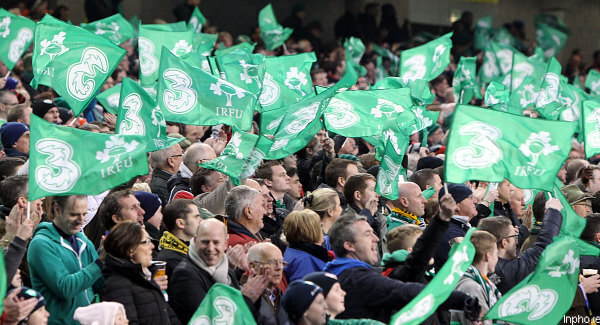
Ireland hosting a World Cup in 2023 offers a unique opportunity to bring so many different facets of Irish life together as one, to project a united front to the sporting world and show all the best attributes modern Ireland has to offer.
The biggest stumbling block of all, however, will be finance. World Rugby relies on the tournament to fund its development role on a four-year cycle and will seek a Government guaranteed fee in excess of €120m. Even at that level there is every chance that with the IRFU in receipt of all the ticket revenue and estimates of more than 300,000 supporter visits clocked up over the duration of the competition, that the event would at least break even. The longer term impact of that tourist influx should even be more significant.
Ultimately whether or not the Irish bid is successful will come down to politics. Rival bids from South Africa, the USA and Italy in particular will also attract much support.
While my vision all those years ago of Semple Stadium hosting the All Blacks is unlikely, a World Cup game at the revamped Páirc Uí Chaoimh along with Killarney’s Fitzgerald Stadium would hit the mark. That prospect has taken a step in the right direction and 2015 will prove a big year in bringing it closer to reality.