Three of Kilkenny’s All-Ireland heroes offer insight into county's winning formula
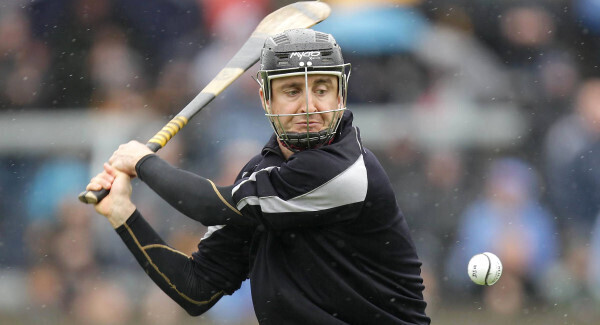

Sunny evenings during the summer, there’s no place you’d rather be than Nowlan Park. You go inknowing it’ll be tough
The secret life of a Kilkenny hurler: what is it like? One never hears much about what goes on behind the curtain at Nowlan Park. But the recent retirement of no fewer than five All-Ireland multi-medallists means hordes of men no longer subject to the Official Secrets Act are roaming around Noreside just dying to talk. Kind of. We tracked down three of them — JJ Delaney (a panellist for 14 seasons, nine All-Ireland medals), Aidan Fogarty (12 seasons, eight All-Irelands) and David Herity (seven seasons, five All-Irelands) – and subjected them to a session almost as searching as one of Brian Cody’s.
You can’t get tired of winning All-Irelands. It’s something you’re putting so much time into. It’s a pastime, a pastime I enjoy. If you’re putting so much time into it and not enjoying it, you’d have to stop and ask yourself why you’re doing it. And it’s not really the winning. It’s the camaraderie. Seeing the new lads coming in every year, seeing what kind of characters they are, seeing them deal with things. You’re in the background and you’re seeing the work they’re putting in. And then there are the people on the outside talking about these new lads, wondering if they’ll make it, maybe saying So and So isn’t up to it. And at the end of the day So and So proves them wrong. There’s great satisfaction in watching that happen.
Sunny evenings during the summer, there’s no place you’d rather be than Nowlan Park. You go in knowing it’ll be tough. The challenges you’ll meet every night of the week. Seeing how well you’re developing. If you’re not going well in training it’s up to you to do something about it. It’s too late in a game if you’re getting skinned.
Absolutely not. It’s the be-all and end-all. There’s the whole feeling of winning an All-Ireland and also the feeling of being there on the day. “We’ve done it now for the year. All the hard work has paid off.” That’s what drove it on for me every year after we won the All-Ireland. The whole buzz. You always want to come back and experience that feeling again. To me it wasn’t about trying to get the best out of yourself, it was about winning as much as you could while you could. You trained so hard and if you didn’t win the All Ireland, basically the year was a failure.
You never get tired of winning, let alone winning All-Irelands. Every competition you enter you want to win. The Walsh Cup at the start of this year was huge for the new lads on the panel. It was a new season, 2013 was over, we were back in Croke Park, winning a trophy and beating a very good Dublin team. It’s about winning every single game and there’s always another target. And even when you do win you know there are new lads coming in behind you. You never get the chance to enjoy it too much. Nearly. Okay, win the All-Ireland and in October and November you can relax for a bit. But then December comes and you’re back into the routine of the pre-pre-season. That’s the tough thing. You head back into it almost straightaway.
It is, but at the end of the day hurling is only just a pastime. You’re playing a game because you enjoy it and because you want to get the best out of yourself. It shouldn’t affect your personality or dictate your life or give you a big head. It’s only a small part of your day. I was lucky in that I was able to focus when I had to and able to switch off afterwards. That’s one of the reasons I lasted so long. When I was on the field I gave 100 per cent. When I was off it I didn’t let hurling affect my life. Other people live and breathe the whole thing. That wasn’t for me. Like I said, it’s a pastime. An important pastime but still only a pastime.
When I was younger I always thought that winning an All-Ireland would feel great. But if you don’t have self-esteem before winning an All-Ireland, you’re not going to get it by winning one. It’s a confidence booster, it’s great for your hurling. But you have to try and build your self-confidence outside of hurling, and if you do that it’ll be reflected on the field. I’ve often said, if hurling dictates how you feel, that’s not a good place to be. If you get depressed over playing badly, that’s going to impact on how you play the next day.
As time went by, one thing I learned was not to take hurling so seriously. That might sound funny because I love it and I always gave 110 per cent. But in the last couple of years I developed a bit of perspective about myself and about the importance of being a rounded person instead of just a hurler.
It’s something that definitely does stick. Part of your identity is taken away when you retire. But while it lasts it’s wonderful, no doubt about it. You’re introduced to people as, ‘The Kilkenny hurler, David Herity’. And they know how much you put into it and dedicate to it. You get a lot more respect.
Tommy Walsh had that flamboyance about him. On the ball constantly and he’d clear you out of it. JJ didn’t do as much as Tommy, he was a different kind of guy to mark. Jackie Tyrrell was physically tougher. Outside Kilkenny I always found Paddy Stapleton very tricky. And Brian Murphy never did anything exceptional but you didn’t do anything exceptional on him.
Eddie Brennan was very difficult to stop. A lot of forwards when they get the ball let fly immediately. Eddie had the knack of assessing the situation and then either taking it around you or dropping it low and hitting it. And anywhere inside 40 yards out that TJ Reid gets a ball, he’ll have a pop at goal. Any time he gets it he’ll go for it. A point is always a second option for him.
All of them. There was Colin Fennelly’s speed and his strength, which is greater than people might think. TJ Reid’s aerial ability was unbelievable. Eoin Larkin and the way he had of flicking the ball away from you. And the man with the whole package: Henry Shefflin. His strength, his pace, his movement. One minute you’re beside him and the next minute he’s 30 yards behind you waving his hand for the pass. The pinnacle.
I’ve never seen anything like it. Sheeting rain, pouring off helmets. We came back out after half-time and things seemed to be drying up. And then out of nowhere... With about 20 minutes left the PA came on and the man started speaking. I was hoping and praying he was going to say we were stopping for ten minutes for a break. By the end of the match I was down to my fifth hurl, the others were so wet. Rain had been forecast from early in the week but I was talking to Derek Lyng [Kilkenny selector] in the dressing room on the Wednesday night and he said, “Ah, it never really rains in Croke Park.” Ha!
I didn’t start and didn’t come on, although I was close to coming on at one stage. I was warming up along the Hogan Stand sideline and went up as far as the corner flag. I looked across the pitch and I couldn’t see the corner flag on the far side, the rain was so heavy.
Managing to clear the ball 30 yards was an achievement. It was hard to hold the hurl and it was even harder to hit the ball. One high ball that landed my way I dropped and had to chase after it to retrieve. From that moment on it was safety first. Get the ball and handpass it to someone.
He keeps things low key, tough and very basic. No bullshit. No magic drills or big statistics. When you come back in January there’s no talk of having won the All-Ireland. The All-Ireland is done and dusted. If he thinks you’re getting soft he’ll say it. And he has a sly way of changing a team without anyone actually knowing. Bringing in one or two new lads the whole time means you’re never safe in your position.
He keeps finding gems all over the place who drive on everyone else and he’s very good – all the management are – at assessing the body language of the players in training. You might be knackered, wondering how you’ll get through training the next night, and they’ll adjust the session accordingly. They’ll cut ten or 15 minutes off it. They don’t flog a dead horse. They’ve adjusted everything over the last few years. This year, for instance, there was less running from the beginning and more hurling, under lights in Carlow IT or in Mooncoin.
The panel will be back together shortly and will be eyeing up the first match in the Walsh Cup. It’s not about All-Irelands any more, it’s about the next game against whoever. The lads will get the vibes from the management: if you play well you’ll get your chance. The subs change from game to game and with five players gone the competition for places in 2015 will be greater than ever. Getting into the match-day squad will be a challenge. The younger lads will be trying to get a place on the panel and, once they’re there, keeping it. Don’t let anyone who’s behind you overtake you. Hold on to your position on the panel and build on it.
Brian never stutters in a speech either. There’s never a pause. He says what he wants to say. Total clarity. The Thursday before the replay against Tipperary, with 37 players in the dressing room, he got up and gave a speech.
It was one of those moments where you walked out of the room afterwards and you just knew you were going to win, that nothing was going to stop you.
He has that absolutely. Galway were hammering us at half-time in the 2012 Leinster final but he gave a great speech. Even then he still believed we could win. We could have been 40 points down and he would have believed. That drive he has, that belief. Everyone feeds off that.
He’s genuine. If he wasn’t managing Kilkenny he’d be managing James Stephens. And he’s no dictator. You can’t deal with a lad for 12 years if he’s going to be barking at you all the time. Anything outside hurling, any problem, ring Brian and if he can do anything to help you he will. The perception that he’s ruthless, well, he has to make the calls. But he’s flexible. He has to be. He couldn’t be there that long without being flexible.
The management are very good at keeping training fresh, which helps a lot. We train very hard but rest and recovery is a massive thing. And going into training every night, you don’t know what you’re going to do. That’s how they’ve managed to keep it going for so long.
More time with the club. During the summer you’re only getting a week here and there, at a time when all the club hurling should be going on. Club players get pushed to one side. I’ll be seeing the other side of it now and getting to know a few of the younger lads. I wasn’t there as much as I’d have to liked to be in recent years. I will be now.
Having options. That’s what I’m looking forward to. Maybe going out for two pints on a Friday night after a stressful week. Or being able to go away for the weekend with the girlfriend. Go over to lads’ houses or have friends over. You become a bit of a hermit. I was in the gym lately and I really enjoyed it. Because I was able to. I’m looking forward to the team holiday in Miami and I don’t care if I come back 20 stone overweight. And I don’t have to look around and see Brian Cody there and worry.
There were a lot of weddings I missed, including my sister’s one in Italy a month after I joined the panel. Oh, and the holiday in Miami. I’ll be able to sit back and relax from start to finish. On previous holidays the last two days were like the wedding before the funeral. You couldn’t properly enjoy them because you knew you were going back and it would be starting all over again.
But what I’m looking forward to most is being able to sit down and eat an oul’ takeaway without worrying about what Eoin Murphy, or whoever the guy is I’m fighting with for my place, is doing.
Let’s thank them and leave them there, shall we? And let us hope Mr Herity enjoys every oul’ takeaway he eats for the rest of his life. They’ve been well earned.