Tradition still packs quite a wallop
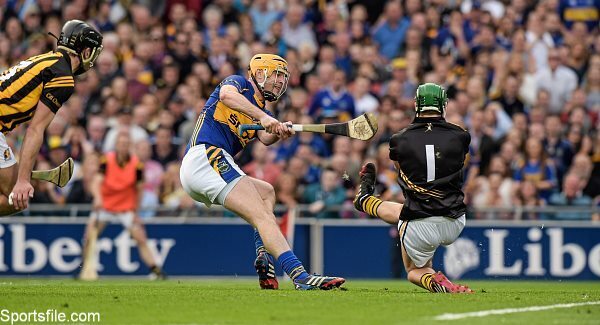
Kilkenny collected the All-Ireland title on Saturday night to underline once again their dominance of the game in recent years. And maybe to add an asterisk or two in addition to an exclamation mark in the space alongside their names on the roll of honour.
Last year we had novelty in the All-Ireland final, but last weekend — and the one preceding, come to that — shows, as AJ Liebling once said, that tradition still packs a nasty wallop.
The men in black and amber have been the power in the land for so long that Tipperary — Tipperary, with their 26 All-Irelands — have almost assumed the role of plucky underdogs striking a blow for the little guy.
And suffering the consequences. We are told by the citizens of Baltimore that when you come at the king, you best not miss, and the tweaks and recalibrations put into effect by Brian Cody remedied the flaws in Kilkenny’s display the first day out. They were too strong and they were too driven: they were just too much.
Cody gave the assembled media a jab in the ribs after the game about criticism of his defence, but he was the one who remodelled his half-back line for the replay, introducing Kieran Joyce and Pádraig Walsh. Both players were outstanding, denying Tipperary a platform for attacks and dominating their opponents to the extent that the half-forwards Tipp started were all withdrawn before the end.
Kilkenny’s superiority was particularly noticeable under opposition puck-outs: if there was ever a game that showed the need for variety in goalkeeper deliveries, including short puck-outs, it was Saturday night.
The game also showed the need for pretty urgent reform of the penalty/20 metre free rule. Tipperary earned three penalties in the two games and collected one point from them; they say hasty law makes poor law, and the GAA will have to address this problem quickly.
In fairness, Tipp boss Eamon O’Shea wasn’t blaming the penalties for losing the game: “You have to give huge credit to the opposition. They’ve won the All-Ireland. Both of us came up to do that, but they’re going home with it, because they were the better team on the day.
“I felt we played okay. We started off well again, and then they came into again. But it was a very intense game, with a lot more mistakes than the last day, from both teams. We were happy enough to be up at half-time, and I thought we were in a reasonable good position.
“And the critical thing is they played the game on their terms, which is the right thing to do. And we couldn’t seem to open it up like we did the last day.”
O’Shea’s diagnosis was correct. Kilkenny didn’t dominate from start to finish. Richie Power was scoreless in the first half, and TJ Reid only had frees to his name at the break. Eoin Larkin was close to getting the curly finger before hitting a magnificent point from the sideline.
Yet when they had a purple patch they were ruthless: two down at the break, within eight minutes of the resumption Kilkenny were three points up, and it took Tipp until the 46th minute to score in the second half. John Power’s goal pushed them out to a six-point lead, and Kilkenny never looked like losing after that, despite Seamus Callanan’s late goal for Tipp. (As an aside, consider John Power’s footwork for his batted goal: with play building, he’s in the square but steps out of it, and when Michael Fennelly’s shot pinballs goalwards to be saved by Darren Gleeson, only then does Power the younger readjust to step back into the square to goal.)
The Kilkenny manager was playing down the significance of Power, Joyce and Walsh starting the replay when it was pointed out how well they’d played.
“That’s what we expected to happen,” said Brian Cody. “The three boys who started the last day and didn’t start this day could have done the same. That’s the call, you make a call and that’s it. We have a strong panel and we expected the lads to play well the last day because the rest are playing well.
“You do what you have to do and that’s the way it works.”
Were we expecting too much after the drawn game? This encounter was different, certainly. Much attention has been drawn to the three blocks Kilkenny put in before the game was two minutes old, and that was of a piece with the rest of the proceedings.
It’s an old compliment to say someone has the skills to hurl in a phone box. On Saturday night that was a basic requirement: there can’t have been many games which had so much compressed activity.
Before John Power’s first point, on 50 minutes, two Tipp players were blocked in an area maybe 15 metres square before the ball was worked downfield.
The first game was Austerlitz, or maybe Waterloo, with its grand sweep and epic charges; this was more like hand to hand in the tractor factories of Stalingrad.
Speaking of Napoleon... it might be difficult to imagine Cody lining up his veterans and delivering a speech like the Corsican’s farewell to the soldiers of the Old Guard, but there was an elegiac note in Croke Park on Saturday evening.
We will hardly see certain Kilkenny players again, given how deep in their 30s some of them are, but if so, some of their exit interviews were truly spectacular. Henry Shefflin will rightfully win the plaudits for an incredible 10th All-Ireland medal won on the field of play, but JJ Delaney, less spectacular but surely the greatest defender in hurling, collected a ninth medal and was central to Kilkenny’s victory. Take the sublime hook of Seamus Callanan in the first quarter with a goal yawning. “I knew I wasn’t going to catch him for pace anyway,” said Delaney, recalling the incident.
“I wasn’t going to run back past him. I kept him at a hurley’s length because I knew he had to throw it up and hit it, it was just being in the right place at the right time.”
Patience, skill, execution, calmness, modesty. Put them together and label as tradition.