Rules must resolve penalty conundrum
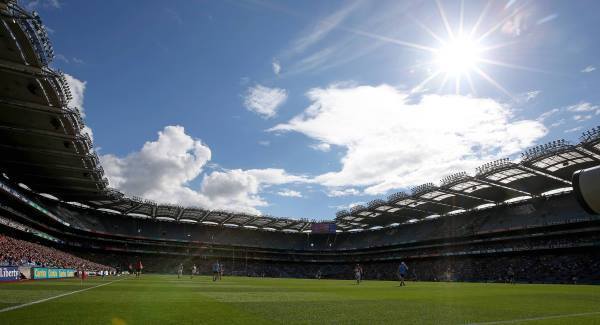
The more the draw is analysed, the more the result appears just. Tipperary were doubly unfortunate to be stymied by the new penalty interpretation as they were lucky to win the penalties, considering the fouls appeared to be committed outside the large parallelogram.
John O’Dwyer was as blessed to have been given the opportunity to win an All-Ireland final as Kilkenny were that his trojan effort skimmed wide. It seems, after all, that all is fair in war; that these men created their own sense of justice.
But, casting aside that it impacted negatively on one team more than the other, Sunday brought to a head a penalty issue that will hopefully be resolved by next year’s Championship.
It’s now 15 games since a goal came by way of a direct penalty strike, Joe Canning’s drive against Kilkenny in the drawn Leinster semi-final. In the meantime, so many have tried and failed to find their way past three defenders from 20 metres. Prior to Sunday, the last to try his hand was Dublin’s Paul Ryan in an All-Ireland quarter-final. His shot was easily managed by Brendan Maher.
In their drawn qualifier game with Wexford in Ennis, Tony Kelly’s extra-time hit was blocked although Seadna Morey found the net with the rebound. Again against Wexford but in Nowlan Park later in July, Austin Gleeson had his penalty denied. And that’s not including those who opted for points instead.
It’s not that these men are in anyway incompetent taking such shots, but being ordered to shoot further out than was previously permitted has hindered them. As well as that, they also have to split their concentration between lifting the ball and checking their run before the 20m line.
In the build-up to the All-Ireland final, RTÉ showed archived footage of Eddie Keher giving a tutorial on lifting the sliotar. He said: “The most important thing a free-taker must do is concentrate on the rising of the ball. If he doesn’t rise the ball correctly, he has no hope of hitting a good shot at goal.”
The amount of momentum a player is capable of building up has also gone from one extreme, as displayed by Anthony Nash and TJ Reid, to another. Most now opt for a two or three-step technique but that generates little in the way of power.
As if it isn’t bad enough that the penalty taker is outnumbered by the three on the line, he is also outgunned.
The oversized hurleys utilised by the men guarding the net cut the chances of conversion again. Then there are the manoeuvres they make from the goal-line to make themselves bigger targets.
From one September to another, the quality of penalty striking has gone from thunderous to tepid. You can’t compare but only contrast what Anthony Nash did last year to Seamus Callanan and John O’Dwyer’s shots at the weekend. Again, it’s not that either can’t pack a punch. Just look at O’Dwyer’s last-gasp free.
But Nash and Stephen O’Keeffe changed everything in Thurles in June when the Waterford goalkeeper had the audacity to run at his opposite number’s torpedo and absorb it with his thigh. The GAA could not allow their players to demonstrate such wilful neglect for their own safety.
It wasn’t that Nash was too successful. In fact, the penalty conversion rate wasn’t spectacularly good prior to the new interpretation. Referees chief Pat McEnaney has his critics among hurling people but he nailed the issue last December when he spoke of how penalties, regardless of the path Nash had beaten for himself and others, were not of sufficient benefit to the attacking team.
Speaking about how the matter was discussed on the standing playing rules committee, he said: “In the consultations I was in favour of having the ball struck before that line and only having the goalkeeper on the line. Dónal Óg (Cusack) also favoured this. But it didn’t wash. At the moment, we are legitimising fouling.”
After a game which constructed its own sense of parity, the rule book needs to do the same. One penalty taker, one on the goal-line.
Only then will cynical play be adequately punished.
As a Manchester United fan, Eamonn Fitzmaurice might appreciate how he sounded a little like Alex Ferguson at the weekend.
In April 1996, Ferguson ordered his players to change their grey shirts at half-time having trailed Southampton 3-0.
“The players couldn’t pick each other out,” he remarked at the time. “They said it was difficult to see their team-mates at distance.”
On Saturday, Fitzmaurice made the point that both Kerry and Donegal might have a problem on Sunday week picking out their colleagues because of the counties’ similarity in jerseys and supporters’ colours in Croke Park. He said: “I think the only issue is if you are playing into the Hill 16 end when it will be all green and gold on the day and you are looking in trying to pick out a player. Hopefully it won’t cause trouble.”
Silly? Not at all. Jim McGuinness was of the same mind. “I saw the full thing and it didn’t look too bad but I’m not 100% sure about it, to be honest,” he stated about the decision to allow the sides don their gold and green/green and gold attires. “Both counties want to wear their first choice kits. We like to wear the white kits. It’s not high up on the agenda. It won’t be a jersey that beats us.”
The managers’ comments emphasise about a couple of points. Firstly, how deeply they consider even the minutest of details. Secondly, did anyone bother to ask them their opinion about the possibility of a colour clash?
The father rang yesterday. He had a query. “Why were Richie Hogan and TJ Reid were either side of Eoin Murphy on Kilkenny’s goal-line for Tipperary’s penalties?”
We were stumped. More often than not, the goalkeeper is joined by two defenders in picking up spade-like hurleys. And it’s not as if Hogan, standing 5ft7in and weighing 12 stone 7lbs, fills much of the goal.
A couple of phone-calls to Kilkenny later and the answer was found. Both Hogan and Reid have played in goal at some time in their careers. Not only that, they are believed to have the best hand-eye co-ordination in the Kilkenny camp. Look at how much aerial ball the pair won on Sunday and that is easily believed.
Brian Cody is apparently not one for tactics. Getting the right men to face down a penalty sure seems premeditated.